The National Automotive Design and Development Council (NADDC) has advocated a shift from government subsidies to affordable and sustainable vehicle financing as a means of improving mobility access for Nigerians and strengthening the country’s automotive industry.
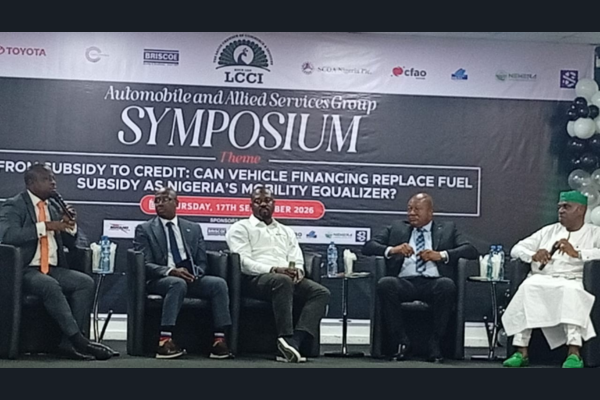
The Director-General of NADDC, Otunba Joseph Oluwemimo Osanipin, made the call in a keynote address delivered on his behalf by the Council’s Principal Information Officer, Tanko Kyumnom, at the Lagos Chamber of Commerce and Industry (LCCI) Auto Sectoral Group Symposium held on Thursday, September 17, 2026, at the Henry Fajemirokun Hall, LCCI, Lagos.
The symposium, themed “From Subsidy to Credit: Can Vehicle Financing Replace Fuel Subsidy as Nigeria’s Mobility Equaliser?”, brought together stakeholders across the automotive, financial, transport and business sectors to examine sustainable ways of improving access to mobility amid rising transportation costs.
Osanipin said while subsidies could provide immediate relief by reducing mobility costs, their continued reliance could place considerable pressure on government finances.
He argued that vehicle financing could provide a more sustainable alternative by enabling individuals, businesses and transport operators to acquire vehicles and spread payment over an agreed period.
However, the NADDC boss stressed that credit by itself would not solve Nigeria’s mobility challenges, insisting that financing schemes must be affordable, accessible and sustainable, with repayment structures that reflect the realities of Nigerian consumers and businesses.
“Vehicle financing offers a more sustainable approach by enabling individuals, businesses and transport operators to acquire vehicles and pay for them over time,” Osanipin stated.
He said a major consideration in the development of vehicle financing programmes should be their ability to support Nigerian-made and locally assembled vehicles.
According to him, linking affordable vehicle credit with local automotive production would generate benefits beyond mobility, including increased industrial activity, job creation, stronger local supply chains and reduced dependence on imported vehicles.
The NADDC DG therefore called for stronger collaboration among government agencies, financial institutions, vehicle manufatcturers and other stakeholders to develop innovative financing mechanisms capable of expanding access to vehicles.
He identified affordable loans, vehicle leasing, fleet financing, credit guarantees and appropriate interest-rate support as some of the mechanisms that could help make vehicle ownership and productive mobility more accessible.
Osanipin noted that the success of such initiatives would depend largely on the ability of stakeholders to design financing products that recognise the economic realities facing Nigerians and businesses.
He said NADDC remained committed to creating an enabling environment for automotive manufacturing, local content development and access to affordable mobility.
“The goal is not simply to put more vehicles on Nigerian roads. It is to ensure that Nigerians can access productive mobility without placing an unsustainable burden on government finances or household incomes,” he said.
The NADDC boss further maintained that properly structured vehicle financing could simultaneously address Nigeria’s mobility needs and support the country’s broader industrialisation agenda.
He said the development of a viable automotive financing ecosystem would create a stronger link between mobility, economic inclusion and domestic vehicle production.
“With the right policies and partnerships, vehicle financing can become a powerful instrument for mobility, economic inclusion and automotive industrial development,” Osanipin added.