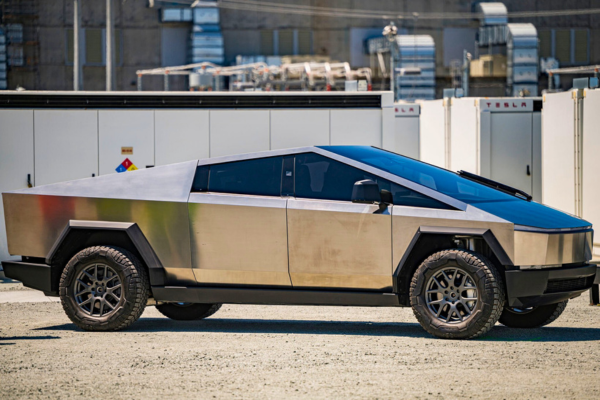
Tesla has issued another recall for its controversial Cybertruck, raising fresh questions about quality control and long-term reliability for one of the world’s most talked-about electric vehicles.
The company said a defect linked to the truck’s wheel assembly could increase the risk of a wheel separating while the vehicle is moving. Tesla is now offering free repairs to affected owners.
The latest recall affects 173 rear-wheel-drive Cybertruck Long Range vehicles, according to documents filed with the National Highway Traffic Safety Administration.
Although the number may appear small, the issue has renewed scrutiny around the Cybertruck programme, which has faced repeated recalls since deliveries began.
According to Tesla, cracks may develop around the brake rotor’s stud holes after the vehicle experiences harsh road impacts or heavy cornering loads. Over time, the damage could allow a wheel stud to separate from the hub.
For drivers, the consequences could be severe.
A loose wheel can create vibrations, unstable handling, and in extreme cases, complete wheel detachment while driving. Safety experts warn that such failures significantly increase crash risks, especially at highway speeds.
Sean Tucker, managing editor at Kelley Blue Book, told Wired the issue appears connected to a manufacturing materials problem involving the lug nut assembly on some 18-inch wheels.
He said grease associated with the assembly may have allowed lug nuts to loosen gradually. That movement may then have created vibrations capable of accelerating cracks in the brake rotor.
“A car is such a complex machine that a very small change to design can have consequences years down the road,” Tucker said.
Tesla stressed that the recall only affects a limited production batch rather than every Cybertruck currently on the road. Tucker described it as a “subset of a subset” tied to specific production dates and parts.
Still, the recall adds to a growing list of customer-facing issues surrounding the futuristic electric pickup.
Last year, Tesla recalled nearly all Cybertrucks manufactured between November 2023 and February 2025 after discovering that an exterior stainless-steel trim panel could detach while driving because of an adhesive problem.
Months later, another recall followed after regulators warned that the truck’s front lights were excessively bright and could create hazards for other road users.
The repeated fixes have become an uncomfortable challenge for Tesla at a time when competition in the global electric vehicle market is intensifying.
For consumers, reliability remains one of the biggest deciding factors when choosing an electric vehicle. High-profile recalls involving flagship models can damage confidence, not only in a brand but also in the wider EV market.
That concern matters because electric vehicles remain central to global efforts to reduce emissions from petrol and diesel transport. Analysts warn that persistent quality concerns could slow adoption among cautious buyers still considering whether to switch from traditional combustion-engine vehicles.
Tesla says it is already addressing the latest issue by replacing wheel hubs, brake rotors, and lug nuts free of charge on affected vehicles.
Owners have been advised to contact Tesla immediately if they notice unusual vibration, wheel noise, or changes in handling performance.
Despite the latest setback, industry experts say one recall should not define the entire electric vehicle sector. Buyers are still encouraged to compare safety records, reliability ratings, charging infrastructure, and long-term ownership costs before making purchasing decisions.
Read also: Tesla recalls more than 218,000 vehicles over rearview camera safety concern