
• News
    • Tech
    • Lifestyle
    • Business
    • Opinion
    • Premium
  • Reviews
  • Events
    • Nigeria
    • South Africa
  • Tools
    • Price Guide
    • Find your idea car
    • Car valuation
    • Sell your car
    • Car insurance quote
    • Locate a dealer
    • Deals
  • For Sale
    • New Cars for sale
    • Cheap Cars for sale
    • Bikes for sale
    • Trucks for sale
    • Boats for sale
    • Jets for sale in Africa
    • Cars under 5m
    • EV in Nigeria
    • EV in South Africa
Saturday, August 29, 2026
  • Login
Auto Journal Africa
  • News
    • Tech
    • Lifestyle
    • Business
    • Opinion
    • Premium
  • Reviews
  • Events
    • Nigeria
    • South Africa
  • Tools
    • Price Guide
    • Find your idea car
    • Car valuation
    • Sell your car
    • Car insurance quote
    • Locate a dealer
    • Deals
  • For Sale
    • New Cars for sale
    • Cheap Cars for sale
    • Bikes for sale
    • Trucks for sale
    • Boats for sale
    • Jets for sale in Africa
    • Cars under 5m
    • EV in Nigeria
    • EV in South Africa
Ask Autojorunal AI
No Result
View All Result
  • News
    • Tech
    • Lifestyle
    • Business
    • Opinion
    • Premium
  • Reviews
  • Events
    • Nigeria
    • South Africa
  • Tools
    • Price Guide
    • Find your idea car
    • Car valuation
    • Sell your car
    • Car insurance quote
    • Locate a dealer
    • Deals
  • For Sale
    • New Cars for sale
    • Cheap Cars for sale
    • Bikes for sale
    • Trucks for sale
    • Boats for sale
    • Jets for sale in Africa
    • Cars under 5m
    • EV in Nigeria
    • EV in South Africa
No Result
View All Result
Morning News
No Result
View All Result
Home Read a ride Aerospace

FAA bans US aircraft from Venezuelan airspace after Caracas explosions

David Ijaseun by David Ijaseun
January 3, 2026
in Aerospace, Premium
0
Venezuelan Airspace

Venezuelan Airspace

837
SHARES
9.6k
VIEWS
Share on FacebookShare on Twitter

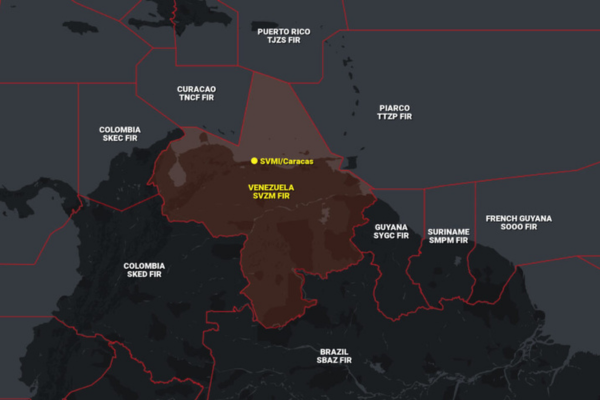
The U.S. Federal Aviation Administration (FAA) on Friday banned all U.S. civilian aircraft from operating in Venezuelan airspace, citing rising safety risks after reported explosions and military activity near Caracas.

The emergency restriction took effect at 06:00 UTC on January 3, 2026, according to an FAA Notice to Airmen (NOTAM). The ban applies at all altitudes in Venezuela’s Maiquetía Flight Information Region and covers all U.S.-registered civilian aircraft. U.S. military and state aircraft are exempt.

READ ALSO

Dubai family uses 3,000 kWh with two electric vehicles and pays $265 electricity bill

Chinese Automakers Target South Africa’s EV and Pickup Markets

The move follows reports of missile strikes, helicopter activity, and low-flying military aircraft over Caracas, including near key sites such as La Carlota airbase and Fort Tiuna, two major military installations.

Below are the key developments driving the FAA’s decision.

1) Explosions and military activity heighten flight risks

Residents in Caracas reported multiple explosions overnight, alongside sightings of military aircraft operating at low altitude. Local media also reported that the residence of Venezuela’s defense minister may have been targeted.

The FAA said ongoing military operations posed a direct risk to civilian flights.

“[U.S. aircraft] are prohibited from operating at all altitudes… due to safety-of-flight risks associated with ongoing military activity,” the FAA said in its NOTAM.

Flight tracking data from Flightradar24 showed Venezuelan airspace completely empty of commercial traffic, as airlines diverted or suspended routes.

2) Military aircraft flying without transponders raise collision fears

A major safety concern has been the use of military aircraft with transponders switched off. Transponders allow aircraft to be visible to Traffic Collision Avoidance Systems (TCAS), used by commercial jets to prevent midair collisions.

While radar can still detect aircraft without transponders, pilots cannot receive automated collision warnings.

Aviation analysts say this practice significantly increases risk in shared airspace.

3) Near-miss incidents push FAA to escalate warnings

The FAA’s ban follows multiple near-miss incidents involving U.S. military aircraft and civilian jets in recent weeks.

On December 12, 2025, a JetBlue Airbus A320 departing Curaçao for New York JFK encountered a U.S. military tanker flying without a transponder. The JetBlue pilots were forced to take evasive action.

Days later, a similar incident involved a private jet flying between Aruba and Miami, again narrowly avoiding a military tanker.

“These were not isolated events,” said one aviation safety expert familiar with the reports. “In congested airspace, even a single untracked aircraft can be catastrophic.”

4) U.S. military activity expands as tracking goes dark

In recent days, the U.S. Air Force reportedly disabled transponders across its entire fleet, removing its aircraft from public tracking systems.

Defense officials have not commented publicly, but analysts say the move suggests heightened operational secrecy and possible expansion of military activity.

One exception has drawn global attention: a KC-135R Stratotanker, a 66-year-old aircraft registered as 58-0016, circling over the Caribbean near Puerto Rico. At one point, it was the most-tracked flight worldwide, with over 30,000 users monitoring it live.

5) Political shock deepens aviation uncertainty

The airspace closure coincides with a dramatic political development. U.S. President Donald Trump said U.S. forces had carried out a surprise operation arresting Venezuelan President Nicolás Maduro and First Lady Cilia Flores.

Trump said the operation was conducted jointly with U.S. law enforcement, citing long-standing U.S. indictments accusing Maduro of narcotics-related offenses.

Venezuelan Vice President Delcy Rodríguez said the government had no confirmed information on the couple’s location and demanded proof they were alive.

The operation marks the first capture of a sitting foreign president by U.S. forces since 1989, when Panama’s Manuel Noriega was detained.

What comes next

With military activity expected to continue, aviation experts say the FAA ban is likely to remain in place.

Most airlines had already reduced or suspended service to Venezuela. The FAA’s move formalizes those safety concerns and signals a prolonged disruption.

Read also: Sky wars: Somalia, Somaliland airspace clash threatens air travel

 

Tags: HeadlineVenezuelan airspace

Related Posts

Electric Vehicle Charging Stations
Electric Vehicles

Dubai family uses 3,000 kWh with two electric vehicles and pays $265 electricity bill

August 29, 2026
Chinese Automakers Target South Africa’s EV and Pickup Markets
Africa

Chinese Automakers Target South Africa’s EV and Pickup Markets

August 29, 2026
Walmart low-cost charging station
Electric Vehicles

Walmart’s low-cost EV charging push could force Tesla into price war

August 28, 2026
What Went Wrong at Nikola How an American EV Truck Dream Collapsed
Business

What went wrong at Nikola? How an American EV truck dream collapsed

August 28, 2026
West Marine has emerged from Chapter 11 bankruptcy
Business

West Marine exits bankruptcy after $265 million debt reduction

August 27, 2026
Fisker's Second Chance at Building a Car Company
Business

Fisker’s second chance at building a car company ends in bankruptcy: What went wrong?

August 27, 2026
Next Post
Air traffic failure in Greece

What Greece’s air traffic control failure means for European airlines

POPULAR NEWS

Inferno at Toyota 1000 Desert Race consumes 49 cars

Inferno at Toyota 1000 Desert Race consumes 49 cars

July 3, 2023
Mobius Motors

Mobius Motors: Rising taxes, competition ends Kenyan SUV maker’s journey

August 7, 2024
Autojournal car race

Get ready for the biggest RACE show this December in Nigeria

August 12, 2024
Rolls-Royce La Rose Noire Droptail 2026, the most expensive car in 2026

Ultra-luxury: The 10 most expensive cars in the world in 2026

January 7, 2026
From style to sustainability: How Geely Auto is shaping the future of luxury vehicles

From style to sustainability: How Geely Auto is shaping the future of luxury vehicles

October 25, 2024

EDITOR'S PICK

Chevrolet EV Truck Breaks World Record With 1,059-Mile Drive

Chevrolet EV truck breaks world record with 1,059-Mile drive on single charge

August 24, 2025
Tesla shares fall 4% amid global price cuts, concerns over margins

Tesla’s energy business surges in Q2 2024, boosts earnings

July 12, 2024

Lagos Blue Line light rail transports over 1 million passengers in 219 days with 9,322 train trips

April 17, 2024
Trump tarrifs

Trump grants one-month tariff relief to automakers to ease trade war pressures

March 6, 2025

About

Auto Journal Africa is the leading online and print magazine for automobiles in Africa.

Follow us

Recent Posts

  • Dubai family uses 3,000 kWh with two electric vehicles and pays $265 electricity bill
  • Chinese Automakers Target South Africa’s EV and Pickup Markets
  • Walmart’s low-cost EV charging push could force Tesla into price war
  • What went wrong at Nikola? How an American EV truck dream collapsed

Links

  • Privacy Policy
  • About Us
  • Contact Us
  • Terms & Conditions
  • News
  • Reviews
  • Events
  • Tools
  • For Sale

© 2023 Auto Journal

No Result
View All Result
  • News
    • Tech
    • Lifestyle
    • Business
    • Opinion
    • Premium
  • Reviews
  • Events
    • Nigeria
    • South Africa
  • Tools
    • Price Guide
    • Find your idea car
    • Car valuation
    • Sell your car
    • Car insurance quote
    • Locate a dealer
    • Deals
  • For Sale
    • New Cars for sale
    • Cheap Cars for sale
    • Bikes for sale
    • Trucks for sale
    • Boats for sale
    • Jets for sale in Africa
    • Cars under 5m
    • EV in Nigeria
    • EV in South Africa

© 2023 Auto Journal

Welcome Back!

Sign In with Google
OR

Login to your account below

Forgotten Password?

Retrieve your password

Please enter your username or email address to reset your password.

Log In
Are you sure want to unlock this post?
Unlock left : 0
Are you sure want to cancel subscription?