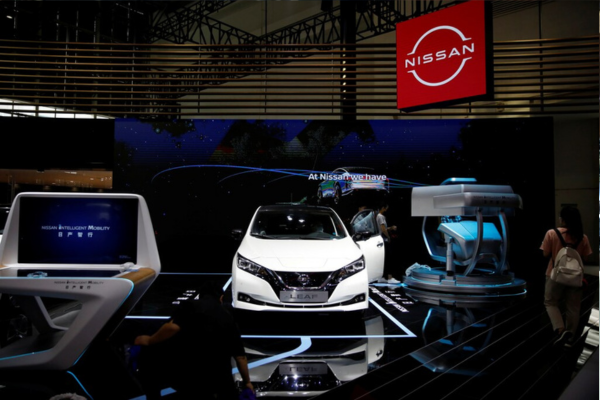
Japanese carmaker Nissan is cutting petrol vehicle production in China as electric and hybrid cars gain ground in the world’s largest automotive market.
The decision highlights the growing pressure on international manufacturers to compete with China’s increasingly powerful electric vehicle industry.
Nissan says it will reduce production of petrol-powered vehicles while expanding its range of battery-electric cars and plug-in hybrids. The company is also reviewing its sales expectations after demand in China weakened more sharply than anticipated.
The Japanese manufacturer has lowered its global vehicle sales forecast for the financial year ending March 2027. It now expects to sell between 2.97 million and three million vehicles, down from its previous target of 3.15 million.
The revised forecast reflects mounting difficulties in China, where local manufacturers are competing aggressively on prices, technology and vehicle features.
Nissan reported that its Chinese sales fell by 22% in the first half of the year. The decline worsened, with sales falling 32% during the first nine months.
Chief executive Ivan Espinosa acknowledged the difficulties facing the company, describing China as its biggest challenge.
He said demand was weaker, competition was intensifying and the transition towards new-energy vehicles was happening faster than expected.
Chinese manufacturers increase pressure
China has become one of the most competitive automotive markets in the world.
Local manufacturers have developed electric vehicles with advanced technology, competitive pricing and features increasingly attractive to consumers.
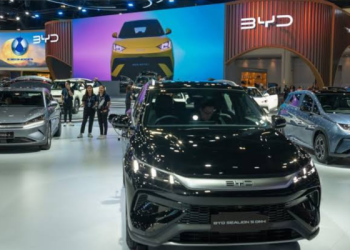
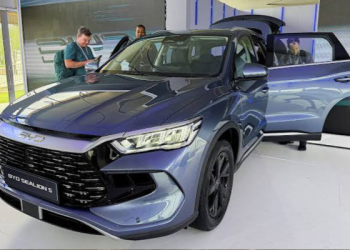
Companies such as BYD and Geely have strengthened their positions through extensive electric vehicle portfolios.
Their growing influence has made it increasingly difficult for established international manufacturers to maintain market share.
Nissan’s petrol-focused product range has struggled to keep pace with changing consumer preferences.
Its popular Sylphy saloon has traditionally played an important role in China. However, the company now needs to strengthen its electric and hybrid offerings to remain competitive.
The manufacturer is responding by expanding production of battery-electric vehicles and plug-in hybrids, which combine electric motors with petrol engines.
Its N-series models are expected to play an important role in this strategy.
Financial pressure adds to Nissan’s challenges
The production changes come as Nissan continues to face wider financial difficulties.
For the July-to-September quarter, the company reported an operating profit of just 2.1 billion yen, representing a 96% decline compared with the same period last year.
Nissan also recorded a quarterly net loss of 43.5 billion yen.
The results underline the challenges facing the manufacturer as it attempts to rebuild its business and improve profitability.
However, its performance has been stronger in some other markets.
Sales have improved in Japan and North America, where consumer adoption of electric vehicles has been slower than in China.
This contrast demonstrates how different regional markets are developing at different speeds, creating additional challenges for manufacturers operating globally.
What this means for the global automotive industry
Nissan’s decision represents another indication of how quickly the global automotive industry is changing.
For years, established Japanese, European and American manufacturers dominated the international vehicle market through engineering expertise, established brands and extensive distribution networks.
However, Chinese manufacturers are increasingly challenging that position, particularly in electric vehicle technology and affordability.
The competition is no longer simply about manufacturing reliable vehicles. It increasingly involves software, battery technology, digital features, production costs and the speed of introducing new models.
For Nissan, the challenge is to rebuild its competitiveness without losing its established strengths.
The company’s experience also raises important questions for other international manufacturers, particularly those with significant exposure to China.
As electric vehicle adoption continues to develop, manufacturers that fail to respond to changing customer expectations risk losing ground in one of the world’s most important automotive markets.
The message is becoming increasingly clear: the future of the automotive industry will depend on how quickly manufacturers can respond to changing technology, consumer demand and competition.
Read also: New Mitsubishi Eclipse Sportback costs $7,755 more than Nissan Leaf Despite Similar Technology