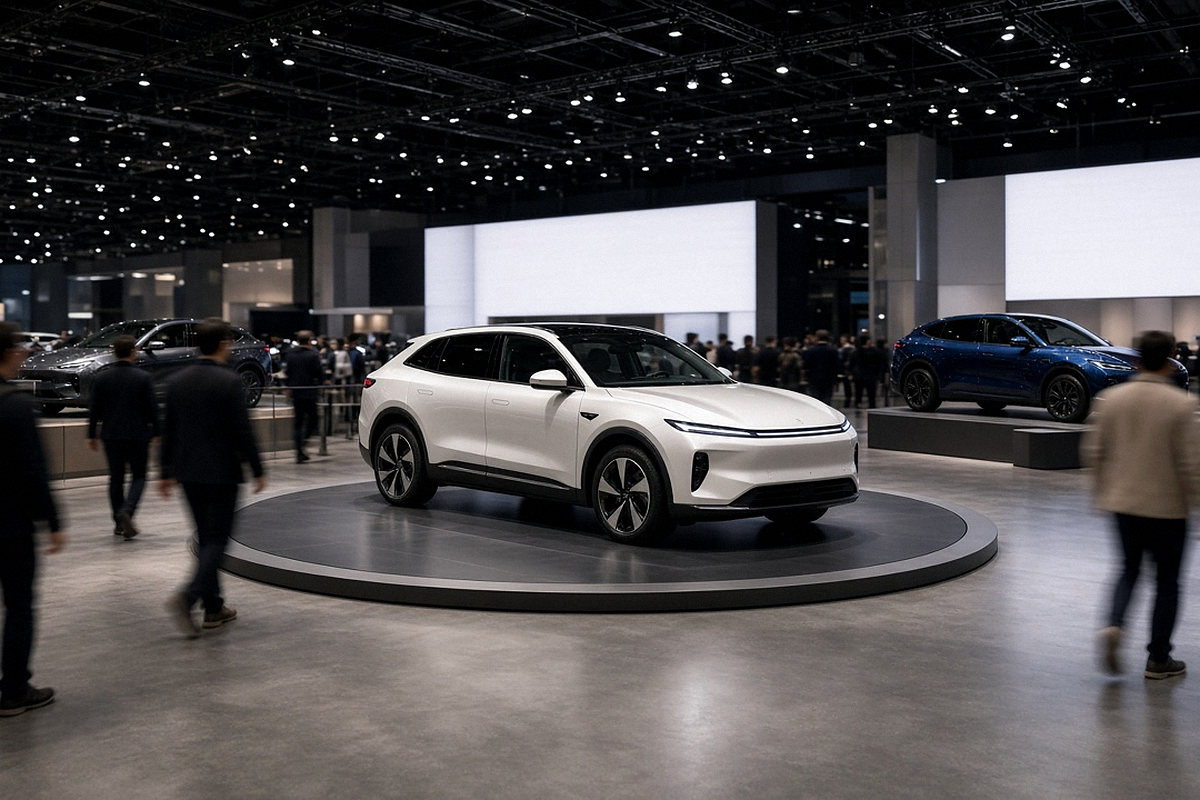
The 2026 Guangzhou Auto Show opened on 27 November with 1,106 vehicles on display, including 115 global debuts, according to Chinese auto industry outlet Gasgoo. New-energy vehicles (electric and plug-in models) made up 707 of them, almost 64% of everything on show.
It is one of the biggest showcases of what China’s carmakers will sell next. And for African buyers, that matters more every year: the same brands are rapidly gaining ground in showrooms from Nairobi to Lagos and Johannesburg.
The models making headlines
BYD Tang EV (third generation). BYD launched its new large five-seat electric SUV on 24 November, just before the show, priced from 187,900 to 219,900 yuan in China. BYD claims up to 850 km of range on China’s CLTC test cycle, using its second-generation Blade Battery and what Gasgoo describes as megawatt-level flash charging. It also brings an air-suspension chassis and steer-by-wire technology into a mainstream price bracket.
BMW iX3 and i3 (Neue Klasse, China long-wheelbase). BMW launched its long-wheelbase iX3 in China on 25 November, from 269,900 yuan (about $40,170, according to CnEVPost). BMW says a 10-minute charge can add 418 km of range on the top version. The new i3 sedan opened for orders at the show, with a claimed CLTC range above 1,000 km and deliveries expected in the first quarter of 2027.
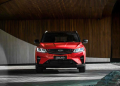
Leapmotor Lafa5. A compact electric hatchback with an 800-volt platform, 640 km claimed range and LiDAR, priced at 105,800 to 121,800 yuan in pre-sale. It shows how quickly advanced tech is reaching cheaper cars in China.
Also on the list: a new BYD Han, the Yangwang Dingyao flagship, the Zeekr 7X update, the Hongqi H9 plug-in hybrid, Mercedes-Benz’s electric GLC, and China debuts for the Lexus TZ and Audi Q9.
A note on range figures: China’s CLTC test is generally more generous than the WLTP figures used in South Africa and many other markets, so real-world range is usually lower.
Why this matters in Africa
Chinese brands are no longer a niche on the continent.
In Kenya, data from the Kenya Motor Industry Association (KMI), reported by Business Daily, shows Chinese brands more than doubled their share of new-vehicle sales in the nine months to September 2026, from 7.39% to 14.65%. Sales rose 152% to 1,847 vehicles. Much of that came from trucks: Sinotruk alone sold 1,442 units, up 169.5%. But passenger brands are growing too. BYD went from 2 sales to 54, Changan from 36 to 73, and Chery Tiggo from zero to 50.
| Kenya, Jan–Sep | 2025 | 2026 |
|---|---|---|
| Chinese brands’ share | 7.39% | 14.65% |
| Chinese brand sales | 733 | 1,847 |
| Sinotruk | 535 | 1,442 |
| BYD | 2 | 54 |
| Changan | 36 | 73 |
| Chery Tiggo | 0 | 50 |
Source: KMI data via Business Daily, 4 November 2026.
At the NCBA-KMI Motor Show in Nairobi, which ran from 27 to 29 November, launches included the Jetour T2 IDM and Changan Hunter K50 alongside the new Toyota Hilux and Subaru Outback Wilderness. The KMI chairman said Kenya’s market recorded about 14,000 new-vehicle sales from January to October 2026, up 26% year-on-year. Kenya is also pushing to attract electric-vehicle investment.
In Nigeria, industry voices say Chinese competition is pushing new-car prices down. Dr Femi Eguaikhide of the LCCI’s auto sector group told ThisDay that a new SUV can now be bought for about ₦28m instead of ₦55m, while warning that most Chinese vehicles arrive fully built rather than locally assembled.
In South Africa, Chinese brands have been a growing part of the new-vehicle market, as AutoJournal Africa has reported on the shift toward Chinese imports, and the country’s new-energy vehicle sales for January–September 2026 already exceeded the whole of 2025, according to naamsa. Traditional automakers more broadly are under growing pressure from Chinese carmakers, as China’s own EV market share keeps climbing.
Will these exact models come to Africa?
Not necessarily, and not soon. Many Guangzhou launches are China-specific (BMW’s long-wheelbase iX3 and i3, for example), and prices in yuan do not translate directly into African showroom prices once shipping, duties and local specifications are added. AutoJournal Africa has not seen confirmed African launch dates for the specific models highlighted above.
What is likely to reach Africa is the technology: cheaper long-range batteries, faster charging and more standard driver-assistance features, filtering down through the Chinese brands already selling here.
The challenge: charging and power
Fast-charging headlines from China contrast sharply with reality in much of Africa, where unreliable grid power remains a key barrier to EV adoption. That is why, for now, many Chinese brands are selling petrol, diesel and hybrid models in African markets alongside a smaller number of EVs. Nigeria’s own EV plans, as AutoJournal Africa has reported, face a power challenge of their own.
Sources: Gasgoo (28 November 2026); CnEVPost (9 November 2026); Business Daily Africa (4 November 2026); Nairobi Lifestyle (27 November 2026); ThisDay (14 November 2026); naamsa October 2026 new-vehicle sales release.