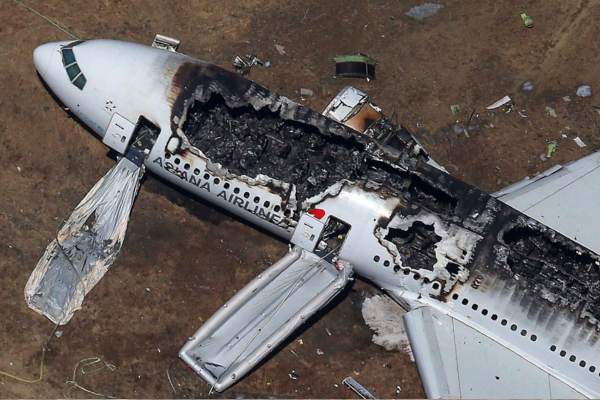
When a commercial aircraft crashes, investigators rush to recover black boxes, study wreckage, and determine what went wrong. But after the headlines fade, another process quietly begins, one that turns destroyed aircraft into industrial raw material.
Modern commercial jets like the Boeing 737 and Airbus A320 are built largely from aluminum. According to aerospace materials research cited in aviation investigations, aluminum makes up roughly 70% to 80% of a traditional narrowbody aircraft by structural weight.
That metal does not simply disappear after a crash.
Instead, it moves through a tightly controlled system involving federal investigators, forensic engineers, hazardous-material crews, scrap handlers, and industrial smelters before eventually becoming part of cars, buildings, and factory equipment.
The Legal Hold On Aircraft Wreckage
After a crash, the wreckage becomes protected evidence.
In the United States, the National Transportation Safety Board (NTSB) controls accident sites under federal law. Internationally, ICAO Annex 13 rules require authorities to preserve all physical evidence until investigators approve its release.
That means damaged aluminum panels, wing sections, and fuselage pieces are treated more like forensic evidence than scrap metal.
Investigators first map the debris field using GPS tools, high-resolution cameras, and photogrammetry systems. Every fragment’s location helps experts understand how the aircraft broke apart.
Critical parts such as flight recorders, engine sections, and structural joints are removed first. The remaining aluminum stays untouched until engineers complete their analysis.
The Hidden Business Of Aircraft Recovery
Once investigators clear the site, cleanup becomes an industrial operation. Heavy machinery crushes damaged fuselage sections into transportable pieces. Excavators and cranes move wreckage into large containers for removal.
The process changes depending on terrain and damage. Mountain crashes may require helicopter lifts. Underwater crashes can involve diving teams and remotely operated vehicles. Fires create additional complications because heat changes aluminum’s structure and lowers its recycling value.
Environmental cleanup also becomes a major concern.
Jet fuel, hydraulic fluid, and carbon-fiber dust often contaminate soil around the wreckage. Cleanup contractors may spend weeks removing hazardous material before regulators approve the site.
For aviation insurers and environmental remediation companies, these operations can become multimillion-dollar projects.
How Aerospace Materials Reveal The Cause Of Crashes
Some aircraft sections are transported to special reconstruction hangars where engineers rebuild parts of the plane. There, metallurgists study fracture surfaces inside the aluminum.
Tiny crack patterns can reveal whether a structure failed from fatigue, corrosion, or overload stress. Investigators use microscopes and forensic imaging tools to determine whether maintenance problems, design flaws, or operational issues contributed to the disaster.
One of the most famous examples was TWA Flight 800. Investigators recovered about 95% of the aircraft from the Atlantic Ocean and reconstructed it inside an NTSB hangar. The work eventually identified an electrical fault inside the fuel tank as the cause of the explosion.
The wreckage remained preserved for more than two decades before authorities finally released it.
The Billion-Dollar Market For Aircraft Recycling
Once investigations end, the aluminum enters the commercial recycling market.
Specialists sort alloys carefully because aerospace-grade metals cannot simply be melted together. Aircraft commonly use 2xxx-series and 7xxx-series aluminum alloys, each designed for different structural stresses.
That sorting process determines the value of the recovered metal.
According to industry research cited by Airbus, recycling aluminum uses only 5% of the energy needed to produce new aluminum from raw ore while cutting carbon emissions by 95%.
Recovered material is often reused in automotive manufacturing, construction, industrial tooling, and consumer products.
However, the metal usually cannot return to commercial aircraft production because it loses aerospace certification traceability.
The Growing Carbon Fiber Recycling Challenge
While aluminum recycling is now highly developed, newer aircraft create a different problem.
Modern jets such as the Boeing 787 and Airbus A350 use large amounts of carbon-fiber-reinforced polymer (CFRP). Recycling these composites remains difficult and expensive.
Recovered carbon fiber sells for far less than virgin aerospace-grade material, limiting its commercial value.
Industry analysts expect 6,000 to 8,000 aircraft to reach end-of-life by 2030, increasing pressure on the aviation sector to improve carbon fiber recycling technology.
Read also: Air Canada crash: Two pilots dead after runway collision at New York’s LaGuardia Airport