The United States and China are preparing to test a new trade framework that could lower tariffs on billions of dollars in goods, marking a major shift in how Washington handles its economic relationship with Beijing.
The proposed system, described by U.S. officials as a “Board of Trade,” could allow both countries to reduce barriers on about $30 billion worth of non-sensitive imports while keeping restrictions on critical technologies tied to national security.
The talks come as trade between the world’s two largest economies continues to shrink after years of tariff battles and export controls linked to the U.S.-China Trade War.
U.S.-China goods trade fell 29% to $415 billion in 2025 from $582 billion in 2024, according to U.S. Census Bureau data. The U.S. trade deficit with China also dropped nearly 32% to $202 billion, its lowest level in almost 20 years.
Tariff Cuts Signal New Trade Strategy
The planned agreement shows a clear change in Washington’s approach. Instead of trying to force China to adopt a more market-driven economy, the Trump administration now appears focused on managing trade flows in selected sectors while keeping pressure on sensitive industries.
U.S. Trade Representative Jamieson Greer compared the plan to an “adapter” connecting two very different economic systems.
Officials familiar with the talks said both sides are considering a framework that would reduce tariffs on non-strategic goods worth around $30 billion from each country.
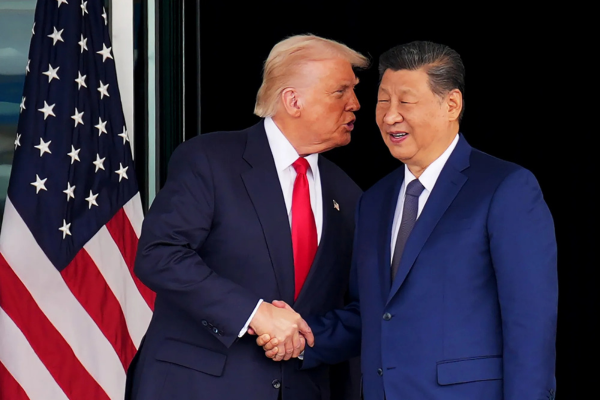
The proposal remains under discussion ahead of talks between President Donald Trump and Chinese President Xi Jinping in Beijing.
Energy And Agriculture Could Benefit
Energy and agriculture are expected to become major parts of the negotiations.
China currently applies extra tariffs on several U.S. exports, including:
- 10% on crude oil,
- 15% on liquefied natural gas,
- 15% on coal,
- and up to 55% on beef.
The United States also maintains tariffs on many Chinese consumer products first introduced during Trump’s earlier trade war.
These include televisions, Bluetooth headphones, printers, footwear, and smart devices.
Some temporary exemptions on industrial and medical imports may also become permanent under the new framework.
Supply Chain Concerns Remain
Even as talks continue, major concerns remain inside Washington. US lawmakers and manufacturing groups are warning against allowing deeper Chinese investment into the American vehicle sector. Industry groups argue this could weaken domestic manufacturing and increase dependence on Chinese production.
The discussions also include a possible “Board of Investment,” though U.S. officials say the idea is still in early stages.
The debate highlights growing pressure on governments and companies trying to balance economic growth with national security concerns.
CEOs From Tesla, Goldman Sachs, And Apple Join Delegation
Business leaders are playing a major role in the Beijing visit. More than a dozen top executives are expected to join the U.S. delegation, including leaders from Tesla, Goldman Sachs, Apple, Boeing, Citi, Visa, Meta, Qualcomm, and BlackRock.
Their presence shows how deeply global companies remain tied to U.S.-China trade despite political tensions.
For investors and multinational firms, the talks could shape future decisions on manufacturing, exports, technology investment, and global supply chains. While the proposed framework may not end the broader trade conflict, it signals that both governments are searching for ways to keep parts of the economic relationship alive without crossing security red lines.
Read also: One American car or five Chinese EVs? The price gap reshaping the global auto industry