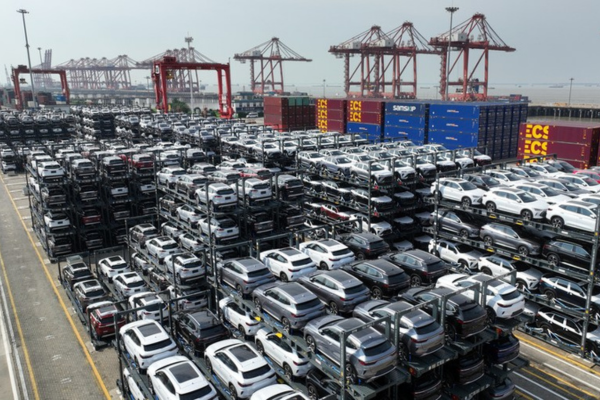
The global electric vehicle race is shifting eastward at a speed many Western automakers feared.
New sales figures covering January to March 2026 show Chinese brands dominating the world’s best-selling EV rankings, raising fresh concerns across the automotive manufacturing industry about pricing power, jobs, and the future of global competition.
Leading the list was Tesla’s Model Y, which sold 242,420 vehicles in the first quarter of the year, according to data compiled by CleanTechnica. Tesla’s Model 3 followed with 99,524 sales.
But beyond Tesla’s strong performance, the rest of the rankings reveal a larger trend: Chinese automakers are rapidly taking control of the global EV market share battle.
Brands including BYD, Geely, Xiaomi, Li Auto, NIO, and AITO filled most of the top 20 positions.
Only Tesla, Toyota, and BMW from the list currently sell vehicles in the United States.
BYD Electric Vehicles Drive Affordable EV Market Expansion
Chinese brands have gained momentum partly because of aggressive pricing and years of government-backed investment.
BYD alone placed multiple models on the global best-seller rankings, including the Song/Seal U, Seagull, Dolphin, Sealion, and Qin Plus.
The BYD Seagull/Dolphin Mini sold 72,932 units during the first three months of 2026, while the BYD Song/Seal U recorded 84,787 sales.
Industry analysts say the rise of Chinese automakers reflects a major shift toward the affordable EV market, where consumers increasingly prioritize price over brand loyalty.
Tesla itself appears to be responding. Reports last month suggested the company was developing a lower-cost SUV in China to compete more directly in the budget EV segment. Globally, BYD has already surpassed Tesla as the world’s largest EV seller.
Tesla Stock and Western Automakers Under Pressure
The rapid growth of Chinese EV makers has triggered warnings from Western automotive leaders.
Executives from Ford and General Motors have previously raised concerns about China’s scale, pricing, and manufacturing efficiency.
John Higham, Vice President of Communications at the Electric Vehicles Association, warned that Western carmakers could face growing pressure as Chinese brands continue expanding internationally.
“The West’s auto manufacturing sector is in trouble,” Higham told Supercar Blondie. “We can tariff them to death, but capitalism will find a way,” he added.
China’s dominance did not happen overnight.
The country first made EV development a national priority in 2001. Between 2009 and 2022, the Chinese government invested roughly $29 billion through subsidies and tax incentives to accelerate electric vehicle growth.
By 2022, China accounted for more than half of global EV sales. That long-term investment is now translating into global market power.
EV Market Share Battle Reshapes Global Auto Industry
The latest rankings highlight how quickly the global EV industry is changing. While Tesla still holds the top two positions, Chinese manufacturers now control most of the remaining leaderboard, particularly in lower-cost segments where demand continues to rise.
The next phase of competition may center less on premium performance and more on affordability, battery supply chains, and manufacturing scale. For Western automakers, the challenge is growing more urgent as Chinese brands continue expanding into markets across South America, Australia, Europe, and parts of Asia.
Whether tariffs and domestic incentives can slow that momentum remains uncertain. But one thing is increasingly clear, he global electric vehicle market is no longer centered solely around Silicon Valley or Detroit and China is now shaping much of the industry’s future.
Read also: From luxury to ‘for parents’: How China turned on German cars