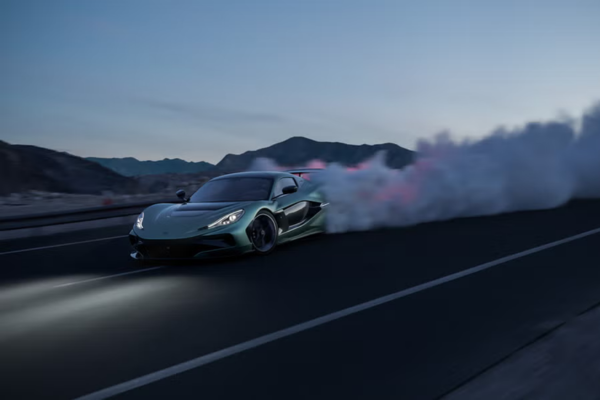
German carmaker Porsche is selling its stake in hypercar maker Bugatti, marking a sharp shift in strategy as falling profits push the company to cut costs and refocus on its core business.
The deal will see Porsche exit its 45% stake in the Bugatti-Rimac joint venture and its 20.6% holding in Rimac Group. The buyer is a consortium led by U.S.-based HOF Capital, with backing from BlueFive Capital and other institutional investors across the United States and Europe.
The move comes at a critical time. Porsche’s profits have taken a severe hit, with margins dropping to just 1.1% last year from 14.1% the year before. The decline has placed pressure on leadership to adopt a stricter asset divestment strategy and free up capital.
Why Porsche is selling: Asset divestment strategy under pressure
Porsche’s decision highlights a broader shift in the luxury automotive market, where even top-tier brands are feeling the squeeze from rising costs, weaker demand in China, and global trade pressures such as U.S. tariffs.
CEO Michael Leiters, who took over earlier this year, is now leading efforts to stabilize the company. Selling high-value but non-core assets is seen as a fast way to improve liquidity and restore investor confidence in Porsche stock (P911_p.DE).
While financial details of the deal were not disclosed, a source familiar with the matter said Bugatti Rimac was valued at over $1 billion, signaling strong continued interest from private equity investment firms in niche luxury brands.
New Owners Bet Big on Luxury and Electric Performance
The consortium led by HOF Capital represents a growing wave of private equity investment into high-end automotive ventures. With $15 billion in assets under management, BlueFive Capital’s involvement underscores the scale of capital now flowing into the sector.
Importantly, BlueFive said its investment targets Bugatti Rimac specifically and does not extend to Rimac’s broader operations. This suggests a focused bet on hypercar branding and performance innovation rather than full-scale electric vehicle production.
Mate Rimac, CEO of Bugatti-Rimac, acknowledged Porsche’s role in building the joint venture but signaled confidence in the new ownership structure, saying it would allow the company to move faster on its long-term plans.
End of an Era for Volkswagen Influence
The sale also marks a symbolic shift. Porsche’s parent, Volkswagen Group, has played a key role in shaping Bugatti since acquiring the brand in 1998. This deal effectively ends that chapter.
For Porsche, however, the focus is clear: survival and recovery. By shedding assets, the company is betting it can regain its footing in a rapidly changing global market.
The bigger question now is whether this is a one-off move, or the start of a wider restructuring across the luxury automotive market.
Read also: $150k stolen porsche recovered but thieves took literally everything
![Toyota RAV 4 [Reuters]](https://autojournal.africa/wp-content/uploads/2026/04/Toyota-RAV-4-Reuters-75x75.png)

![Tesla [Reuters]](https://autojournal.africa/wp-content/uploads/2026/04/Tesla-Reuters-350x250.png)
![Bentley GTA VI delayed [source MarketWatch]](https://autojournal.africa/wp-content/uploads/2025/11/Bentley-GTA-delayed-source-MarketWatch-120x86.png)