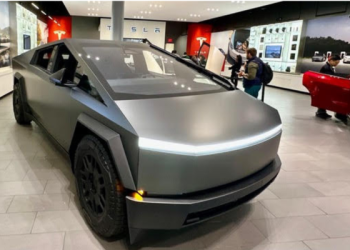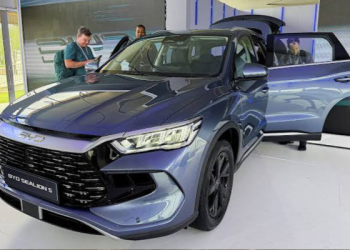

Tesla’s Cybertruck was designed to represent the future of pickup trucks. But its falling sales and planned production wind-down show how difficult that future may be to sell.
The electric vehicle maker plans to dismantle the Cybertruck assembly line around June or July next year, according to Chief Executive Elon Musk.
Musk said Tesla would first increase production at its Austin, Texas, factory to clear an existing order backlog. The company would then use the production capacity to make more Cybercab robotaxis, which have yet to be sold commercially.
The development marks a major setback for Tesla’s ambitions in the electric pickup truck market, where high prices and limited practical capabilities are making it difficult for manufacturers to attract buyers.
Tesla Cybertruck sales fall as demand weakens.
Cybertruck sales fell 28 percent in the first nine months of the year to about 11,600 vehicles, according to estimates from research firm Motor Intelligence.
That is far below the 250,000 trucks Musk once predicted Tesla could sell annually.
The company’s sales figures also come with an unusual detail. SpaceX, Musk’s other major business, bought Cybertrucks worth $131 million from Tesla at list price last year, according to a federal regulatory filing.
Despite its relatively weak sales, the Cybertruck has performed better than electric pickup offerings from some traditional automakers, including General Motors and Ford Motor.
However, the wider market is struggling to turn early excitement about battery-powered trucks into sustained demand.
Why expensive electric pickup trucks are struggling
The biggest challenge is the cost of producing large electric vehicles.
Unlike smaller electric cars, full-size pickups need massive batteries to deliver the power and driving range customers expect. Those batteries add significantly to production costs and retail prices.
General Motors’ Chevrolet Silverado EV, for example, starts at around $62,000.
But the high price does not always translate into the practical benefits expected by traditional pickup buyers.
Electric trucks can struggle with tasks such as towing horse trailers and carrying heavy equipment. These are important functions for customers who use pickups for work.
Karl Brauer, executive analyst at vehicle research site iSeeCars.com, said manufacturers had failed to translate the traditional strengths of pickup trucks into their electric versions.
“So in the end, you have to pay more money for a vehicle that is less functional,” Brauer said.
This creates a difficult challenge for the electric vehicle industry: customers must be convinced that the benefits of going electric justify the higher purchase price and possible loss of functionality.
Ford shifts focus to cheaper electric pickups
Ford has also changed its strategy after demand for its F-150 Lightning electric pickup cooled.
Chief Executive Jim Farley acknowledged the financial challenges during an earnings call last year.
“The larger the vehicle, the bigger the battery, the more pressure on margin because customers will not pay a premium,” Farley said.
The company has since shifted attention towards a smaller electric pickup called the Fathom.
Ford plans to launch the vehicle late next year at a starting price of about $28,000.
The strategy suggests that manufacturers may find better opportunities in smaller, more affordable electric trucks than in expensive full-size models.
Hybrid technology offers another route for automakers
Other manufacturers are also exploring ways to combine electric driving with the practical benefits of conventional engines. Stellantis, which makes Ram trucks, plans to introduce an extended-range electric pickup next year.
The vehicle will use a petrol-powered generator to recharge its battery while driving.
This approach could help address concerns about the range and performance of large electric trucks, particularly when carrying heavy loads.
The changes across Tesla, Ford and Stellantis point to a wider shift in the electric vehicle market.
Automakers are being forced to reconsider vehicle size, battery costs and pricing as they seek products that customers can afford and use for demanding tasks.
For Tesla, the planned Cybertruck production wind-down marks a significant change in its manufacturing priorities.
It also highlights a difficult lesson for the wider automotive industry: building an electric version of a popular vehicle does not guarantee that customers will buy it.
Read also: Tesla to end Cybertruck production in 2027 after years of disappointing sales