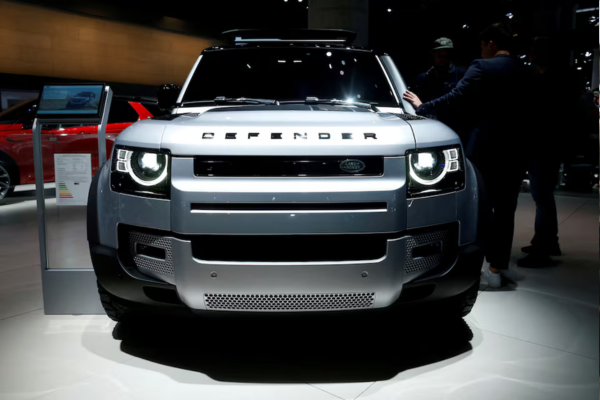
A Chinese SUV designed to compete in the global market has hit a legal roadblock in Europe after a Dutch court ruled that its design infringes on the rights of one of the industry’s most recognisable vehicles.
A district court in The Hague on Friday barred Chinese automaker BYD from selling its Fangchengbao Ti7 SUV across the European Union, following a legal action brought by Jaguar Land Rover (JLR), a unit of India’s Tata Motors.
The ruling adds a new challenge to BYD’s rapid European expansion, as competition between Chinese and established automakers increasingly extends beyond prices, technology and market share to automotive intellectual property.
JLR launched the case earlier this year after BYD announced on its UK website that the seven-seater Ti7 was available for orders, with customer deliveries expected to begin in January 2027.
BYD launched the Fangchengbao Ti7 in China last year.
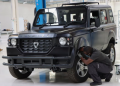
BYD Ti7 and Land Rover Defender design dispute
The Dutch court said the Ti7 infringes on JLR’s European design rights, pointing to similarities between the two vehicles.
“In these summary proceedings, the preliminary relief judge rules that the Ti7 infringes the EU design of Jaguar Land Rover,” the court ruling said. “The characteristic and distinctive elements of the design are reflected in the BYD Ti7.”
Automotive media have highlighted several similarities, including the vehicles’ boxy shape, flat roofs, upright proportions, tailgate styling and squared-off wheel arches.
Both vehicles also feature a solid body-coloured panel behind the rear passenger door.
The Defender is JLR’s best-selling model, with global sales exceeding 100,000 units in 2025.
The injunction will take effect one week after the ruling. The court said BYD currently has no concrete plans to launch the Ti7 in the European Union.
It also barred the company from producing the vehicle at its new factory in Hungary until the intellectual property case is resolved.
The Hungarian plant is expected to begin mass-producing vehicles early next year.
However, the judge ruled that the court had no jurisdiction over BYD’s UK affiliate.
BYD challenges European intellectual property ruling
BYD said it strongly disagreed with the decision and would appeal.
“The BYD Ti 7 is the result of BYD’s own independent design work and infringes none of JLR’s rights,” the company said in a statement.
“We will pursue every legal avenue to demonstrate that this decision is incorrect.”
JLR said it would continue to protect its intellectual property but declined to discuss the ongoing proceedings.
“We protect our intellectual property and take legal action when necessary,” the company said. “Legal proceedings are ongoing, and we won’t be commenting further at this time.”
The case is unusual because major automakers rarely take one another to court over vehicle design rights in Europe. It is also uncommon for an injunction to be issued so early in a case that could take considerable time to resolve.
What the BYD ruling means for Europe’s automotive market
The dispute comes as Chinese automakers gain a larger share of the European market. According to data from the European Automobile Manufacturers’ Association (ACEA), BYD sold more than 280,000 vehicles in Europe through September 2026.
Its sales more than doubled compared with the same period last year, allowing it to outsell Ford, Tesla and Nissan over the period.
BYD began selling vehicles in Europe in late 2022 and has expanded its presence as Chinese manufacturers seek new customers outside their home market.
The ruling also highlights the growing importance of **intellectual property protection** as global carmakers compete across markets.
Established automakers have often accused Chinese manufacturers of copying vehicle designs. However, few such disputes have been proven in court.
In 2005, General Motors and Chinese automaker Chery settled a dispute involving the Chery QQ. GM had claimed the vehicle copied its Chevrolet Spark.
The latest case could have implications for BYD’s plans to expand its European manufacturing footprint, particularly while the Hungarian factory faces restrictions on producing the Ti7.
However, the ruling does not amount to a final judgment on the wider dispute.
For now, BYD faces a legal battle over one of its SUVs at a time when its European sales are growing rapidly.
The outcome could help shape how automotive design rights are enforced as global manufacturers compete for customers in Europe.
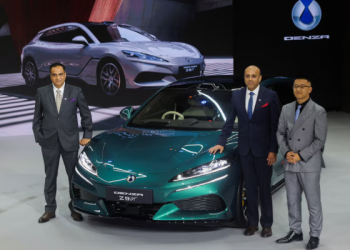
Read also: BYD launches Denza in India with $166,600 Luxury EV, challenging Mercedes, Toyota