The collapse of Canoo is another reminder that bold ideas alone cannot build a successful car company. The American electric vehicle (EV) startup once attracted billions of dollars in market value, secured high-profile customers and promised to transform commercial transport. Yet within eight years of its launch, the company had shut its doors.
Canoo filed for Chapter 7 bankruptcy protection in the United States in January 2025 and immediately ceased operations. The filing marked the end of a company that had once been viewed as one of the most promising EV startups in North America.
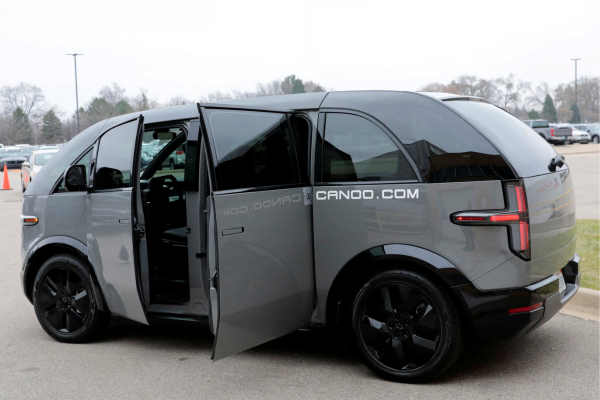
Founded in 2017, Canoo set out to build a new generation of electric vans, delivery vehicles and lifestyle vehicles using a modular skateboard platform. Its futuristic designs quickly attracted attention from investors and fleet operators looking for cleaner transport solutions.
Investor confidence peaked in 2020 when Canoo went public through a Special Purpose Acquisition Company (SPAC) merger. The deal valued the company at around US$2.4 billion, making it one of the fastest-rising names in the booming EV sector.
The company also secured partnerships that many startups could only dream of. Retail giant Walmart agreed to purchase 4,500 electric delivery vehicles, with an option to increase the order to 10,000 units. NASA selected Canoo to supply crew transport vehicles for its Artemis moon missions, while the United States Postal Service also placed a small order for electric vans.
Despite these achievements, Canoo struggled to turn ambition into production.
Vehicle launches were repeatedly delayed. Manufacturing plans changed several times, moving from California to Oklahoma, Arkansas and later Texas. Each change increased costs and slowed progress toward mass production.
Leadership instability added to the uncertainty. Several senior executives and company founders departed over the years, while strategic changes created confusion among investors and employees. The company also faced regulatory scrutiny and shareholder lawsuits following its public listing.
Cash soon became Canoo’s biggest problem.
Although the company announced thousands of vehicle orders, only a small number of vehicles were actually delivered. Revenue remained extremely low while operating expenses continued to rise. In 2023, Canoo delivered just 22 vehicles, highlighting the enormous gap between customer commitments and manufacturing reality.
Throughout 2024, the company’s financial position deteriorated further. It furloughed employees, paused factory operations in Oklahoma and searched urgently for new investment. Management also attempted to secure funding from the US Department of Energy and overseas investors, but those efforts failed.
By January 2025, the business had reached breaking point.
Canoo filed for Chapter 7 bankruptcy, a process that requires a company to liquidate its assets rather than restructure its debts. Court documents estimated the company’s assets at around US$126 million, while liabilities exceeded US$164 million.
Chief Executive Tony Aquila thanked employees, customers and partners, including Walmart, NASA and the US Department of Defense. He admitted the company had exhausted every realistic option to secure fresh funding before making the difficult decision to shut down.
For the automotive industry, Canoo’s failure is another warning that the electric vehicle business remains one of the toughest sectors to succeed in.
Developing new vehicles requires billions of dollars, years of engineering and the ability to manufacture at scale. Winning customer orders is only one part of the challenge. Delivering vehicles consistently and managing cash flow are equally important.
Canoo joins a growing list of EV startups that struggled after listing during the SPAC investment boom. While investor enthusiasm fuelled rapid growth during the early years, rising interest rates, slowing EV demand and tighter access to funding exposed weaknesses across many young manufacturers.
What Went Wrong?
Canoo’s downfall offers several important lessons for investors, entrepreneurs and the wider automotive industry:
Strong product ideas cannot replace sustainable financing.
Major customer contracts mean little without the ability to manufacture at scale.
Constant leadership changes can weaken investor confidence.
Cash flow is often more important than market valuation.
Scaling an automotive business requires operational discipline as much as innovation.
Canoo’s story began with bold ambitions to reshape urban mobility. It ended with bankruptcy, reminding the industry that in the automotive world, execution—not vision alone—determines long-term success.