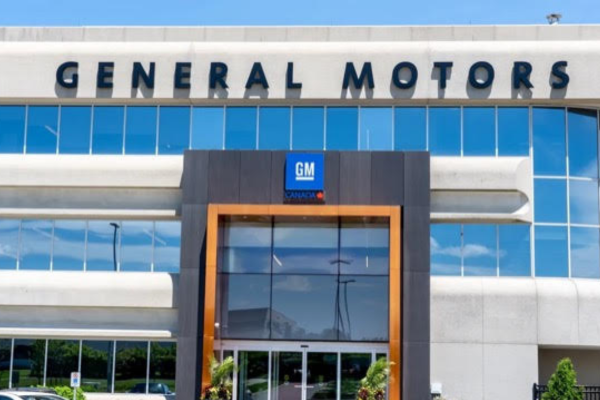
General Motors is facing mounting pressure to expand its hybrid vehicle range as American drivers increasingly seek fuel-efficient alternatives to traditional petrol-powered cars.
With fuel prices remaining stubbornly high, many consumers are choosing hybrids over fully electric vehicles. Dealers say the growing demand is exposing a major gap in GM’s product line-up, potentially driving customers into rival showrooms.
Industry data shows hybrid vehicles accounted for 19% of all US retail vehicle sales in August 2026, up from around 16% before the conflict that began in February 2026. Earlier in May, hybrids reached 20% of total sales, highlighting the continued strength of the segment.
The shift reflects changing consumer priorities. Many motorists want to reduce fuel costs without worrying about charging infrastructure or changing their driving habits. Hybrids offer improved fuel economy while retaining the convenience of a conventional petrol engine.
Dealers say this trend is becoming impossible to ignore.
Bill Wallace, who owns 16 dealerships across Florida, said customers are asking for hybrid vehicles more frequently as petrol prices continue to rise.
At his Hyundai, Kia and Mazda dealerships, sales teams can offer multiple hybrid options across different price ranges. However, at his General Motors dealerships, the only hybrid currently available is the Chevrolet Corvette hybrid sports car, leaving many everyday buyers without suitable alternatives.
That limited offering is becoming increasingly noticeable as competitors rapidly expand their hybrid portfolios.
According to industry research cited by The Detroit News, hybrid vehicles were sold more than twice as quickly as conventional petrol-powered vehicles during the second quarter of 2026.
The figures suggest consumer demand is no longer limited to environmentally conscious buyers. Instead, affordability and lower running costs are becoming the main drivers behind purchasing decisions.
General Motors has long maintained that battery electric vehicles represent the future of transportation.
Speaking at a Barclays investor conference in 2019, Chief Executive Mary Barra described hybrids as an “interim solution”, adding that customers were generally not interested in the technology.
That strategy placed GM firmly behind an all-electric future while several competitors invested heavily in hybrid technology.
Toyota, Honda and Nissan continued developing hybrid systems across their most popular models, particularly compact SUVs, which remain among America’s biggest-selling vehicle segments.
The strategy now appears to be paying dividends.
Toyota says electrified vehicles—including hybrids, plug-in hybrids and battery electric vehicles—represented more than half of its US sales during the first half of 2026.
Honda and Nissan have also expanded their hybrid offerings, particularly in family SUVs where demand continues to grow.
In comparison, General Motors still sells petrol-only versions of popular compact SUVs such as the Chevrolet Trax and Buick Envista, while competitors offer hybrid alternatives including the Toyota RAV4 Hybrid and Honda CR-V Hybrid.
Industry analysts believe hybrid technology has now become a mainstream expectation rather than a temporary trend.
Srini Rajagopalan, Vice President for OEM Customer Success at JD Power, said nearly every major manufacturer is introducing hybrids within this highly competitive market segment.
“This is becoming a little bit more than just a phase or a fad,” he said.
The changing market is also reflected in sales performance.
General Motors’ share of the US market declined from 17.6% during the first half of 2025 to 16.8% during the same period in 2026, while Toyota and Honda both recorded gains.
Dealers argue that buyers increasingly want vehicles capable of reducing fuel consumption without requiring a complete transition to battery electric vehicles.
David Ferraez, a General Motors dealer in New Jersey, said customers are actively requesting hybrid models and hopes the company responds by expanding its product range.
The company has already begun adjusting its position.
In late 2024, Mary Barra announced GM planned to introduce plug-in hybrid models for North America by 2027. More recently, speaking to Fortune in September 2026, she confirmed hybrids would be added to key vehicle segments, although no launch timetable was announced.
Meanwhile, rivals continue moving quickly.
Nissan recently accelerated the launch of its next-generation hybrid Rogue SUV, saying the decision was made in response to growing consumer demand.
The coming years are likely to determine whether General Motors’ long-term electric vehicle strategy can coexist with a market that is increasingly embracing hybrid technology.
For now, dealers believe many customers are looking for a practical middle ground—one that combines lower fuel bills with the familiarity of conventional motoring.
Read also: General Motors, Toyota’s sales tank as high prices and oil crisis keep buyers away