A new electric vehicle developed with support from BMW could reshape how people think about charging. The lightweight prototype is designed to harvest more solar energy during a typical day than it consumes while driving. If the technology reaches production in the future, it could significantly reduce the need for frequent charging and lower running costs for everyday drivers.
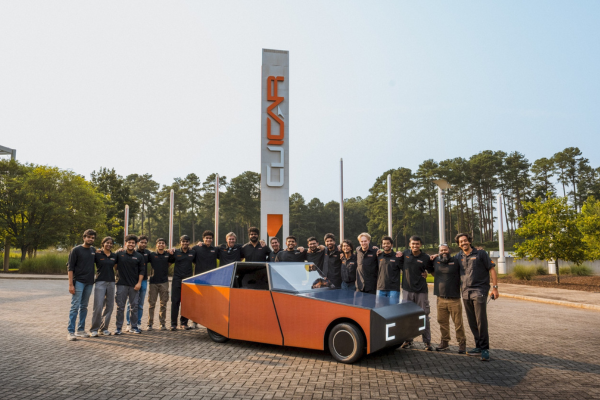
The vehicle, known as Deep Orange 17 or Luminetta, was created by engineering students at Clemson University through the institution’s long-standing partnership with BMW. The project challenged students to design an electric vehicle capable of producing more energy over an average day’s driving than it used.
BMW gave the challenge to the student team in 2024. Their answer was an ultra-light electric coupe weighing just 1,212 pounds (about 550 kilograms)—less than half the weight of many modern electric vehicles.
Keeping the vehicle so light required an innovative approach to construction. The team combined steel, aluminium, carbon-fibre components and 3D-printed metal joints to reduce weight without compromising structural integrity.
The name Luminetta reflects the vehicle’s advanced solar technology and pays tribute to BMW’s design heritage. However, the project’s biggest breakthrough lies beneath its striking appearance.
The body of the concept car is covered with more than 1,700 photovoltaic (solar) cells integrated into its exterior panels. These solar cells continuously collect energy whenever the vehicle is exposed to sunlight.
Engineers also focused on improving every aspect of the vehicle’s efficiency. They refined the drivetrain controls, regenerative braking system, torque distribution and power electronics to minimise energy losses during driving.
To understand how the vehicle would perform in different climates, Clemson researchers simulated weather and sunlight conditions in Frankfurt, Madrid, Mumbai, and areas near Greenville, South Carolina.
Using a typical 12-mile (19-kilometre) daily commute as a benchmark, the team found that the vehicle could generate enough solar energy to provide an average of 31 additional miles (50 kilometres) of driving range across those locations.
In practical terms, the vehicle could complete its daily journey and still end the day with surplus energy stored in its battery. That would represent a significant step forward in improving electric vehicle efficiency.
While solar-powered cars have long remained experimental, Deep Orange 17 demonstrates how combining lightweight engineering with integrated solar technology can dramatically improve energy performance.
The concept also highlights another important advantage of electric vehicles. Electricity generally costs less than petrol or diesel, while EVs require fewer routine maintenance services because they have fewer moving parts and do not need regular oil changes.
BMW has made it clear that Deep Orange 17 is not intended for mass production. Replicating its extremely low weight and specialised construction while meeting modern safety standards, comfort expectations and manufacturing costs would be difficult.
However, many of the technologies tested during the project could influence future production vehicles. Better solar integration, lighter construction methods and smarter energy-management software could help future EVs travel farther, consume less energy and rely less on public charging infrastructure.
Although the prototype may never appear in showrooms, it serves an important purpose. Automotive concept vehicles often act as laboratories where manufacturers test ideas that later become standard features in production models.
As global demand for cleaner and more affordable transport continues to grow, projects like Deep Orange 17 show how innovation in solar technology and vehicle efficiency could shape the next generation of electric mobility.
Read also: BMW and Rover: How a rescue deal became the end of the road