When BMW bought Rover in 1994, many people hoped it would save one of Britain’s most famous carmakers.
The deal looked bold, ambitious and full of promise. BMW paid about £800m to buy Rover Group from British Aerospace. It gained Rover, MG, Mini and Land Rover.
For Britain, the takeover offered hope. Thousands of jobs depended on Rover’s factories at Longbridge, Cowley and Solihull. Many families saw the German investment as a lifeline.
For BMW, Rover offered something it did not have. It gave the company access to small cars, family cars, off-road vehicles and famous British brands.
But six years later, the dream had collapsed. BMW broke up Rover in 2000. Land Rover was sold to Ford, Mini stayed with BMW, and the rest became MG Rover.
It was one of the most painful chapters in modern British motoring.
A company already carrying old wounds
Rover’s problems did not begin with BMW. The company had carried decades of damage from the British Leyland era. Poor quality, weak productivity, underinvestment and confused management had hurt the brand badly.
In the 1970s and 1980s, many British Leyland cars developed a poor reputation. Cars such as the Austin Allegro, Maestro and Montego became symbols of a wider industrial decline.
That image mattered. Buyers lost confidence. Dealers struggled. The Rover name, once linked with quality British engineering, became harder to defend.
Yet Rover was not dead. By the late 1980s and early 1990s, the company was showing signs of recovery. Under Graham Day, Rover moved away from the troubled Austin name and pushed itself upmarket.
The company also benefited from its partnership with Honda. This helped Rover build better cars at lower development cost. Models such as the Rover 200 and Rover 600 gave the brand fresh credibility. They were not perfect, but they showed that Rover could still make desirable cars.
Honda helped Rover survive. The Honda partnership was one of Rover’s greatest strengths.
It gave Rover access to proven Japanese engineering at a time when the company could not afford to develop everything alone. The result was a range of better-built cars with a more premium British feel.
The Rover 200 became a major success. Nearly one million examples were built between 1989 and 1998. At its peak, the model helped Rover compete strongly against Ford and Vauxhall.
The Rover 600 also gave the company a stylish executive car. It combined Honda engineering with Rover design and comfort. This was the formula that gave Rover a second chance. But it also created a dangerous dependency.
When BMW arrived, Honda’s role changed. The Japanese firm was no longer a friendly partner helping a British company survive. It became a former partner protecting its own interests.
Royalty payments on Honda-based cars hit Rover’s finances. BMW had bought a business that needed new models, but still depended on old agreements.
Land Rover was moving in the right direction
While Rover cars struggled, Land Rover was becoming stronger. In 1986, Land Rover produced just over 35,000 vehicles. By 1994, output had grown to nearly 95,000 vehicles.
The rise of SUVs and 4x4s changed everything. Customers wanted more space, a higher driving position and more lifestyle appeal.
Land Rover was perfectly placed for that shift. The Range Rover had already moved upmarket. The Discovery, launched in 1989, widened the brand’s appeal. The Freelander, launched in 1997, brought Land Rover into a growing compact SUV market.
This was the part of Rover Group that had a clear future. In hindsight, Land Rover was the jewel BMW had bought almost by accident. Rover cars needed rescue. Land Rover needed investment and room to grow.
BMW’s strategy looked good on paper and plan made sense in theory. It wanted to keep Rover separate from BMW. This would allow BMW to stay premium while Rover covered smaller and more mainstream segments.
Mini would become a modern small premium car. Land Rover would continue as a luxury off-road brand. Rover would sit below BMW as a British executive and family car brand.
But the plan was much harder in practice. BMW and Rover both carried executive-car identities. That created overlap. BMW was never likely to fund a Rover model that competed directly with its own 3 Series or 5 Series.
The result was confusion. Rover needed freedom to rebuild. BMW needed to protect its own brand. Those two aims were never fully aligned.
The Rover 75 was beautiful, but risky
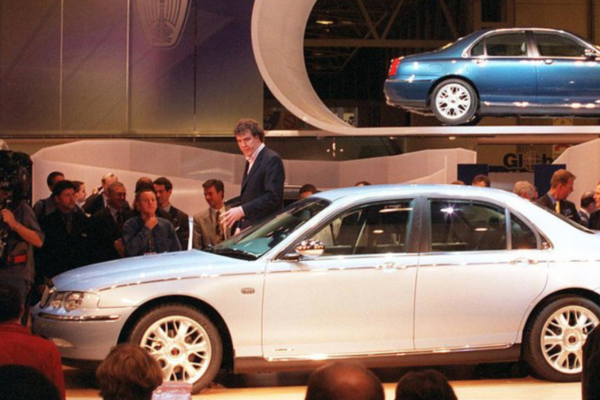
The Rover 75 was the only major BMW-funded Rover car to reach production before the break-up. It was launched in 1998 and went on sale in 1999. Many reviewers praised its comfort, engineering and refinement.
But the car also showed BMW’s misunderstanding of Rover’s market. The 75 leaned heavily on retro styling. It looked back to Rover’s past, rather than forward to a new future. For some buyers, that was charming. For others, it made the car feel old before its time.
The car was also positioned awkwardly. It was meant to sit below BMW’s own executive models, but that limited its appeal.
Rover needed a bold modern car to win new customers. Instead, it received a carefully engineered car that seemed to speak mainly to older loyalists.
The timing was also difficult. Sterling was strong, exports were under pressure, and Rover’s problems were being discussed publicly. Confidence fell. Sales suffered. A car that should have renewed the brand became part of the crisis.
Longbridge became the centre of the storm
The most emotional part of the story was Longbridge. For generations, the Birmingham plant had been a symbol of British carmaking. It built Austins, Minis, Metros and Rovers. It supported thousands of workers and many more supplier jobs.
BMW said Longbridge needed major change. It wanted cost cuts, higher productivity, government support and more flexible working practices. Unions did agree to changes. Workers were not the old stereotype of British Leyland militancy. Many were ready to fight for the plant’s survival.
But the public battle damaged Rover deeply. BMW asked the UK government for support. The government offered aid, but not enough to settle the company’s concerns. The dispute played out under intense media pressure.
That was damaging. Car buyers do not like uncertainty. When they hear a brand may be in trouble, they often walk away.
Rover’s sales weakened further. Losses mounted. By 2000, the company was reportedly losing about £2m a day.
BMW walks away
In March 2000, BMW decided to break up Rover Group. Land Rover was sold to Ford for about £1.85bn. BMW kept Mini, Plant Oxford, the Swindon pressings plant and the Hams Hall engine plant.
The remaining Rover and MG business went to the Phoenix Consortium for a symbolic price. It was renamed MG Rover.
At first, many people celebrated the rescue of Longbridge. There was national pride in seeing British managers take control.
But the business still lacked enough new products, investment and scale.
MG Rover collapsed in 2005. Thousands of jobs were lost. Longbridge, once one of Britain’s great industrial sites, became a symbol of a painful decline.
MINI survived and became the great irony
The biggest irony is that BMW’s most successful Rover-era project was MINI.
The new MINI was launched in 2001 and built at Plant Oxford. It turned British heritage into a global premium product.
BMW understood what the Mini could become. It was not treated as a cheap economy car. It became a fashionable, fun and profitable small car.
That decision helped secure thousands of jobs in Oxford.
But it also deepened the sadness around Rover. BMW proved it could make a British brand work when the positioning was clear.
MINI had a future because BMW knew what it wanted it to be. Rover did not.
What went wrong?
The Rover story was not caused by one mistake. British Leyland damaged the company’s reputation for years. British Aerospace failed to give Rover enough long-term investment. Honda helped Rover survive, but its departure left Rover exposed.
BMW invested heavily, but expected results too quickly. It underestimated the complexity of the company it had bought.
The German group also allowed Rover’s problems to become too public. That hurt consumer confidence at the worst possible time.
There was also a deeper strategic problem. Rover needed a clear identity for the 21st century. It never got one.
Was it a premium British alternative to Ford and Vauxhall? Was it a cheaper BMW? Was it a heritage brand? Was it a family-car maker?
The market never received a convincing answer.
The lesson for today’s car industry
The BMW-Rover story still matters today. Car companies are again facing huge change. Electric vehicles, software, Chinese competition, new supply chains and factory restructuring are reshaping the industry.
The lesson is clear. Buying a famous brand is not enough. Heritage cannot replace investment, focus and speed. Workers also need more than promises. They need a product plan that gives factories a future.
Rover had talent, loyalty and history. Land Rover had market momentum. Mini had emotional power. But Rover cars lacked the clear strategy needed to survive.
In the end, BMW did not kill Rover alone. But BMW was the owner when the final damage was done.
The tragedy is that parts of the business proved highly valuable after the break-up.
Land Rover became a global luxury SUV force. MINI became a modern premium success story. But the Rover name disappeared from Britain’s roads as a living car brand.
That is why the BMW-Rover saga remains more than a failed takeover. It is a warning about leadership, timing and brand identity.
And for thousands of workers at Longbridge, it was not just a business case. It was the end of the road.
Read also: BMW could lose up to 7,700 jobs after third profit warning in three years