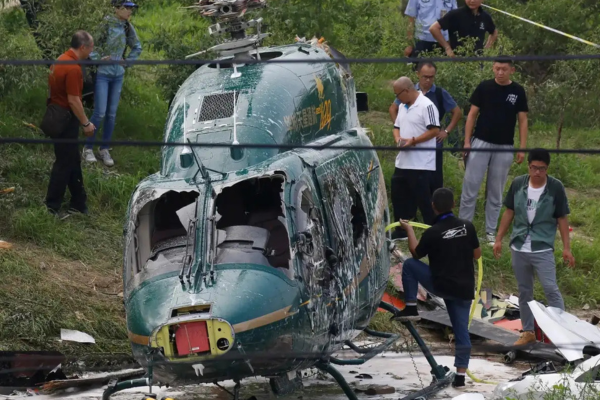
A helicopter owned by Saudi Aramco, the world’s largest oil company, crashed in eastern Saudi Arabia on Sunday, killing all 14 people on board, the company said.
The accident happened at about 6 a.m. local time in Ras Tanura, a key hub for Saudi Arabia’s oil industry. Aramco said all those killed were Saudi nationals.
The company did not provide details on what caused the crash. Local media reported that an investigation has begun.
The incident comes at a sensitive time for Saudi Arabia’s energy sector, which has been under pressure from regional conflict and disruptions to global oil flows.
Saudi Aramco and Energy Infrastructure Under Scrutiny
Ras Tanura is home to one of the Middle East’s largest refineries, capable of processing around 550,000 barrels of oil per day. The facility plays a major role in Saudi Arabia’s energy network and export operations.
The refinery has previously been targeted during attacks linked to regional tensions. Earlier strikes caused fires and disrupted some operations, according to Saudi authorities.
Saudi Arabia reported in April that attacks had affected production activities at facilities in Ras Tanura, Jubail, Yanbu and Riyadh.
Oil Supply Chain and Strait of Hormuz Concerns
The crash occurred as Gulf nations work to increase production following disruptions linked to attacks in the region and instability around the Strait of Hormuz, one of the world’s most important routes for crude oil exports.
Saudi Arabia produces slightly more than 10 million barrels of oil per day and remains the world’s largest crude exporter.
Aramco recently redirected part of its exports through pipelines to reduce dependence on the Strait of Hormuz during the conflict.
On Friday, the company announced that crude loading operations had resumed at the Ras Tanura export terminal after months of disruption.
Saudi officials said there was no indication that Sunday’s helicopter crash was connected to a hostile attack. Investigators are working to determine the cause.
Read also: Four plane crashes in four days raise questions about US aviation safety