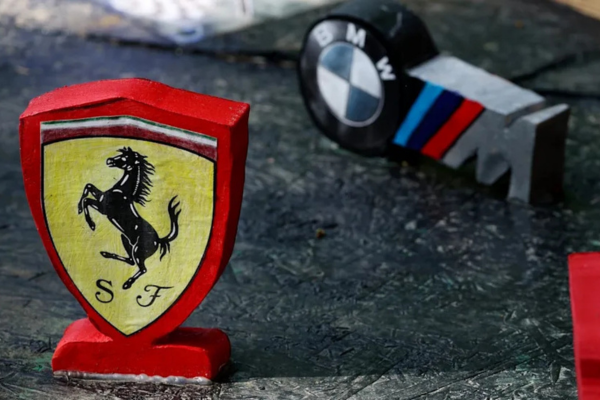
Ferrari and BMW are accelerating a growing industry shift away from copper wiring, joining Tesla (TSLA) and several Chinese Electric Vehicle (EV) manufacturers in adopting cheaper and lighter aluminium alternatives.
The move reflects mounting pressure from rising Copper Demand, supply shortages, and growing consumption from renewable energy projects and Data Centres, according to a Reuters report.
Industry analysts say the trend could reshape global metals markets over the coming decade.
Aluminium Gains Ground in Electric Vehicles
Ferrari said it began using aluminium power cables in its 296 hybrid sports car last year and has since expanded the technology into other vehicles, including the Luce, its first fully electric vehicle launched recently.
According to Ferrari communications executive Dario Esposito, the switch can reduce total wiring weight by as much as 20%.
“We are not choosing aluminium because it’s cheaper, we choose the material that has better performance,” Esposito told Reuters.
BMW said it first introduced aluminium conductors in 2011 and now uses significant amounts of aluminium cables in both high- and low-voltage systems across its latest eDrive electric vehicle platform.
Rising Copper Prices Drive Industry Change
Copper prices surged to nearly $15,000 per metric ton earlier this year, strengthening the business case for aluminium. Aluminium currently trades at roughly $3,100 per ton, making it about one-quarter the price of copper.
Analysts note that forecasts show global copper supply trailing demand for more than a decade, largely because of energy transition projects and expanding digital infrastructure.
A recent JPMorgan Forecast estimates aluminium substitution will affect about 2% of global copper demand this year and could rise to approximately 6% by 2030.
China Leads the Transition
China has become a major driver of aluminium adoption.
Government policy released in 2025 encouraged manufacturers to replace copper with aluminium where practical. Chinese EV makers including XPeng, Xiaomi, and AVATR have already adopted aluminium wiring in various vehicle components.
Consultancy Zhuochuang estimates that between 25% and 30% of copper-based components in the power, automotive, and home-appliance sectors could switch to aluminium by 2030.
Despite the momentum, experts caution that aluminium remains less efficient than copper and requires larger volumes to carry the same amount of electricity. Higher energy requirements for aluminium production also raise environmental concerns.
Still, with costs under pressure and EV competition intensifying, aluminium appears set to play a growing role in the future of automotive manufacturing.
Read also: Why Chinese EVs are winning in Europe despite 45% tariffs









![Petrol Station in South Africa [source BBC]](https://autojournal.africa/wp-content/uploads/2025/10/Petrol-Station-in-South-Africa-source-BBC-120x86.png)