Waymo’s $220 million purchase of an Apple-linked test facility in Arizona is more than a property deal. It is a signal that the robotaxi race is entering a tougher and more expensive phase.
For readers, businesses, investors and policymakers, the message is clear. The future of mobility will not be decided by car design alone. It will be decided by software, safety data, testing capacity, regulation, infrastructure and the ability to scale.
The Alphabet-owned self-driving company has acquired a 5,500-acre proving ground in Wittmann, Arizona. The site had been linked to Apple’s abandoned vehicle programme, known as Project Titan.
The deal was recorded in early June and gives Waymo one of the most advanced controlled testing environments in the autonomous vehicle industry. The facility includes a mock city, a vehicle dynamics course, a four-mile oval track and a freeway section built for self-driving trials.
That matters because robotaxis cannot be tested like ordinary cars. They must be trained to handle confusing, dangerous and unpredictable situations before they meet passengers on public roads.
A closed test site allows engineers to recreate difficult scenarios again and again. These may include emergency braking, pedestrians crossing unexpectedly, road works, poor visibility, high-speed merging, standing water and unusual driver behaviour.
Waymo said the facility will help it simulate driving scenarios in a controlled environment. It will also support rider-only testing, motion control testing, operational training and future expansion.
The purchase also carries symbolic weight. Apple bought the site in 2021 for about $125 million after using it for years. The company later cancelled its long-running car project in 2024 after spending billions of dollars on the effort.
That contrast tells a bigger story about the automotive industry. Some technology companies discovered that building cars is brutally difficult. Others, including Waymo, are still betting that autonomous mobility can become a real transport business.
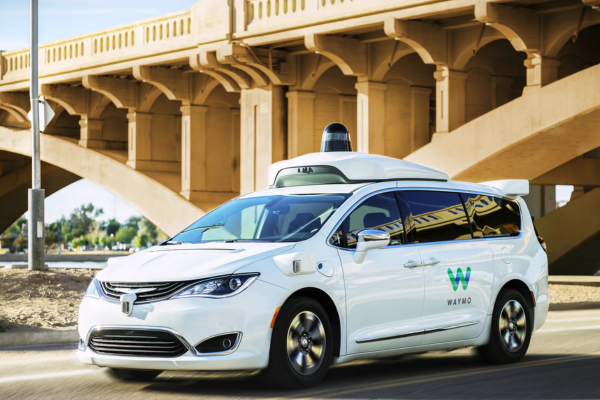
Waymo is already one of the most advanced robotaxi companies in the world. Its fleet is now close to 4,000 vehicles, and its service operates in more than 10 US cities, including Phoenix, Los Angeles, the San Francisco Bay Area, Austin and Atlanta.
The company is also preparing for a much larger fleet. It has said it wants to produce tens of thousands of robotaxis a year, using vehicles including the Zeekr-built van and Hyundai Ioniq 5.
This shows how the robotaxi industry is now tied to the wider electric vehicle market. Driverless fleets are expected to depend heavily on electric vehicles because they offer lower running costs, simpler maintenance and better software integration.
But the road ahead is still difficult. Autonomous vehicles remain under heavy safety scrutiny from regulators and the public. In May 2026, Waymo recalled thousands of automated driving systems after a software issue could allow vehicles to enter standing water on higher-speed roads.
The issue shows why controlled testing is becoming so important. Robotaxis must prove they can handle rare and dangerous situations, not just normal city traffic.
Waymo has published safety data showing fewer serious injury crashes and fewer injury-causing crashes than human-driver benchmarks in its operating areas. However, the industry still faces public concern whenever driverless vehicles make mistakes.
That is the central challenge. Robotaxis must be safer than human drivers, but they must also be trusted by everyday passengers, city authorities, insurers and emergency services.
The deal also comes at a time when the global automotive industry is being reshaped by electrification, software and China’s manufacturing rise. Global vehicle production rose to 96.4 million units in 2025, while global vehicle sales reached 99.8 million units.
Electric vehicles are now a central part of that change. Global electric car sales exceeded 20 million in 2025, representing about one-quarter of all car sales worldwide.
China remains the strongest force in this transition. It has become the world’s largest car exporter and is now a dominant player in electric vehicles, batteries and affordable connected cars.
That matters for Waymo because its next-generation robotaxi platform includes vehicles built by Zeekr, a Chinese brand under Geely. It also shows how global mobility is becoming more connected across software, batteries, vehicle platforms and supply chains.
The robotaxi race is no longer only a Silicon Valley story. Chinese companies such as Baidu, Pony.ai and WeRide are expanding their autonomous vehicle ambitions in China, Europe and the Middle East.
For Africa, this development may feel distant, but the lesson is important. The continent may not be ready for large-scale robotaxis today, but it must prepare for software-defined mobility.
African cities need better road data, clearer regulation, digital mapping, traffic management, insurance rules and charging infrastructure. Without those foundations, future mobility technologies will arrive slowly, expensively or in poorly adapted forms.
Africa’s current mobility economy is still heavily shaped by affordability and used vehicle imports. Many countries depend on imported used cars, while consumers struggle with vehicle financing, fuel costs, spare parts and maintenance.
This is why electric mobility in Africa is likely to grow first through practical segments. Motorcycles, buses, delivery fleets, hybrids, CNG vehicles and locally assembled models may move faster than private electric cars.
Recent investment in African electric mobility shows that change is already underway. Battery-swapping companies, solar-powered charging networks and local assembly plans are beginning to attract serious capital.
South Africa is also becoming an important testing ground for new energy vehicles. Chinese automakers are using the market to introduce hybrids, plug-in hybrids and electric models while studying local assembly options.
The Waymo deal should therefore be read as a warning and an opportunity. Mobility is becoming a technology business, not just a vehicle business.
For African policymakers, the priority should be readiness. That means building rules for connected vehicles, supporting local assembly, improving road infrastructure, developing charging corridors and encouraging cleaner fleet operations.
For investors, the opportunity is not only in cars. It is in charging, battery swapping, fleet management, diagnostics, repair training, mapping, financing and data services.
For automakers and dealers, the message is also clear. The next generation of vehicles will be judged by software performance, safety updates, ownership cost and aftersales support, not only by engine size or design.
Waymo’s Arizona purchase does not mean robotaxis will take over the world overnight. The technology still faces cost, regulation, safety, weather and profitability challenges.
But it does show that the companies still in the race are preparing for scale. They are buying land, collecting data, improving software and building the industrial systems needed to support driverless fleets.
The next phase will be about trust. The winners will not simply be the companies with the best prototype. They will be the ones that can make autonomous mobility safe, affordable, reliable and acceptable to cities.
For Africa, the bigger question is not whether robotaxis arrive tomorrow. It is whether the continent will build the policies, infrastructure and businesses needed for the next mobility era before it arrives.
Read also: Waymo expands self-driving taxis to more neighborhoods in California
![Tesla [Reuters]](https://autojournal.africa/wp-content/uploads/2026/04/Tesla-Reuters-350x250.png)


![plane crash [CNN]](https://autojournal.africa/wp-content/uploads/2026/06/plane-crash-CNN-75x75.png)