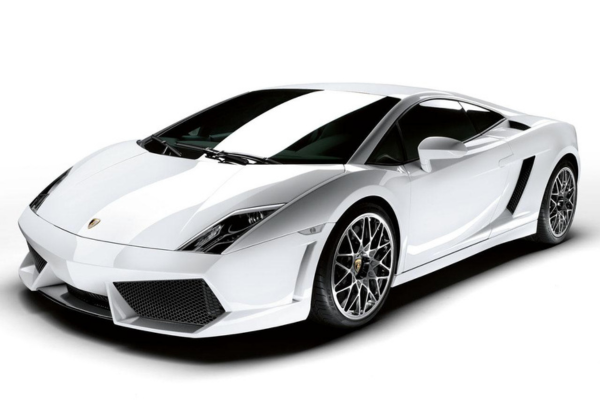
Lamborghini has confirmed it has no plans to introduce a manual gearbox, reinforcing its commitment to hybrid technology and racing-inspired engineering instead.
The decision means buyers hoping to see Lamborghini follow Ferrari’s recent manual-inspired transmission strategy will have to wait much longer, if it ever happens. Instead, the Italian supercar maker says its future will continue to be shaped by technologies developed for motorsport.
The announcement comes just days after Ferrari introduced the 12Cilindri Manuale, a V12 grand tourer featuring a new “Manuale-by-Wire” system. The technology recreates the experience of driving a traditional manual transmission while retaining the speed and efficiency of a dual-clutch automatic gearbox.
Ferrari’s move generated excitement among driving enthusiasts who miss the involvement of manual gear changes. It also raised questions about whether rival brands, including Lamborghini, would introduce similar technology.
However, Lamborghini has made its position clear.
Speaking during the Goodwood Festival of Speed, Lamborghini’s Chief Marketing and Sales Officer, Federico Foschini, said the company recognises that some customers still appreciate manual driving experiences. Even so, he believes the market has largely moved in a different direction.
“There are a few customers that are still in love with this kind of stuff,” Foschini said. “It’s an opportunity, but it’s not the trend.”
He explained that Lamborghini believes today’s high-performance driving experience is better delivered through advanced automatic transmissions rather than manual gear changes.
The company’s engineering philosophy is closely linked to its motorsport activities. Technologies developed for Lamborghini’s racing programmes often influence its production vehicles, making paddle-shift transmissions and hybrid powertrains a natural fit for future models.
This strategy is already visible across Lamborghini’s latest lineup.
The company has accelerated its electrification programme in recent years, introducing hybrid technology into key models as it works towards reducing emissions while maintaining the extreme performance expected from the brand.
For Lamborghini, hybrid systems are not simply about meeting environmental regulations. They are also designed to deliver quicker acceleration, improved efficiency and instant torque without compromising driving excitement.
That approach differs from Ferrari’s latest effort to recreate the emotional appeal of traditional manual driving through modern electronics.
While Lamborghini has ruled out a manual transmission, it has hinted at expanding another popular concept.
The company says it is open to building more Sterrato models following the success of the Huracán Sterrato, an unconventional off-road-inspired supercar launched near the end of the Huracán’s production life.
The model combined increased ground clearance, all-wheel drive and rugged all-terrain tyres, proving that even exotic supercars could appeal to customers looking for adventure beyond smooth racetracks.
Although Foschini stopped short of confirming a new Sterrato, he suggested that the recently introduced Temerario could be an ideal candidate.
The Temerario replaces the Huracán and features a newly developed hybrid V8 powertrain, making it one of Lamborghini’s most technologically advanced supercars to date.
Its hybrid architecture and performance capabilities could provide the perfect foundation for another high-riding performance model designed to tackle rougher terrain.
For now, Lamborghini’s message is clear. The company sees its future in electrified performance, advanced automatic transmissions and racing-derived technology—not in reviving the traditional manual gearbox.
As the supercar industry continues its transition towards electrification, Lamborghini believes innovation, rather than nostalgia, will define the next generation of high-performance vehicles.
Read also: Why Lamborghini rebuilt Florida Man’s Aventador after losing it to shipping disaster