As governments try to keep promises to cut carbon emissions and use of fossil fuels, many automakers are looking for other ways to power cars and other vehicles.
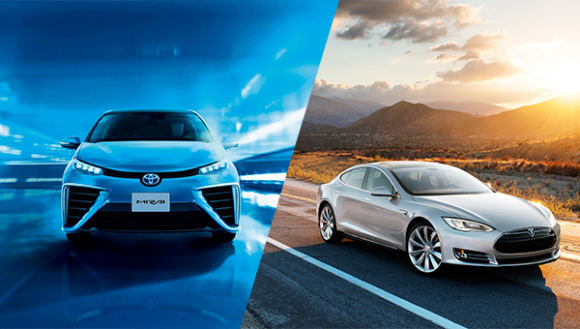
This includes making electric cars and cars that run on hydrogen fuel cells.
An electric vehicle gets its power from a battery that stores electricity and needs to be charged when it runs out. On the other hand, a hydrogen car gets its power from hydrogen fuel. Even though this technology is being looked into for rockets and other forms of transportation, it seems like it will have the most effect on cars in the future.
Here, we’ll look at the most important differences between hydrogen and electric cars, including range, emissions, charging time, safety, and cost .
1. Range
For electric cars, the range depends a lot on which vehicle you buy. The more expensive cars, like the Tesla Model S Long Range, have a range of 375 miles, while the less expensive Nissan Leaf Acenta only goes 150 miles.
Hydrogen fuel cell vehicles have longer ranges and can be refuelled faster. The Hyundai Nexo, for example, can go 414 miles and only takes five minutes to fill up, while it can take hours to charge an electric vehicle.
2.
Charging/Refuelling Station Availability
Hydrogen fuel cell cars have much less infrastructure for refuelling. There are only about 400 hydrogen refuelling stations in the world right now (including private ones).
In the UK, for example, there are only 16 places to fill up on hydrogen. This lack of facilities is a big problem for hydrogen-powered cars right now, but there are already thousands of charging stations for electric cars all over the world.
3.
Safety
Safety has been a major concern with hydrogen fuel cells because hydrogen gas is very flammable and burns in air at concentrations ranging from 4 to 75%.
But technological advances have solved many of these potential safety problems.
The Toyota Mirai, for example, uses a patented design to keep hydrogen from leaking and to stop the flow of hydrogen in the event of a crash. It also keeps the fuel tank outside of the cabin, so if there is a leak, the gas will just go up into the air.
Hydrogen is lighter than air, so it goes straight up into space at 20 mph. This makes it safe unless it is allowed to build up in closed spaces in large amounts.
Electric batteries also come with their own safety concerns. If lithium-ion batteries are allowed to overheat or overcharge, they can hurt people.
Also, if there is a fire, the batteries can catch fire and are hard to put out because the fuel for the fire isn’t let out like it is with hydrogen.
Electric Vehicle makers are solving this by controlling temperatures and using multiple sets of smaller batteries to avoid overcharging.
4.
Emissions
Even though hydrogen and electric cars don’t release emissions from their exhaust pipes, they are not zero-emission products because CO2 is released into the air during the manufacturing process.
The process of making lithium-ion batteries uses a lot of energy, which, when added to the emissions from charging, adds up to an average of 124g of CO2 per kilometre for a 100kWh battery. The process of making hydrogen fuel cells isn’t much better. The Toyota Mirai’s fuel cell stacks produce 120g of CO2 per kilometre, but this can be greatly reduced if renewable energy is used to make the hydrogen.
Of course, all of this could change as technology improves for both hydrogen and electric vehicles.
5.
Cost of Ownership
Depending on the model and manufacturer, electric cars can be expensive to buy, even with government grants to help buyers and bring prices down.
Likewise, the cost of charging makes up for some of the initial costs. In the UK, it costs around £35 to fully charge a 100kWh battery at a roadside charger and about £12 at home.
On the other hand, hydrogen vehicles are more expensive than electric vehicles. Since there are no cheaper options on the market right now, the price of a new hydrogen vehicle is about the same as that of a high-end electric vehicle.
Also, filling up with gas is more expensive, costing between £50 and £75 for a full tank.
Conclusion:
What does the future hold for hydrogen cars and electric cars?
Both need more research and development. For example, electric vehicles need better ways to recycle old batteries, quicker charging times, and longer ranges. Hydrogen, on the other hand, needs better infrastructure and cheaper ways to get hydrogen gas for fueling.
In the meantime, hybrid options could work, but the ultimate goal is to replace combustion engines to create a clean, green, and renewable future for transportation.
Automakers are already spending time and money developing the next generation of electric and hydrogen-powered cars, so we can expect to see more and more of them on our roads.
Today in history
Alberto Contador was born on December 6, 1982, in Madrid, Spain. He is a Spanish cyclist who won the Tour de France twice (in 2007 and 2009) and had a third win taken away after he was caught doping in 2010.
Contador started racing as an amateur when he was in his mid-teens, and he didn’t turn pro until 2003. He started out well, winning a time trial at the Tour of Poland in his first year. However, in 2004, he fell during a race and had to have surgery to remove a blood clot from his brain.
Contador made an amazing recovery and started racing again in 2005. He won a stage of the Tour Down Under in Australia and his first overall victory as a professional rider at the Catalan Cycling Week.
Ride of the day
Energica EGO+ / RS
The Energica Ego was the first motorcycle made by Energica. It was first shown to the public in 2013.
Ego + RS is a combination of high performance and low energy use. It has a maximum power of 126 kW (171 hp) and a 21,5 kWh battery that gives it a range of up to 420 km in an urban cycle.
Using a Mode 4 fast charge DC power supply, it can also be fully charged in an hour.
Since it was founded in 2014, Energica Motor Company has tried to combine cutting-edge engineering and design to become one of the best motorcycle companies in the world.
How much does one cost?
The 2023 Energica Experia costs $25,880.28


![Boeing 737 max [Photo Credit BusinessInsider]](https://autojournal.africa/wp-content/uploads/2023/08/Boeing-737-max-Photo-Credit-BusinessInsider-350x250.jpg)







![Tesla's charging standard [Photo Credit Motor Trend]](https://autojournal.africa/wp-content/uploads/2023/08/Teslas-charging-standard-Photo-Credit-Motor-Trend-120x86.jpg)