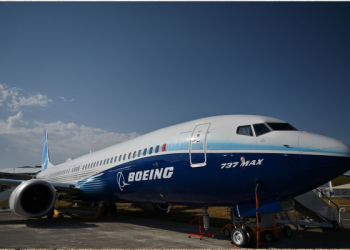
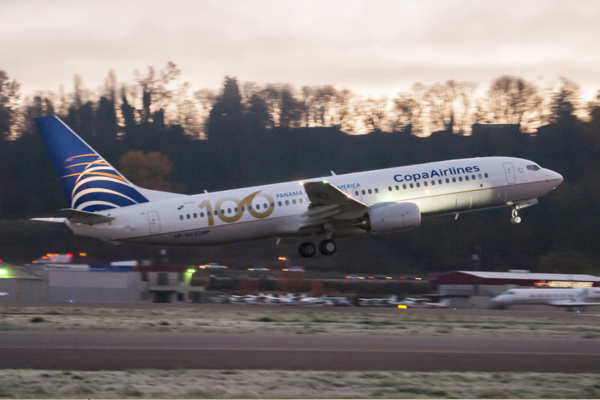
Panama-based Copa Airlines has agreed to purchase up to 60 Boeing 737 MAX aircraft in a deal valued at approximately $13.5 billion at list prices. The agreement includes 40 firm orders and 20 optional aircraft, with deliveries scheduled to run through 2030 to 2034. It adds to an existing order book of 40 aircraft, pushing Copa’s long-term fleet expansion plan to more than 100 new Boeing jets over the next decade.
On the surface, this is another large aircraft order in a recovering aviation sector. But the strategic implications go deeper.
Copa Airlines is effectively committing to a long-term fleet standardisation strategy, centred entirely on the Boeing 737 family. This approach reduces pilot training complexity, simplifies maintenance operations, and improves aircraft utilisation efficiency across its Latin American and North American routes. The airline is also targeting a fleet of over 200 aircraft by 2034, with passenger volumes projected to rise toward 27 million annually by the end of the decade.
For Boeing, this deal reinforces a critical message: global demand for narrow-body aircraft remains structurally strong. Airlines continue to prioritise fuel-efficient single-aisle jets as travel demand stabilises and expands post-pandemic. It also reflects continued confidence in the 737 MAX programme, despite its historically challenging safety and regulatory journey.
More broadly, Boeing’s order backlog, now estimated at over $695 billion globally, continues to highlight long-term demand visibility across commercial aviation. Latin America alone is expected to require more than 2,300 new aircraft over the next 20 years, with narrow-body jets accounting for the overwhelming majority of that growth.
However, the deal also sits within a more complex reality for Boeing. While demand is not the issue, execution remains the central challenge. The company continues to face production constraints, supply chain pressures, and uneven delivery schedules. Profitability in its commercial aircraft division is still in recovery mode, with full stabilisation expected only in the coming years rather than immediately.
From an investor standpoint, this transaction reinforces Boeing’s dual reality. On one hand, it sits at the centre of a strong long-term demand cycle supported by global travel growth and airline expansion. On the other, it remains a multi-year operational turnaround story, where financial performance depends heavily on manufacturing stability and delivery consistency.
Ultimately, this is not just a headline about a single airline expanding its fleet. It is a reminder of Boeing’s position in a global aerospace duopoly where demand is robust, but execution determines value creation.
Read also: SAA leadership exit raises questions over airline’s recovery path

![Tesla [Reuters]](https://autojournal.africa/wp-content/uploads/2026/04/Tesla-Reuters-350x250.png)