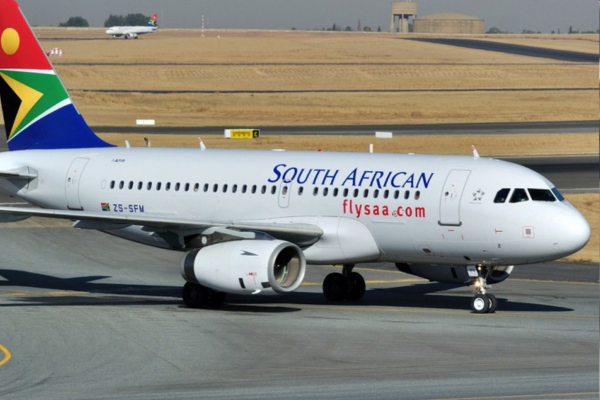
South African Airways (SAA), once a flagship of African aviation, is again under scrutiny following the sudden resignation of its chief executive and renewed concerns about governance, financial sustainability, and operational efficiency.
The resignation of CEO John Lamola, effective April 30, 2026, comes at a sensitive moment for the state-owned carrier, which only recently emerged from years of financial collapse and restructuring.
The announcement has raised questions about the airline’s leadership stability and whether its recovery trajectory is sustainable.
Leadership Uncertainty at a Critical Stage
While no detailed reason was given for Lamola’s departure, aviation economist Joachim Vermooten said the move signals deeper structural uncertainty within the airline.
He suggested the resignation “reflects some serious disagreement on policy or direction or funding,” adding that such instability often points to unresolved strategic conflicts at executive level. The timing is particularly significant given SAA’s recent financial reporting improvements.
State-owned airline restructuring under scrutiny
SAA, founded in 1934 after the South African government acquired Union Airways, has long been a symbol of national aviation ambition. But the airline has faced persistent financial distress since the early 2000s, failing to post a profit since 2011 and entering voluntary business rescue in December 2019.
Operations resumed in September 2021 after restructuring, with the airline reducing its fleet to five aircraft at its lowest point. Since then, it has expanded to 19 aircraft and increased its destination network from six to 17 routes.
For the financial year ending March 31, 2025, SAA reported a R155 million profit, marking its strongest performance since restructuring.
However, Vermooten warned that this figure may not fully reflect long-term sustainability. He questioned whether the reported gains were driven by “past taxpayer support and maybe some interesting accounting treatment.”
Aviation profitability and load factor efficiency challenges
Beyond financial reporting, operational efficiency remains a major concern. Vermooten highlighted that load factors, how full aircraft are on average, are critical to profitability. Historically, a 68% load factor was considered acceptable. Today, however, airlines often require around 82% to break even.
“This means aircraft need to operate almost at full capacity to be profitable,” he said, noting that SAA faces the same pressure as global carriers.
Despite this, he pointed to potential strength in SAA’s regional and domestic routes, provided the airline deploys appropriately sized aircraft.
Competitors such as FlySafair and Airlink have reportedly optimized operations using smaller, fuel-efficient aircraft better matched to demand.
Corporate governance risk in aviation
Concerns also extend beyond finance and operations into governance. Vermooten said SAA has struggled to stabilize its financial and accounting systems, an essential requirement for large-scale aviation operators.
Adding to the pressure are ongoing corruption concerns within the organization.
In March 2026, former SAA avionics technician Lucas Sekae was sentenced to 18 years in prison for stealing high-value aircraft components linked to a broader criminal syndicate involving employees and private entities.
The airline confirmed that multiple individuals connected to the syndicate have been arrested and convicted.
A recovery story still in question
Despite visible operational recovery and reported profitability, SAA’s leadership transition, governance challenges, and operational pressures continue to cast doubt on whether the airline’s turnaround is durable or dependent on continued state support.
Read also: Spirit Airlines collapse triggers rescue fare battle across US carriers