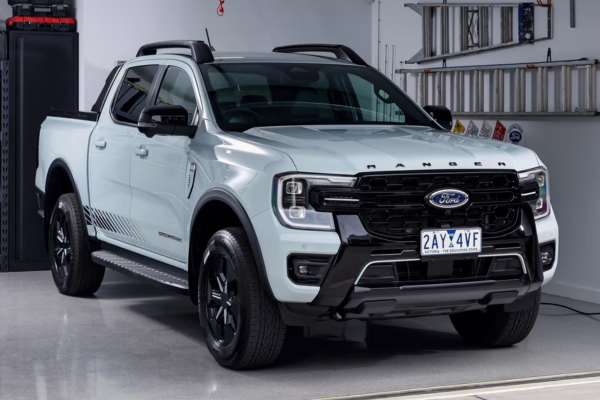
Ford Motor Company is lowering the price of its Ranger plug-in hybrid pickup in Australia as competition from Chinese carmakers rapidly intensifies. The move comes after BYD surged to the top of the country’s plug-in hybrid sales charts with its Shark 6 ute.
The decision highlights how quickly the global automotive industry is changing. Traditional manufacturers are now under growing pressure from Chinese brands offering lower prices, longer electric ranges, and more technology-focused vehicles.
According to automotive publication TorqueCafe, Ford will reduce the entry price of the 2026 Ranger PHEV from around AU$62,000 to approximately AU$59,000 before on-road costs. That places it much closer to the BYD Shark 6, which starts at AU$57,900, or roughly US$41,000.
The Australian market has become one of the world’s most competitive battlegrounds for electrified pickup trucks. Buyers are increasingly looking for vehicles that combine utility, fuel savings, and lower emissions without sacrificing towing capability or off-road performance.
Ford’s updated Ranger PHEV will also receive changes to its trim structure. Some premium features available on higher-spec versions have been removed from the entry-level XL variant to help reduce pricing.
Those deleted features reportedly include power-folding mirrors, side steps, an alarm system, and an auto-dimming rear-view mirror. However, Ford is adding a larger 12.4-inch digital instrument cluster, replacing the previous 8-inch display. The upgrade represents a 50% increase in screen size and gives the cabin a more modern appearance.
Despite the price adjustment, Ford still faces a challenge in one key area: electric driving range.
The Ranger PHEV is expected to deliver just over 30 miles of electric-only driving. In comparison, the BYD Shark 6 reportedly offers more than 60 miles of electric range. Another rival, Great Wall Motor’s Cannon Alpha PHEV, is said to exceed 70 miles on battery power alone.
That difference could matter for customers using plug-in hybrids for daily commuting or urban driving. Longer battery range means drivers can rely less on petrol for shorter trips, helping reduce fuel costs and tailpipe emissions.
Still, Ford’s pricing strategy may help it remain competitive in a fast-changing market. The Ranger remains one of Australia’s best-known pickup brands, with strong customer loyalty and an established dealer network.
The rise of affordable plug-in hybrid trucks is also reshaping expectations across the industry. Increased competition is pushing manufacturers to lower prices while improving efficiency and technology.
For consumers, that could mean more accessible alternatives to traditional petrol-powered pickups. For the automotive industry, it signals a deeper shift toward electrification, even in segments once dominated by large combustion-engine vehicles.
Read also: Ford doubles down on affordable EV pickup despite $20bn setback
![Tesla [Reuters]](https://autojournal.africa/wp-content/uploads/2026/04/Tesla-Reuters-75x75.png)



![Recovered Stolen vehicles [Source Football Reporting] (1)](https://autojournal.africa/wp-content/uploads/2023/08/Recovered-Stolen-vehicles-Source-Football-Reporting-1-120x86.jpg)