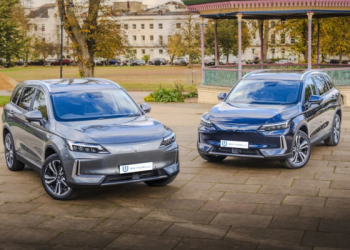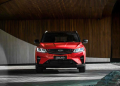
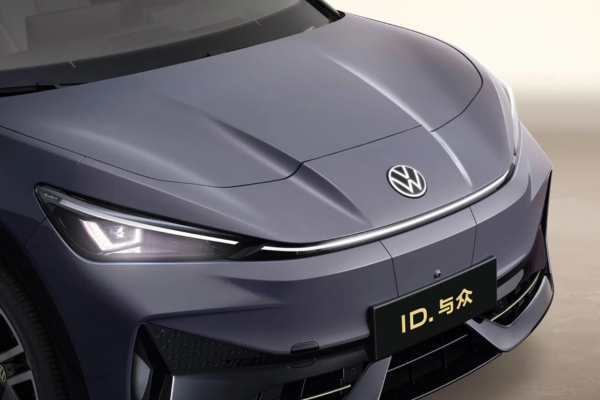
Volkswagen’s plan to revive its China business through a partnership with Xpeng is facing a major test after its first jointly developed electric SUV fell about 93% short of its initial monthly sales target.
The ID. UNYX 08 sold an average of just 267 vehicles a month between April and August 2026, according to data from ThinkerCar cited by Reuters.
Volkswagen had initially aimed to sell 3,622 units a month this year, company planning documents showed.
The poor sales raise fresh questions about Volkswagen’s future in the China electric vehicle market, where local brands are gaining ground.
Volkswagen China EV sales fall behind Xiaomi and Zeekr
Volkswagen launched the UNYX 08 in April at about $34,260. But Chinese rivals offered more advanced features at similar prices. Xiaomi’s YU7 came with an advanced sensor package, while Zeekr’s 7X offered fast charging.
Between April and August, Xiaomi sold almost 57,000 YU7 vehicles. Zeekr sold more than 21,000 7X models. Volkswagen sold about 1,300 UNYX 08 SUVs over the same period.
“Chinese customers ask: Why buy an expensive German car if they can get the technology much cheaper,” said Pedro Pacheco, vice president of research at Gartner.
The sales gap shows how hard it has become for foreign brands to compete on technology, price and consumer appeal.
Volkswagen’s EV investment faces a dealer network problem
The problem was not limited to the car itself.
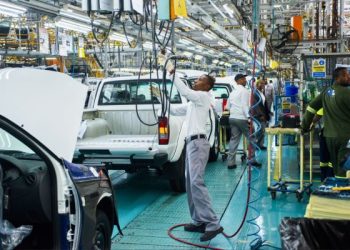
Volkswagen chose to sell the UNYX 08 mainly through a new dealer network operated by Volkswagen Anhui. That network was far smaller than the more than 3,000 dealerships Volkswagen had with its partners FAW and SAIC.
Two people familiar with the business told Reuters that many buyers did not even know the vehicle existed. Volkswagen said its Anhui sales network had grown to 166 outlets. It was also working with FAW-Volkswagen at selected dealerships to reach more buyers.
The company has recently advertised the UNYX 08 at a 17% discount from its April launch price.
China automotive investment targets face sharp cuts
Volkswagen’s internal forecasts show how far sales have fallen below expectations. In 2024, the company expected to sell 32,600 UNYX 08 vehicles by the end of 2026. Early this year, it cut that target by more than 60% to 12,300 units.
Yet Volkswagen still expects strong sales from its next Xpeng-linked model, the UNYX 09 sedan. The car is due in showrooms in October, with planning documents forecasting average monthly sales of nearly 4,900 vehicles.
Volkswagen said the Xpeng partnership had helped it develop a new electric vehicle architecture in a record 18 months. Xpeng declined to comment on the report.
Volkswagen market share in China halves as EV competition grows
Volkswagen’s wider problems go back years. In 2019, one in five passenger cars sold in China was a Volkswagen.
By the first eight months of 2026, its market share had dropped to 10%, according to the China Passenger Car Association. China once generated nearly half of Volkswagen Group’s profits. That figure has fallen to about 10%.
The company is now going through the biggest restructuring in its 89-year history. In a September message to staff, Volkswagen China chief Ralf Brandstaetter warned that the passenger-car market could shrink by 20% this year.
He said industry profit margins had fallen to 1.5%, while vehicle development cycles had dropped from seven years to three. Volkswagen must urgently “align our production capacities with market realities,” he wrote.
What Volkswagen’s China crisis means for the EV industry
The struggle shows that access to local technology does not guarantee sales. Volkswagen has explored partnerships across batteries, software, charging and vehicle development. Some failed to deliver the results it wanted.
Chinese brands such as BYD and Geely have moved faster with software-rich vehicles, often at lower prices.
Bill Russo, founder of Automobility, said Volkswagen still had a path to recovery but he warned that the real risk “is that the market moves faster than the company can reinvent itself.”
For Volkswagen, building a competitive electric car is only part of the battle. Selling it in a market that has moved on is another.
Read also: Volkswagen CEO warns of factory closures as Chinese EV competition intensifies