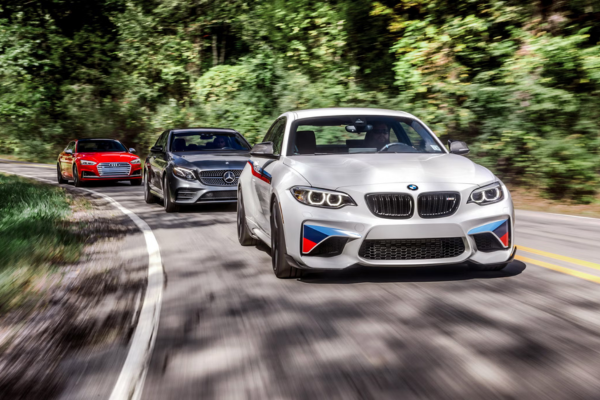
German luxury car brands are losing ground fast in China.
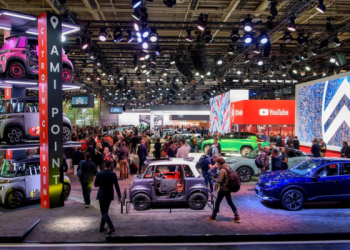
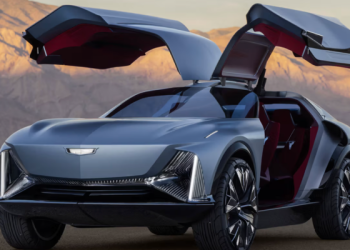
At this week’s Beijing Auto Show, where 181 new models and 71 concept cars are expected, the message is China’s carmakers are no longer chasing volume alone, they are targeting prestige and that puts Germany’s luxury giants directly in the crosshairs.
Premium Automotive Market Faces Disruption
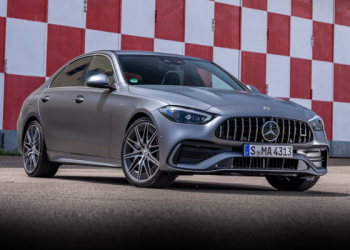
For decades, brands like Bayerische Motoren Werke AG and Mercedes-Benz Group AG dominated China’s premium segment. But that dominance is slipping.
Sales of German automakers in China have fallen about 25% since 2020, as domestic rivals push aggressively into the premium automotive market with high-tech vehicles at lower prices.
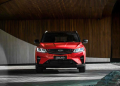
Chinese brands such as Nio and Geely are now targeting former German car owners. Geely says most buyers of its full-size 9X SUV previously drove German luxury vehicles.
What has changed is not just price but perception.
Younger Chinese consumers increasingly view domestic brands as more innovative, while German models are seen as reliable but dated.
Electric Vehicles (EVs) Redefine Luxury
The shift comes after years of a fierce electric vehicles (EVs) price war in China. Now, with regulators stepping in to curb aggressive discounting, competition is moving upscale.
Chinese automakers are leveraging advanced technology. software, connectivity, and battery performance, to redefine what “premium” means.
This presents a challenge for German brands, whose pricing structures struggle to match local competitors.
Global Auto Expansion Accelerates
With China’s market growth expected to remain flat at best this year, automakers are looking outward. Companies like Changan and Great Wall Motor are ramping up global auto expansion plans. Changan aims to grow sales by two-thirds by 2030 and enter the global top 10 automakers.
Great Wall Motor is preparing a renewed push into Europe after an earlier attempt faltered. This time, it plans to launch at least 10 new models across multiple fuel types to better align with European demand.
But the landscape has changed.
Dozens of Chinese brands are now targeting Europe, creating intense competition not just with legacy players but among themselves.
Luxury Car Sales China: A Generational Divide
The biggest threat to German automakers may not be pricing but relevance.
Once the gold standard of success, German luxury cars are increasingly associated with older buyers. In contrast, Chinese brands dominate the aspirational market for younger consumers.
Volkswagen, which held China’s top sales spot for roughly 25 years, now ranks third behind Geely and BYD.
Investors are taking note. Pressure is mounting on German automakers to rethink their China strategy, especially as a premium-only focus risks further erosion in luxury car sales China.
Automotive Industry Investment Signals Shift
The ripple effects extend beyond China. In Europe, EV sales rose sharply in early 2026 as fuel prices surged בעקבות geopolitical tensions. Meanwhile, automakers like Tesla Inc continue to reshape the competitive landscape, both through innovation and cost strategies.
The global automotive industry investment cycle is now tilting toward electrification, technology, and market adaptability.
For German brands, the question is no longer whether competition is coming, it is whether they can catch up.
Read also: Why Germany’s car factories are becoming the new political battleground