In a world where cars are judged by curves, paint, and presence, one man is proving that true automotive passion goes far beyond sight.
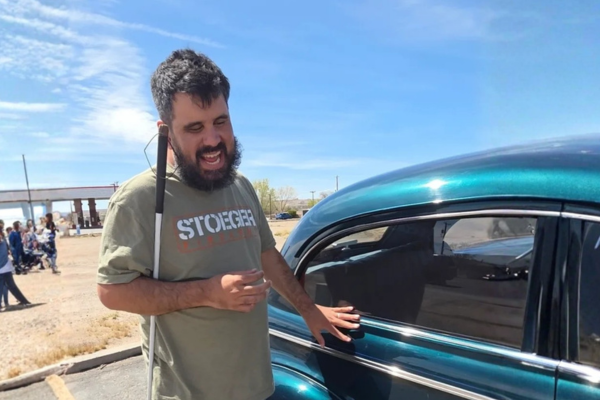
Mike, a blind resident of New Mexico, has developed an unusual expertise: he can identify nearly any car model simply by touching it.
What began as childhood curiosity has evolved into a skill that is now drawing global attention—and reshaping conversations around automotive industry expertise.
@blindhoundfarms He’s done this so many times… and I still don’t understand how 😅 what should we try next? #trucksoftiktok #blind #blindness #carguys #marriedlife ♬ original sound – Mike & Jenn | Blindhound Farms
From Touch to Talent
Growing up in a family deeply interested in cars, Mike spent years exploring vehicles in the only way available to him, through touch.
“I developed a memory bank of what every car feels like,” he said, describing how he learned to recognize subtle differences in doors, fenders, and body shapes.
That tactile memory has become his signature.
Today, alongside his wife Jenn, Mike shares videos online where he identifies cars in public spaces, often surprising owners and onlookers alike.
The content has gained traction on TikTok, placing him among a growing class of creators benefiting from digital content monetization.
Classic Cars vs Modern Design
Mike’s expertise shines brightest with older vehicles.
Classic models like the 1957 Chevy Bel Air or late-1960s Chevelle Sports are, he says, easier to recognize due to their distinct designs, features that remain central to classic car valuation and collector appeal.
Newer models, however, present a challenge. “The hardest ones to identify are the newer ones,” he admitted, pointing specifically to modern Corvettes.
That difficulty reflects a broader industry trend, where aerodynamic efficiency and design standardization have reshaped how vehicles look and, in Mike’s case, how they feel.
A New Perspective on Car Culture
Car enthusiasm is often framed visually, driven by iconic brands like Ferrari or Alfa Romeo, where aesthetics dominate conversations. But Mike’s story challenges that assumption.
Instead, his appreciation lies in craftsmanship, structure, and design detail, qualities that extend beyond surface beauty and into engineering.
His growing recognition also highlights the evolving role of creators in niche spaces, where storytelling intersects with industries like car identification technology and automotive media.
Beyond Sight: A Broader Message
For Mike and Jenn, the project was never intended to go viral. What started as simple curiosity has turned into a platform that shifts perceptions about disability and capability. “You can have a passion for something even if you’re blind,” Mike said.
His story is not just about cars. It is about access, identity, and how expertise can take unexpected forms.
As his videos continue to circulate, they are not only entertaining audiences, they are prompting a deeper question about how people connect with the things they love.
Read also: Luxury, speed, and loss: The dark side of football’s car culture