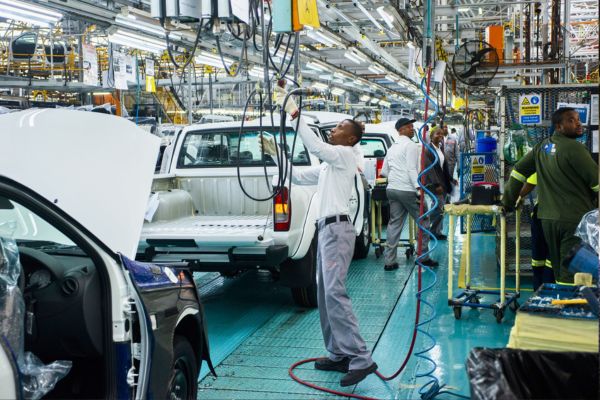
South Africa plans to reduce support for vehicle assembly operations that depend heavily on imported kits, as the government seeks to strengthen domestic manufacturing, create jobs and expand local supply chains.
The proposed policy aims to increase local content in vehicles from 38% to 60%. It would put greater pressure on automakers to source more components locally and invest in deeper manufacturing activities.
The move could have important implications for Africa’s automotive industry. Countries such as Nigeria, which are seeking to expand vehicle assembly and attract investment, could learn from South Africa’s approach.
Government targets deeper automotive manufacturing
South Africa has announced plans to phase out support for vehicle assembly operations that rely heavily on imported semi-knocked-down kits.
These kits contain vehicle components that are shipped into a country for assembly. While this approach can help establish assembly operations, it may offer fewer opportunities for local component manufacturers when most parts are imported.
The government wants automakers to move beyond basic assembly and develop stronger domestic production capabilities. Increasing local content would mean more opportunities for businesses supplying components, materials and other manufacturing services.
The proposed increase from 38% to 60% represents a rise of 22 percentage points. In relative terms, that is an increase of about 58% from the current local-content level.
However, achieving this target will depend on investment, access to technology, reliable infrastructure and the ability of local suppliers to meet automotive quality standards.
What the policy could mean for jobs and investment
A stronger local supply chain could create opportunities for South African manufacturers producing vehicle components, including metal parts, plastics, wiring systems and interior fittings.
It could also support jobs beyond vehicle assembly plants. Local suppliers, logistics companies, maintenance businesses and industrial service providers could benefit if domestic production expands.
For workers and communities, the potential gains extend beyond the factory floor. A stronger automotive manufacturing base could support technical training, improve industrial skills and create more opportunities for small and medium-sized businesses.
However, the transition could also present challenges. Automakers may need to invest heavily in local suppliers, production facilities and workforce development. If domestic components are expensive or difficult to source, manufacturers could face higher production costs.
The pace of implementation will therefore be important. Clear targets, practical timelines and support for local suppliers could help the industry adapt without undermining its competitiveness.
Why Nigeria and other African countries should pay attention
South Africa’s plans raise an important question for Africa: how can governments attract foreign automakers while ensuring that more of the economic value remains within their own countries?
Nigeria has ambitions to develop its automotive industry through local assembly, investment and policies designed to encourage domestic production. But assembly operations alone may not deliver the full economic benefits of a manufacturing industry.
Developing local suppliers is crucial. Businesses that manufacture components, provide engineering services and supply production materials can help create a more integrated automotive ecosystem.
South Africa’s proposed policy could offer useful lessons for Nigeria and other African markets. Governments may need to combine investment incentives with measurable local-content targets, supplier development programmes and technical training.
Regional cooperation could also help. African countries that develop complementary component industries and improve cross-border trade could create larger markets for locally manufactured automotive products.
A test of Africa’s manufacturing ambitions
South Africa’s proposed move marks an important policy direction: rewarding deeper manufacturing rather than relying primarily on imported components for local assembly.
The planned increase in domestic content from 38% to 60% sets an ambitious goal. Its success will depend on whether automakers and local suppliers can build the capacity needed to meet it.
For Africa, the wider lesson is that vehicle assembly can be a starting point, but it is not the final destination. Building competitive component industries, developing skilled workers and attracting long-term investment will be essential to creating sustainable automotive jobs.
If South Africa can turn its ambitions into measurable industrial growth, its experience could help shape automotive policy debates across the continent.
Fuel crisis pushes drivers into plug-in hybrids across South Africa