Global venture capital firm Antler and artificial intelligence company OpenAI have highlighted opportunities for African entrepreneurs to build technology-driven businesses, as growing demand for electric vehicles, energy storage and AI infrastructure creates new investment prospects across the continent.
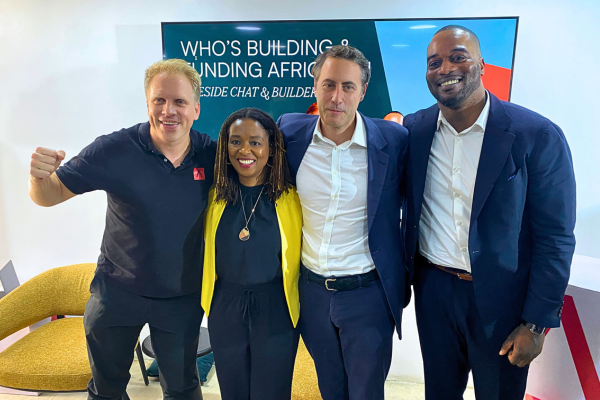
The opportunities were discussed at the Building and Funding Africa’s AI summit held in Lagos on October 29, 2026, where Magnus Grimeland, founder and chief executive officer of Antler, Emmanuel Lubanzadio, Africa Lead at OpenAI, and Tom Duff Gordon, Vice President of EMEA Policy at OpenAI, participated in discussions on Africa’s role in the global AI economy.
Grimeland identified electric mobility, renewable energy, battery storage and electricity infrastructure as promising areas for entrepreneurs, while Lubanzadio challenged the perception that Africa was primarily a consumer rather than a developer of artificial intelligence.
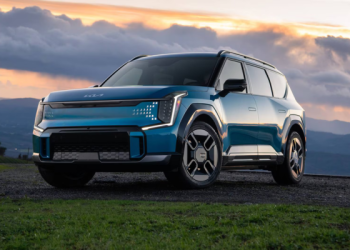
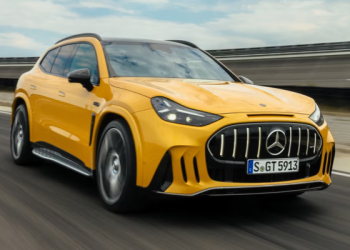
Responding to a question about Antler’s interest in Nigeria’s electric vehicle industry, Grimeland described the sector as a major opportunity, drawing comparisons with the rapid adoption of electric vehicles in China and the expansion of electric mobility businesses in Vietnam.
“I think it’s a huge opportunity,” he said. “If we combine that with energy storage and the renewable energy, plus obviously you need to roll out other sources of power generation, it also fits very well with the whole AI rollout because that requires power as well.”
He added that opportunities existed across the supply chain, encouraging entrepreneurs to develop electric vehicle businesses and supporting electricity infrastructure.
His comments come as the global automotive industry continues its transition towards electric mobility.
According to the International Energy Agency’s Global EV Outlook 2025, electric car sales exceeded 17 million units worldwide in 2024, representing more than 20 percent of new car sales. China accounted for more than 11 million electric car sales, with electric vehicles representing over 40 percent of new car purchases in the country.
The agency also reported that global electric truck sales increased by almost 80 percent in 2024, although adoption remained concentrated in China.
For Nigeria, the growth of electric mobility presents opportunities for vehicle assemblers, charging infrastructure developers, battery suppliers and logistics operators seeking alternatives to petrol- and diesel-powered fleets.
However, high vehicle acquisition costs, limited charging facilities, inadequate electricity supply and access to financing remain major barriers to widespread adoption.
The development of electric commercial vehicles could also affect Nigeria’s logistics and supply chain industry, where fuel costs are a significant operating expense for businesses involved in transportation and distribution. Electric delivery motorcycles, buses and commercial vehicles could provide alternatives for some transport operations, particularly where vehicles follow predictable routes and have access to reliable charging facilities.
The potential savings would depend on vehicle purchase prices, electricity tariffs, battery replacement costs and maintenance requirements.
Beyond transportation, Grimeland identified power management, smart grids, energy storage and data centre technology as important investment areas in the emerging AI economy.
He explained that major technological changes typically create significant demand for infrastructure before opportunities expand across software and other business applications.
“That’s typically where you have, when you have big platform shifts, a lot of money lands there first, infrastructure,” he said.
The relationship between electricity and artificial intelligence is becoming increasingly important as technology companies expand their computing capacity.
The IEA’s Energy and AI report estimated that data centres consumed about 415 terawatt-hours of electricity globally in 2024, representing approximately 1.5 percent of worldwide electricity consumption.
The agency projected that demand could more than double to about 945 terawatt-hours by 2030, driven partly by the expansion of artificial intelligence.
For African economies, the trend could increase demand for electricity generation, battery storage, data centre equipment and the logistics services required to transport and install critical infrastructure. It also creates opportunities for businesses developing energy-efficient systems and technologies that reduce operating costs.
Nigeria’s electricity challenges make these investments particularly important. Businesses frequently rely on alternative power sources to maintain operations, increasing costs for manufacturers, logistics companies and technology service providers.
Speaking further, the Antler CEO argued that African entrepreneurs could participate in the AI economy through three major areas: infrastructure development, software and foundational models, and traditional businesses using AI to improve productivity and expand their operations.
He also warned against building simple applications that depend entirely on existing AI models without developing a sustainable competitive advantage.
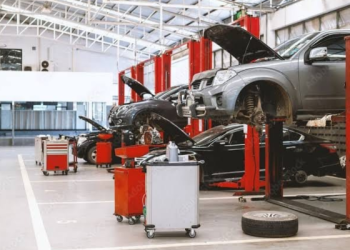
For automotive and logistics businesses, AI-enabled applications could include vehicle maintenance planning, fleet management, route optimisation, demand forecasting and inventory control. These represent potential industry applications rather than specific projects announced by Antler at the summit.
Meanwhile, OpenAI’s Lubanzadio said Africa’s role in artificial intelligence should not be judged solely by how people use existing tools. He acknowledged that many Africans use AI for everyday activities but argued that the assessment overlooked developers already building products and services across the continent.
Lubanzadio pointed to OpenAI’s developer community initiatives in Nigeria, Kenya and South Africa, where local ambassadors help convene and support technology communities. He also highlighted the Codex Challenge, organised through OpenAI’s Open Academy initiative in partnership with Andela, saying young developers had demonstrated their ability to create innovative products within a short period.
According to him, some participants developed impressive solutions in less than two weeks, illustrating how access to AI development tools could reduce the technical barriers faced by entrepreneurs.
His position suggests that African founders do not necessarily need to develop large foundational AI models before building commercially useful solutions for local industries.
Instead, they can use existing technologies to address problems in transportation, healthcare, agriculture, energy and other sectors where local knowledge remains important.
The discussions also highlighted the role of venture capital in helping African entrepreneurs turn technological ideas into commercially viable businesses.
Grimeland disclosed that Antler had backed approximately 2,000 companies globally and expected to support at least 100 additional African startups over the next five years. He said the firm’s approach involved identifying capable founders at the earliest stages of business development and supporting them with capital, expertise and access to other investors.
“We want to be there not only at day zero but like partners throughout the entire journey,” he said.
Antler Africa partner Anil Atmaramani also explained that the firm prioritised founders with strong industry knowledge and the ability to execute their business ideas. He said qualifying startups could receive an initial investment of $100,000 at a $1 million valuation after demonstrating that their businesses were investable.
The approach could be relevant to entrepreneurs developing solutions in electric mobility, energy systems, manufacturing and logistics, where technical expertise and an understanding of local operating conditions are important.
Although Antler did not announce a specific investment commitment to Nigeria’s automotive or logistics sectors, Grimeland’s remarks identified electric mobility and supporting infrastructure as areas of interest.
While OpenAI is supporting efforts to expand local AI development capabilities, Antler’s investment strategy points to the role private capital could play in helping African founders build businesses around emerging technologies.
The challenge for entrepreneurs will be to translate these opportunities into affordable, scalable solutions that address the practical needs of businesses and consumers across the continent.
Read also: Nigeria’s EV push needs reliable power. Can Telios help close the gap?