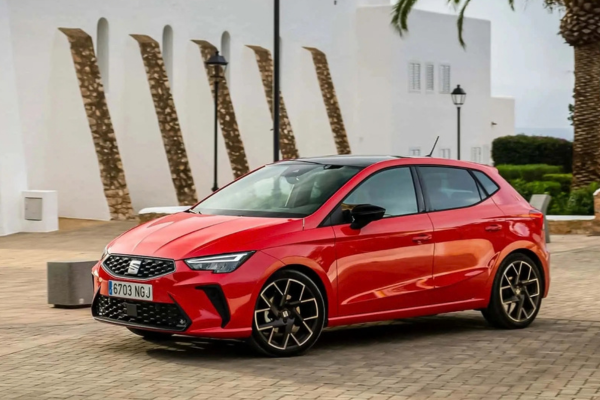
A car brand founded 76 years ago is facing an uncertain future as Volkswagen weighs whether Seat can survive the industry’s costly shift to electric vehicles and growing competition from Chinese automakers.
Volkswagen said earlier this month that Seat’s future beyond its current product cycle remains under review, with several scenarios possible beyond 2030.
A person involved in the discussions said Seat’s combustion-engine models could eventually be phased out while its faster-growing sister brand, Cupra, receives future products.
“We do not want to maintain two brand names,” the person said, speaking on condition of anonymity because the discussions are confidential.
The potential change would make Seat one of the most notable casualties of the global restructuring of the automotive industry as established manufacturers face weaker demand, heavy EV investment and growing competition from China.
Volkswagen and Seat Face EV Investment Pressure
Seat was founded in 1950 as a state-owned company in Spain and bought by Volkswagen in 1986 as a low-cost brand for the German group’s expanding automotive business.
But the brand has not launched a new model since 2020. Seat accounted for less than 3% of Volkswagen’s global deliveries in 2025.
Its sister brand Cupra, launched in 2018, overtook Seat in annual sales for the first time last year. Cupra now offers three fully electric models, including the Raval, which Seat-Cupra CEO Markus Haupt described in May as a “game changer”.
Seat has no fully electric model and none is planned. Executives have said the brand cannot justify the investment needed for an EV programme because it is not profitable.
The uncertainty has raised concerns about workers at the Spanish brand. “If the brand disappears because it isn’t going electric … we have a serious problem,” Seat union leader Matias Carnero said.
Independent auto analyst Matthias Schmidt said the warning signs had been visible for some time.
“It’s been obvious Volkswagen is not prepared to continue with Seat,” he said.
Chinese Automakers Increase Pressure on Legacy Brands
Seat’s situation comes as established automakers face a wider decline in sales.
Data from Felipe Munoz of Car Industry Analysis shows cumulative annual sales by European, U.S., Japanese and South Korean automakers fell by 12.6 million vehicles, or 17%, between 2019 and 2025.
European manufacturers accounted for almost half of that decline, while Chinese rivals captured much of the lost market share.
Chinese companies such as BYD, SAIC Motor and Geely are increasing pressure through price competition as established automakers also deal with weak demand, large **EV investments** and global trade tensions.
Chinese automakers are not the only reason for the pressure. European new-car sales reached 13.3 million in 2025, still about 2 million below 2019 levels.
Auto Industry Consolidation
Volkswagen is not alone in reviewing its brands. Stellantis is focusing investment on four of its 14 brands; Jeep, Ram, Peugeot and Fiat, as the world’s No. 4 automaker seeks to concentrate resources.
The consolidation could also extend to China’s crowded EV market.
Consultancy AlixPartners predicts that only 15 of the 129 EV brands currently operating in China will be financially viable by 2030.
Nissan is restructuring, cutting capacity and reducing future model plans, while Jaguar Land Rover is cutting jobs. “This is all part of a global reordering,” said Sam Fiorani, vice president at AutoForecast Solutions.
“There will be fewer legacy players and fewer Chinese players in the long run.”
Read also: Volkswagen weighs more job cuts as cost gap with rivals widens




![Ferrari Elettrica EV [Source ALBA Cars]](https://autojournal.africa/wp-content/uploads/2025/11/Ferrari-Elettrica-EV-Source-ALBA-Cars-120x86.png)
![cars Seized in Latvia sent to Ukraine [DW]](https://autojournal.africa/wp-content/uploads/2026/06/cars-Seized-in-Latvia-sent-to-Ukraine-DW-120x86.png)