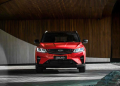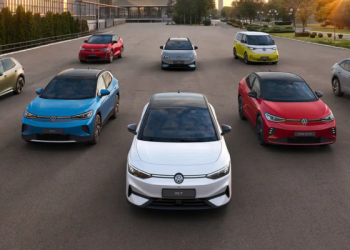
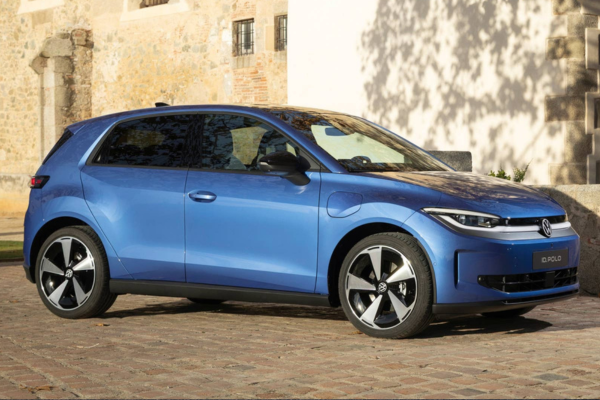
Volkswagen has started building two of its most important electric cars yet. The new Volkswagen ID. Polo and CUPRA Raval have entered production at the Martorell plant in Spain. Both models are designed to make electric driving more affordable for everyday European buyers.
For drivers, the message is simple. Volkswagen wants to bring the cost of an electric car closer to the price of a small petrol hatchback.
The ID. Polo is expected to start from about €24,995, roughly $29,000. The CUPRA Raval is expected to start from about €26,000, or around $30,100.
That places both cars below many mainstream electric vehicles currently sold in Europe. It also gives Volkswagen a stronger answer to cheaper electric cars from China.
The launch comes at a difficult time for European carmakers. Brands such as BYD are expanding quickly with lower-cost EVs, longer ranges and aggressive pricing.
Volkswagen is responding with what it calls its Electric Urban Car Family. The new range will include four fully electric models across three brands.
The ID. Polo and CUPRA Raval are the first two models from that family. They are being led by SEAT and CUPRA for the wider Volkswagen Group.
Both cars are compact hatchbacks. That makes them important in Europe, where small cars remain popular with city drivers, young families and first-time buyers.
The ID. Polo revives one of Volkswagen’s most familiar names in electric form. For decades, the Polo has been seen as a practical, accessible car for ordinary motorists.
The electric version keeps that spirit. It is designed for buyers who want lower running costs without moving into a larger or more expensive EV.
The ID. Polo is expected to be offered with two battery options. These include a 37kWh lithium iron phosphate battery and a 52kWh nickel manganese cobalt battery.
The larger battery is expected to deliver up to 454km of range. That is about 282 miles on a full charge.
The CUPRA Raval will sit beside it as a sportier alternative. It is expected to offer up to around 450km, or about 280 miles, depending on the version.
For many drivers, those figures could be enough for daily commuting, school runs and weekend trips. They also reduce one of the biggest fears around EV ownership: range anxiety.
Volkswagen says both cars are based on its updated MEB+ electric platform. Shared platforms help carmakers reduce costs by using common parts, batteries and production systems.
The company says the platform strategy is linked to around €600m in savings. That is about $692m.
Those savings matter because price remains one of the biggest barriers to electric vehicle adoption. Many buyers still like the idea of an EV but struggle with the upfront cost.
Lower-priced models could help change that. Once purchased, EVs can be cheaper to run because they have fewer moving parts than combustion cars.
Electric cars do not need oil changes. They also avoid many engine-related repairs linked to petrol and diesel vehicles.
Charging at home can also be cheaper than filling a petrol tank. For drivers with solar panels, the savings can be even stronger.
However, the wider challenge for Europe is industrial as well as environmental. Volkswagen’s new small EVs are also about protecting jobs, factories and local manufacturing.
The Martorell plant has become central to that plan. Volkswagen Group has invested heavily in Spain as it prepares to build more affordable electric vehicles in Europe.
The ID. Polo and CUPRA Raval will not be the last. Volkswagen is also preparing the ID. Cross, an electric version of the T-Cross SUV.
That model is expected to arrive later with a starting price of about €28,000. This would place it at roughly $32,500.
The strategy is clear. Volkswagen wants to cover the lower end of the EV market before Chinese rivals dominate it.
Volkswagen Group chief executive Oliver Blume has warned that Europe needs a stronger “Made in Europe” strategy. He said this is important to protect the continent’s industrial base and create a fair competitive environment.
For buyers, the benefit could be more choice and lower prices. For Europe, the stakes are much higher.
This is not just a new car launch. It is a test of whether Europe can still build affordable electric cars at scale.
The ID. Polo and CUPRA Raval now carry that pressure. If they succeed, they could help bring EV ownership closer to millions of ordinary drivers.
If they fail, Volkswagen and its European rivals may find the affordable EV market moving even faster towards China.