• News
    • Tech
    • Lifestyle
    • Business
    • Opinion
    • Premium
  • Reviews
  • Events
    • Nigeria
    • South Africa
  • Tools
    • Price Guide
    • Find your idea car
    • Car valuation
    • Sell your car
    • Car insurance quote
    • Locate a dealer
    • Deals
  • For Sale
    • New Cars for sale
    • Cheap Cars for sale
    • Bikes for sale
    • Trucks for sale
    • Boats for sale
    • Jets for sale in Africa
    • Cars under 5m
    • EV in Nigeria
    • EV in South Africa
Tuesday, August 11, 2026
  • Login
Auto Journal Africa
  • News
    • Tech
    • Lifestyle
    • Business
    • Opinion
    • Premium
  • Reviews
  • Events
    • Nigeria
    • South Africa
  • Tools
    • Price Guide
    • Find your idea car
    • Car valuation
    • Sell your car
    • Car insurance quote
    • Locate a dealer
    • Deals
  • For Sale
    • New Cars for sale
    • Cheap Cars for sale
    • Bikes for sale
    • Trucks for sale
    • Boats for sale
    • Jets for sale in Africa
    • Cars under 5m
    • EV in Nigeria
    • EV in South Africa
Ask Autojorunal AI
No Result
View All Result
  • News
    • Tech
    • Lifestyle
    • Business
    • Opinion
    • Premium
  • Reviews
  • Events
    • Nigeria
    • South Africa
  • Tools
    • Price Guide
    • Find your idea car
    • Car valuation
    • Sell your car
    • Car insurance quote
    • Locate a dealer
    • Deals
  • For Sale
    • New Cars for sale
    • Cheap Cars for sale
    • Bikes for sale
    • Trucks for sale
    • Boats for sale
    • Jets for sale in Africa
    • Cars under 5m
    • EV in Nigeria
    • EV in South Africa
No Result
View All Result
Morning News
No Result
View All Result
Home Electric Vehicles

Why slow supermarket EV chargers still matter to drivers

Michael Olabode Williams by Michael Olabode Williams
August 11, 2026
in Electric Vehicles, Premium
0
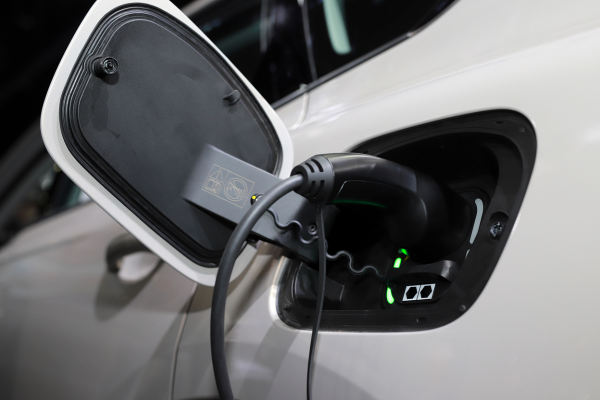
EV Charger
4.2k
SHARES
31.5k
VIEWS
Share on FacebookShare on Twitter

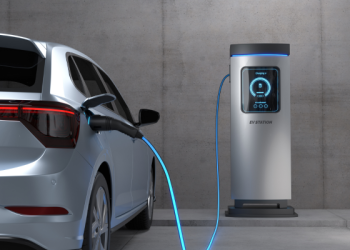
For electric vehicle owners, even a small amount of free or low-cost charging during a supermarket trip can help reduce running costs.

A debate among EV drivers has highlighted why slow chargers still have a role to play, despite taking much longer than rapid charging points.

READ ALSO

Ferrari’s first electric car sells out for 2026 despite fierce criticism

Audi Revives A2 as its most affordable electric car with up to 403 miles of range

The discussion began after one new EV owner questioned the value of supermarket chargers rated at about 6kW.

The driver argued that a typical shopping trip lasting less than an hour would add only a modest amount of range.

But other EV owners said the chargers should not be judged against motorway rapid chargers. Their purpose is different: providing convenient top-ups while drivers are already parked.

Every mile can count
A 6kW charger can theoretically deliver about 6kWh of energy in an hour, although the actual amount reaching the battery can vary.

For an EV consuming around 15-20kWh per 100km, that could translate into roughly 30-40km of additional driving range in an hour.

That may not be enough for a long journey, but it can cover part of a driver’s daily travel.

For motorists who regularly shop at the same supermarket, repeated short charging sessions can gradually add up.

The principle is similar to charging a smartphone for a few minutes when its battery is running low. It may not fully recharge the device, but it can provide enough power to get through the day.

The value of free charging
The economics can make supermarket charging even more attractive when businesses provide it free of charge.

One EV driver in the online discussion said they would happily take advantage of free electricity when shopping.

For drivers, the benefit is straightforward. A free top-up can reduce the amount of electricity they later need to buy from public rapid chargers.

This is particularly important for people living in flats or homes without access to private driveways.

Home charging remains one of the most convenient ways to run an EV. But not every driver has access to a dedicated parking space or a home charging point.

For those motorists, public charging infrastructure can make the difference between an EV being practical and difficult to live with.

Supermarkets also benefit
There is another side to the argument.

Retailers can use charging points as part of a wider strategy to attract customers and encourage them to stay longer.

A driver who plugs in while shopping may spend more time inside the store than someone making a quick visit.

That can create a commercial benefit for supermarkets, while customers receive a useful service during time they were already planning to spend shopping.

However, the success of the model depends heavily on how charging spaces are managed.

Chargers that are broken, poorly maintained or occupied by vehicles that are not actively charging can quickly lose their value.

Drivers also need clear information about pricing, charging speeds and any parking restrictions.

The bigger EV challenge
The debate reflects a wider issue facing electric vehicle adoption.

Charging infrastructure is not simply about installing as many high-powered chargers as possible. Drivers need different charging options for different situations.

Rapid chargers are useful when motorists need to add significant range during a long journey.

Slower chargers can make more sense when a vehicle is already going to be parked for an hour or more.

The best charging network therefore needs to combine both approaches.

For EV owners who cannot charge at home, access to reliable public chargers becomes even more important.

One driver involved in the discussion described public charging as a “game changer” because they live in an apartment and cannot charge at home.

Small top-ups can add up
The discussion also underlines an important lesson for people buying their first EV.

Electric cars do not always need to be charged from near empty to full.

Instead, drivers can often add smaller amounts of energy whenever the opportunity arises.

A supermarket visit, workplace parking session or gym trip can all become opportunities to add range.

Over time, those smaller top-ups can reduce the need for expensive and time-consuming charging stops.

For motorists, the real benefit of a supermarket charger may therefore have little to do with speed.

It is about convenience, cost and making use of time when the car would already be parked.

As more drivers move to electric vehicles, that flexibility could become just as important as the headline charging speeds offered by rapid networks.

Read also: BYD’s 9-minute EV charger could change how drivers think about electric cars
Tags: electric vehilcesEV chargers

Related Posts

The Ferrari Luce
Electric Vehicles

Ferrari’s first electric car sells out for 2026 despite fierce criticism

August 3, 2026
Audi A2
Electric Vehicles

Audi Revives A2 as its most affordable electric car with up to 403 miles of range

August 3, 2026
Telios Intelligence team
Africa

Nigeria’s EV push needs reliable power. Can Telios help close the gap?

August 11, 2026
Boeing 737 max [Photo Credit BusinessInsider]
Aerospace

Why Airlines still spend up to $40,000 an hour to keep the Boeing 747 Flying

July 30, 2026
Thousands of Audi employees protesting
Cars/SUVs

6,000 Audi workers take to the streets as factory closure fears grow

July 30, 2026
Boeing 737 max [Photo Credit BusinessInsider]
Aerospace

Boeing’s $715bn order backlog signals strong recovery despite operating loss

July 28, 2026

POPULAR NEWS

Inferno at Toyota 1000 Desert Race consumes 49 cars

Inferno at Toyota 1000 Desert Race consumes 49 cars

July 3, 2023
Mobius Motors

Mobius Motors: Rising taxes, competition ends Kenyan SUV maker’s journey

August 7, 2024
Autojournal car race

Get ready for the biggest RACE show this December in Nigeria

August 12, 2024
From style to sustainability: How Geely Auto is shaping the future of luxury vehicles

From style to sustainability: How Geely Auto is shaping the future of luxury vehicles

October 25, 2024
Rolls-Royce La Rose Noire Droptail 2026, the most expensive car in 2026

Ultra-luxury: The 10 most expensive cars in the world in 2026

January 7, 2026

EDITOR'S PICK

Ford

Ford set to list, sell certified used cars on Amazon, following Hyundai’s lead

November 18, 2025
Toyota transforms RAV4 into all-hybrid SUV starting 2026

Toyota transforms RAV4 into all-hybrid SUV starting 2026

May 31, 2025
NADDC launches CNG drive in Imo State to cut fuel costs, create jobs

NADDC launches CNG drive in Imo State to cut fuel costs, create jobs

March 23, 2025
Air Canada

Canadian travelers pull back on U.S. flights amid ongoing trade dispute

March 30, 2025

About

Auto Journal Africa is the leading online and print magazine for automobiles in Africa.

Follow us

Recent Posts

  • Why slow supermarket EV chargers still matter to drivers
  • Ferrari’s first electric car sells out for 2026 despite fierce criticism
  • Audi Revives A2 as its most affordable electric car with up to 403 miles of range
  • Nigeria’s EV push needs reliable power. Can Telios help close the gap?

Links

  • Privacy Policy
  • About Us
  • Contact Us
  • Terms & Conditions
  • News
  • Reviews
  • Events
  • Tools
  • For Sale

© 2023 Auto Journal

No Result
View All Result
  • News
    • Tech
    • Lifestyle
    • Business
    • Opinion
    • Premium
  • Reviews
  • Events
    • Nigeria
    • South Africa
  • Tools
    • Price Guide
    • Find your idea car
    • Car valuation
    • Sell your car
    • Car insurance quote
    • Locate a dealer
    • Deals
  • For Sale
    • New Cars for sale
    • Cheap Cars for sale
    • Bikes for sale
    • Trucks for sale
    • Boats for sale
    • Jets for sale in Africa
    • Cars under 5m
    • EV in Nigeria
    • EV in South Africa

© 2023 Auto Journal

Welcome Back!

Sign In with Google
OR

Login to your account below

Forgotten Password?

Retrieve your password

Please enter your username or email address to reset your password.

Log In
Are you sure want to unlock this post?
Unlock left : 0
Are you sure want to cancel subscription?