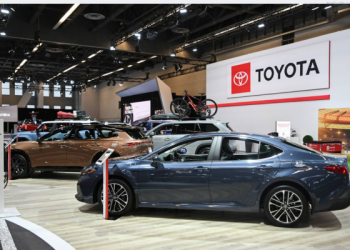

For decades, affordable new cars served as the gateway to American mobility.
They helped teenagers reach their first jobs, allowed single parents to commute to work, and provided reliable transportation for families on tight budgets.
Today, that gateway is rapidly closing.
Industry data cited by Kelley Blue Book and Cox Automotive show that the number of new vehicles priced below $25,000 has fallen from roughly 36 models in 2017 to just four or five models in 2026. Vehicles under $25,000 now account for less than 5% of all new-car sales.
Rising New Vehicle Transaction Prices Reshape the Market
The average price paid for a new vehicle has climbed to around $49,000–$50,000, according to Kelley Blue Book and Cox Automotive figures cited in the report.
While a handful of vehicles remain below the $25,000 threshold—including the Hyundai Venue, Chevrolet Trax, Kia K4, Nissan Sentra, and Hyundai Elantra—the affordable segment has largely disappeared.
At the same time, new vehicle transaction prices continue to rise, creating a widening gap between entry-level buyers and the broader market.
Industry observers say automakers increasingly favor higher-margin SUVs and crossovers over smaller economy cars.
Ford’s move away from most sedans in North America is one example of the industry’s shift toward more profitable vehicle categories.
Auto Financing Becomes a Bigger Burden
The challenge extends beyond vehicle prices.
The average amount financed for a new vehicle has climbed into the $30,000–$42,000 range, while vehicle interest rates remain above 6.5%.
Average monthly payments have also surged toward $749, levels once associated with luxury vehicle leases.
The report notes that approximately one million potential new-car buyers have exited the market since the beginning of the decade rather than purchasing lower-cost alternatives.
Imported Vehicle Tariffs Add Pressure
The report also points to imported vehicle tariffs as a major factor.
According to Cox Automotive analysis cited in the article, nearly 80% of vehicles priced below $30,000 are affected by the 25% tariff on imported vehicles.
Reuters estimates cited in the report suggest tariffs have added roughly $2,300 per vehicle in additional costs.
These added expenses disproportionately affect lower-priced vehicles because manufacturers have less profit margin to absorb the increases.
Subprime Auto Loans and the Used-Car Challenge
Historically, buyers priced out of new vehicles could turn to the used-car market.
However, pandemic-related production disruptions reduced future used-vehicle supply by an estimated 7.5 million to 8 million units, according to the report.
As a result, used-car prices remain elevated, leaving many buyers with limited options.
For consumers with weaker credit profiles, this often means turning to higher-cost subprime auto loans, increasing financial pressure and raising the risk of repossession.
The report concludes that the decline of the affordable new car was not caused by a single factor but by a combination of rising prices, higher financing costs, tariffs, product strategy decisions, and supply shortages that collectively reshaped the market.
Read also The $50,000 car problem: Why one million Americans have left the new car market