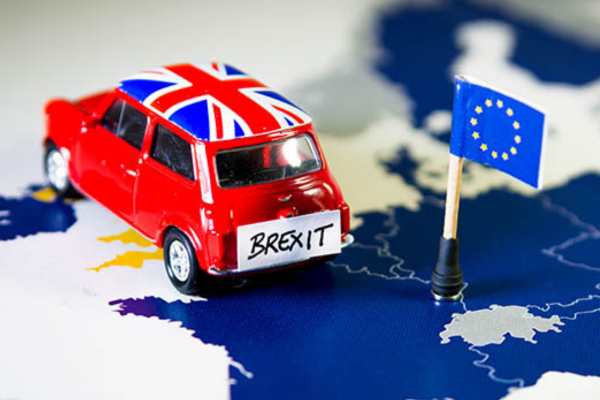
The European Union (EU) and United Kingdom (UK) auto industries are pressing regulators to delay post-Brexit electric vehicle tariffs, warning that battery production is still far from meeting trade deal requirements designed to localise supply chains.
At the centre of the dispute is the EU-UK Trade and Cooperation Agreement, which from 2027 requires that 55% of a vehicle’s value be made in Europe to avoid tariffs. It also demands that 70% of battery packs and 65% of battery cells originate in the region.
Industry leaders say those targets are now out of reach.
Battery Manufacturing Europe Supply Chain Gap Widens
The European Automobile Manufacturers’ Association (ACEA) warned that the region is falling far behind earlier expectations.
“By 2027, we had forecast 60% of batteries across all segments would be made in Europe. It is now estimated that just under 20% will be achieved,” said Jonathan O’Riordan of ACEA.
That gap threatens the core ambition of the policy: building a competitive battery manufacturing Europe supply chain to reduce dependence on imports.
European Commission Under Pressure on EV Tariffs
The European Commission has already suspended the rules once, until the end of this year, after industry warnings. However, manufacturers now say a second suspension is needed.
Sigrid de Vries, director general of ACEA, said “battery drive train development in Europe was far too slow” and called for a “policy shift”.
Mike Hawes of the UK’s Society of Motor Manufacturers and Traders (SMMT) added that current requirements were “based on assumptions that have not materialised despite major investment.”
Lithium Supply Chain and China Competition Risks
Industry leaders also point to structural challenges in the lithium battery supply chain, including high production costs, reportedly 30% higher than in China and dependency on critical raw materials.
The Commission said it remains in contact with stakeholders and that discussions are ongoing within EU-UK negotiations.
European leaders are expected to review broader industrial competitiveness, including China’s role in global overproduction, at a summit on 18 June.
Read also: GM pauses $3.5bn Indiana battery plant as EV demand pressure grows

![cars Seized in Latvia sent to Ukraine [DW]](https://autojournal.africa/wp-content/uploads/2026/06/cars-Seized-in-Latvia-sent-to-Ukraine-DW-75x75.png)