The American dream of driving home in a brand-new car is becoming harder to reach, and the numbers suggest the problem runs deeper than the auto industry.
About one million Americans who would have purchased new vehicles before the pandemic have disappeared from the market, according to industry estimates highlighted by The Wall Street Journal. Analysts now expect annual U.S. vehicle sales to remain around 16 million units or less, down from roughly 17 million before 2020.
The shift reflects mounting affordability pressures facing middle-class households as vehicle prices, financing costs and everyday expenses continue to rise.
The $50,000 Vehicle Affordability Crisis
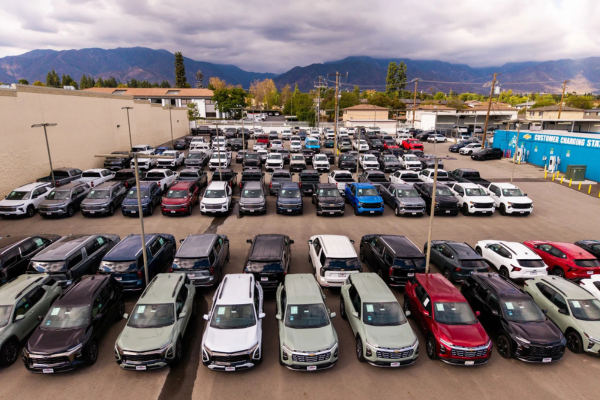
The average new vehicle now costs around $50,000, creating a significant hurdle for many consumers.
High interest rates, elevated insurance premiums, rising repair costs and renewed fuel-price concerns have combined to make vehicle ownership increasingly expensive.
According to Edmunds data cited in the report, only about one-quarter of vehicle models are priced between $25,000 and $35,000, while a larger share now costs more than $55,000.
Erik Severinson, chief commercial officer at Volvo, described the trend as a serious challenge.
“This is a proof point of something more fundamental which is wrong in the general economy,” Severinson said. “People are not able to buy new cars.”
Why the Auto Industry Isn’t Rushing to Lower Prices
Automakers have discovered they can maintain profits by selling larger trucks and SUVs rather than pushing high volumes of lower-priced vehicles.
That strategy has helped manufacturers protect earnings despite slower sales growth.
The result is a market increasingly focused on higher-margin vehicles, leaving budget-conscious consumers with fewer affordable options.
Inflation’s Growing Impact on Household Budgets
The vehicle affordability challenge mirrors broader economic pressures.
Consumer prices have risen roughly 29% since January 2020, according to U.S. inflation data cited in the report. While inflation has cooled from its 2022 peak, Americans continue to pay more for housing, transportation and daily necessities.
These pressures are pushing some households toward used vehicles while delaying major purchases altogether.
Investment Strategies Gain Attention
As inflation remains a concern, investors are increasingly exploring Inflation Hedge strategies such as Gold IRA accounts, Real Estate Investing, diversified stock portfolios and professional guidance from a Financial Advisor.
For many Americans, however, the disappearance of one million new-car buyers serves as a visible reminder that rising costs are reshaping consumer behavior across the economy.
The question facing automakers now is whether those buyers will ever return.
Read also: More than 100 million Americans are trapped in $1.6trn car debt, larger than Saudi Arabia’s economy