Nigeria’s electric vehicle (EV) ambitions face a question that investors, motorists and policymakers cannot ignore: How does a country where 90 million people lack electricity become a leader in electric mobility?
The contradiction has become even more striking after a former Nigerian energy minister was sentenced in May to 75 years in prison for money laundering linked to two failed hydropower projects, highlighting decades of governance failures that have crippled the country’s power sector.
Yet despite chronic blackouts, unreliable grid infrastructure and one of Africa’s largest electricity access gaps, Nigeria is pushing ahead with plans to become a hub for Electric Vehicle Manufacturing and clean transportation.
For many Nigerians, the motivation is simply survival. “I enjoy not buying fuel,” said Khalifa Abubakar Alhassan, a 22-year-old electric vehicle owner in Abuja.
His comment reflects a growing economic reality. Petrol prices have surged by approximately 650% since 2023 following the removal of fuel subsidies, inflationary pressures and global energy market disruptions.
Failed Hydropower Projects Highlight Infrastructure Crisis
Nigeria’s electricity challenges remain one of the biggest obstacles to economic growth.
According to the World Bank, around 90 million Nigerians, roughly one-third of the population, do not have access to electricity.
The recent jailing of a former energy minister over failed hydropower projects has renewed scrutiny of how decades of corruption, policy failures and underinvestment have contributed to the country’s energy crisis.
The case has become a symbol of the challenges facing Nigeria’s power sector at a time when the country hopes to attract investment into Renewable Energy, Charging Infrastructure, and electric mobility.
Analysts say reliable electricity remains the missing link in Nigeria’s transition to cleaner transportation.
Private Sector Bets on Charging Infrastructure
Despite the challenges, industry leaders see opportunity.
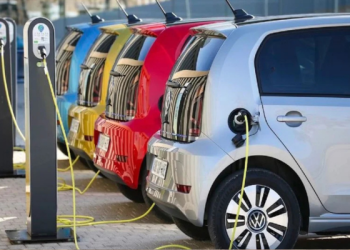
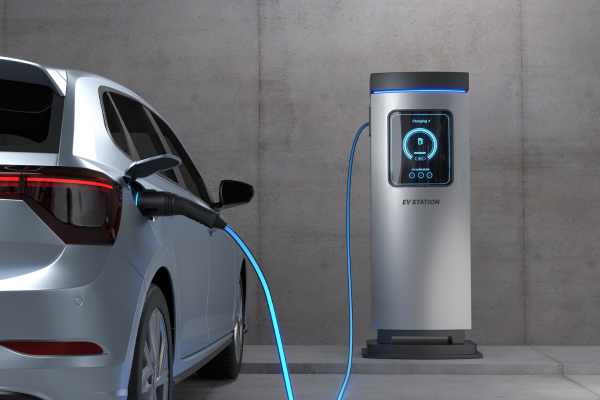
Mosope Olaosebikan, chief executive of NEV Electric, said his company is constructing a charging station capable of serving up to 3,000 vehicles daily, which he believes could become the largest on the African continent.
The facility will rely on a combination of Renewable Energy, Compressed Natural Gas (CNG) and grid electricity.
“When we started, people would ask, ‘There’s no E. Where would they charge?'” he told AFP.
His answer reflects a familiar Nigerian reality: adaptation.
Businesses and households have long relied on alternative power sources ranging from generators to solar systems to compensate for grid failures.
Economic Reality Driving Adoption
For many consumers, affordability is proving more important than environmental concerns.
In Maiduguri, electric buses introduced by the Borno State Government offer fares as low as 50 naira, helping commuters cope with rising transportation costs.
Meanwhile, federal authorities have approved green levies on heavy-engine vehicles, including large SUVs and trucks, while exempting electric vehicles from the charges.
Still, infrastructure remains limited.
Abuja resident Muhammad Abdulahi, who powers his home with solar energy and drives a hybrid vehicle, says he is not yet ready to purchase a fully electric car because charging stations remain scarce outside major cities.
The roughly 200-kilometre route between Abuja and Kaduna still lacks adequate charging infrastructure.
For now, Nigeria’s EV story is defined by a remarkable paradox: a country struggling with one of Africa’s most persistent electricity crises is simultaneously trying to build the continent’s next electric mobility market.
Whether that vision succeeds may depend less on vehicles themselves and more on solving the power failures that have held back the nation’s economy for decades.
Read also: Volkswagen raises Rivian stake as EV slowdown threatens $1.75bn emissions bill