For buyers, investors and supercar fans, the message is becoming clearer. The electric future of luxury performance cars may not arrive as quickly as many expected.
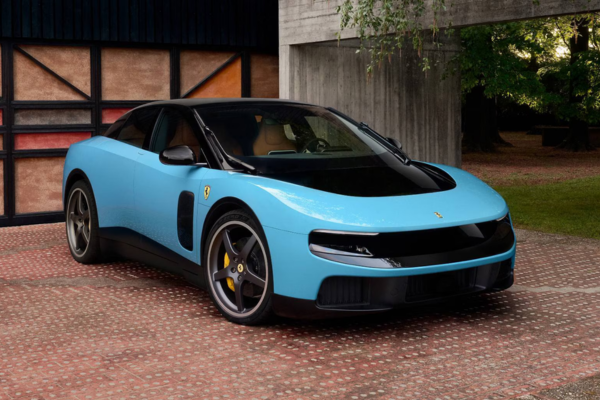
Ferrari’s first fully electric car, the Luce, has sparked a fierce debate across the automotive world. The reaction has now given Lamborghini fresh confidence in its decision to delay a fully electric supercar and focus on plug-in hybrids instead.
The Ferrari Luce was unveiled as a major step for one of the world’s most powerful luxury car brands. It is priced at about €550,000, or roughly $640,000, according to Reuters and the Financial Times.
But rather than winning universal praise, the car has divided opinion. Critics have questioned its design, its four-door layout and whether it carries the emotional identity expected from a Ferrari. Reuters reported that the launch triggered strong reaction from fans, politicians and former executives.
The financial market also reacted sharply. Ferrari’s shares fell by more than 8% after the unveiling, although the company later defended the car and said customer interest remained strong.
For Lamborghini, the moment appears to support a more cautious strategy.
Lamborghini chief executive Stephan Winkelmann said the company had been watching customer demand closely. He said interest in fully electric models among Lamborghini buyers was not rising fast enough.
“By observing the market, we saw that the acceptance curve of EVs for our type of customers is not increasing,” Winkelmann said, according to reports citing his CNBC interview.
That position matters because Lamborghini had once planned to launch its first electric model before 2030. The company’s 2021 “Direzione Cor Tauri” plan included a major electrification roadmap and hybrid versions of every model by 2025.
Lamborghini has already reached the hybrid stage. Its current direction now places plug-in hybrid technology at the centre of its transition.
The Lanzador, originally previewed as Lamborghini’s first full EV, is no longer moving ahead as a pure electric model in its earlier form. Reports suggest the nameplate could return with plug-in hybrid power instead.
For the supercar industry, the issue is not simply about batteries. It is about emotion, sound, heritage and the experience wealthy buyers expect from brands such as Ferrari and Lamborghini.
Electric cars can deliver instant torque and rapid acceleration. That gives EVs a clear performance advantage from a standing start.
But traditional supercar customers often want more than speed. They want engine noise, mechanical drama and a sense of theatre behind the wheel.
That is where plug-in hybrids offer a compromise. They can combine electric power with combustion engines, giving buyers stronger acceleration while preserving part of the traditional supercar character.
Ferrari has defended the Luce as a new chapter, not a replacement for its combustion and hybrid cars. Chief executive Benedetto Vigna said the car had attracted strong customer interest after being shown to about 1,600 clients.
Still, the backlash shows the challenge facing luxury brands. The move to electric power is not only a technology decision. It is also a brand decision.
Luxury carmakers influence more than their own customers. They shape how investors, collectors and the wider car industry view future technology.
When a Ferrari EV faces public criticism, other brands may feel less pressure to rush their own electric models. That could slow full electrification at the very top of the market.
However, the environmental question remains. Plug-in hybrids can reduce fuel use, especially when drivers charge them regularly and use electric-only mode for shorter trips.
But they still depend on petrol engines. That means they do not remove emissions in the same way as fully electric cars.
For consumers, the mixed signals can be confusing. Many carmakers have spent years promising cleaner roadmaps, only to revise those plans when demand weakens or costs rise.
Lamborghini’s message is now clear. It believes plug-in hybrids are the safer bridge for its customers, its brand and its business.
Ferrari, meanwhile, is taking the bigger reputational risk with a full EV. Whether that risk becomes a mistake or a masterstroke will depend on one thing: whether wealthy buyers actually place orders.
For now, the Luce has done something few cars manage before reaching the road. It has forced the supercar world to confront an uncomfortable question.
Is the future of performance fully electric, or will emotion keep the engine alive for longer?
Read also: Ferrari leads Bahrain F1 test day two, power unit issues hit rivals