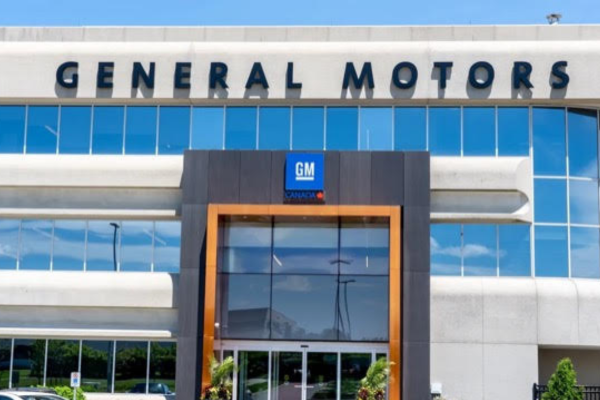
General Motors is ending Chevrolet retail sales in China after more than two decades, following a dramatic collapse in demand for the brand.
Chevrolet’s annual sales in the country have fallen from more than 760,000 vehicles in 2014 to fewer than 9,000 last year. That represents a decline of about 98.8% in just over a decade.
The decision marks a major retreat for one of America’s best-known car brands. But GM is not abandoning its Chinese manufacturing base.
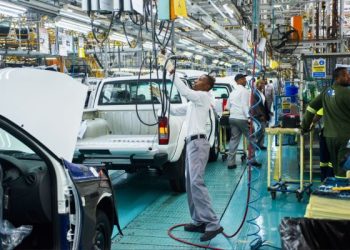
Instead, the company plans to use its production capabilities in China to build Chevrolet vehicles for export to international markets. The move allows GM to keep using existing factories while reducing the cost of maintaining a domestic Chevrolet retail operation.
Why Chevrolet struggled
China has become one of the world’s most competitive automotive markets, particularly as electric and hybrid vehicles have grown rapidly.
New energy vehicles accounted for 62.8% of China’s passenger-car retail sales in June 2026, according to preliminary data from the China Passenger Car Association. That shows just how quickly consumer demand has moved towards electrified vehicles.
Chevrolet struggled to keep pace with that change. Its traditional strength was in petrol-powered vehicles, while Chinese manufacturers moved aggressively into electric cars, connected technology and intelligent driving.
The result was a steep fall in Chevrolet’s relevance among Chinese consumers.
The wider challenge is significant for global manufacturers. Chinese brands are no longer competing only at home. They are increasingly using their domestic scale, technology and manufacturing capabilities to expand into international markets.
GM is staying in China
Despite Chevrolet’s retail exit, General Motors is making a long-term commitment to the Chinese market.
GM and SAIC Motor have extended their joint venture agreement for another 20 years, taking the partnership through 2047. The companies have also agreed to accelerate vehicle development and focus heavily on electric and hybrid models.
SAIC-GM plans to introduce at least 30 new energy vehicles by 2030. The programme will focus particularly on Buick and Cadillac as GM looks to strengthen the brands that still have greater potential in China.
The strategy also gives GM access to China’s manufacturing and technology ecosystem.
That could become increasingly important as the global car industry moves towards software, electrification and advanced driver-assistance technologies.
China becomes an export base
One of the most interesting parts of GM’s strategy is what happens to vehicles developed and produced in China.
GM plans to export China-developed vehicles to markets outside the country. The first examples are expected to include Buick models, with exports targeting regions such as the Middle East, Africa, South America, Mexico and parts of Asia.
That means China’s importance to GM is changing rather than disappearing.
Instead of relying mainly on Chinese consumers to buy American-branded vehicles, GM can use Chinese engineering, technology and manufacturing capabilities to develop products for customers around the world.
It is a striking reversal of the traditional automotive model.
For decades, global carmakers built vehicles in China primarily to serve China’s enormous domestic market. Now, China is increasingly becoming a launchpad for vehicles designed for international consumers.
A warning for global carmakers
Chevrolet’s experience also highlights the speed of change in China’s automotive industry.
GM’s wider China business remains substantial. The company and its joint ventures delivered nearly 1.9 million vehicles in China in 2025, while its new energy vehicle sales reached nearly 1 million units.
But the Chevrolet decision shows that strong manufacturing capacity does not automatically guarantee strong consumer demand.
Automakers must increasingly compete on electric powertrains, software, connectivity, intelligent driving and speed of product development.
For GM, the answer is to concentrate its Chinese retail efforts on Buick and Cadillac while using the country as a manufacturing and technology hub for global growth.
The Chevrolet name may be disappearing from Chinese showrooms, but GM’s relationship with China is entering a very different phase.
And for the global automotive industry, that may be the bigger story.
Read also: Chevrolet EV truck breaks world record with 1,059-Mile drive on single charge