For more than eight decades, Pontiac represented power, performance and American automotive passion. It introduced some of the world’s most iconic muscle cars, including the GTO, Firebird and Trans Am, inspiring generations of enthusiasts. Yet despite its rich history, the legendary brand disappeared almost overnight.
Pontiac’s downfall was not caused by a single bad decision. It was the result of years of declining sales, internal competition within General Motors (GM), changing consumer preferences and the devastating impact of the 2008 global financial crisis. Together, those factors forced one of the world’s biggest carmakers to make one of the toughest decisions in its history.
Pontiac was introduced in 1926 as a companion brand to Oakland Motor Car Company before eventually replacing Oakland altogether. Over the following decades, it built a reputation for stylish, affordable performance vehicles that appealed to younger buyers. By the late 1960s, Pontiac had become one of America’s most successful automotive brands, selling more than 800,000 vehicles annually and ranking as the country’s third best-selling marque behind Chevrolet and Ford.
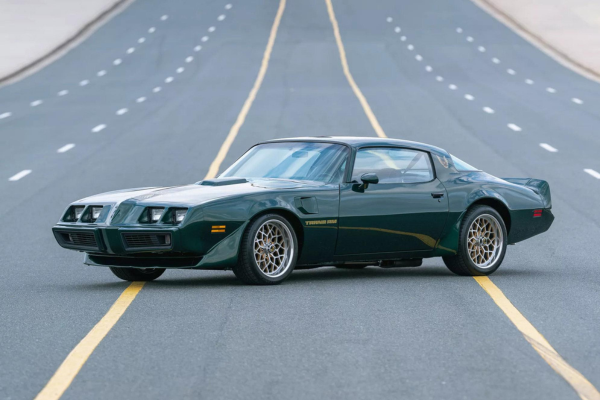
Its greatest success came in 1964 with the launch of the Pontiac GTO. Widely regarded as the car that ignited the American muscle car era, the GTO transformed Pontiac into GM’s performance division. Models such as the Firebird, Trans Am, Grand Prix and later the G8 cemented the brand’s reputation among driving enthusiasts.
However, Pontiac gradually lost its unique identity during the 1980s and 1990s. Many of its vehicles became little more than rebadged versions of Chevrolet models, a strategy known as badge engineering. As differences between GM brands narrowed, customers struggled to see why Pontiac deserved its place alongside Chevrolet, Buick, Cadillac and GMC.
At the same time, changing market conditions worked against the brand. Rising fuel prices, tighter emissions regulations and growing demand for fuel-efficient vehicles reduced interest in traditional performance cars. Japanese manufacturers gained market share by offering reliable, economical alternatives, while Pontiac’s sales continued to weaken.
GM attempted to revive Pontiac during the 2000s with exciting products such as the Solstice roadster, the Australian-built GTO and the highly praised G8 sports sedan. Although these vehicles won positive reviews, sales volumes remained too low to reverse the brand’s decline.
The final blow came during the 2008 global financial crisis. As vehicle sales collapsed worldwide, GM suffered enormous financial losses. The company lost more than US$30.9 billion in 2008, saw its cash reserves shrink rapidly and eventually sought government support before filing for Chapter 11 bankruptcy protection in June 2009.
To secure its future, GM dramatically reduced its operations. The company decided to focus on four core brands; Chevrolet, Buick, GMC and Cadillac, while eliminating Pontiac, Saturn and Hummer as part of its restructuring. On April 27, 2009, GM officially announced Pontiac’s retirement, bringing an end to a brand that had spent more than 80 years shaping American automotive culture. The final Pontiac, a white 2010 G6 sedan, rolled off the production line in January 2010.
Although Pontiac no longer builds new vehicles, its influence remains unmistakable. Classic models such as the GTO, Firebird and Trans Am continue to attract collectors worldwide, with many commanding premium prices decades after production ended. Car clubs, museums and enthusiasts continue to preserve Pontiac’s legacy, ensuring that one of America’s greatest automotive stories lives on.
Pontiac’s disappearance also serves as a powerful lesson for today’s automotive industry. Even legendary brands can disappear if they lose their identity, fail to adapt to changing markets and cannot justify their place in an increasingly competitive business. History alone is never enough to guarantee survival.
Read also: What went wrong? How Saab lost its way and disappeared

![Tesla [Reuters]](https://autojournal.africa/wp-content/uploads/2026/04/Tesla-Reuters-350x250.png)
![Trump Targets Bombardier [Narcity]](https://autojournal.africa/wp-content/uploads/2026/09/Trump-Targets-Bombardier-75x75.png)