Electric vehicle drivers could soon travel longer distances with greater confidence after Horse Powertrain introduced a new methanol-powered range extender designed to keep batteries charged when charging stations are unavailable.
The new technology aims to address one of the biggest barriers to electric vehicle adoption, range anxiety. Instead of driving the wheels directly, the system generates electricity to recharge the battery while the vehicle remains in motion, giving drivers an additional source of power on longer journeys.
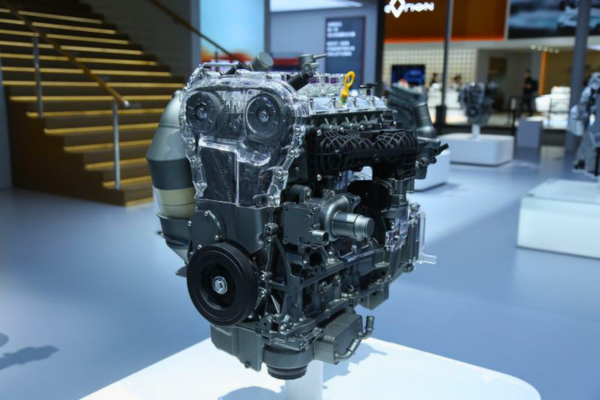
Horse Powertrain, a joint venture between Renault Group and Geely, revealed its new D20 Extended-Range Electric Vehicle (EREV) system this week. The company believes the technology could provide an alternative solution for motorists who want the benefits of electric driving without relying entirely on public charging infrastructure.
At the heart of the system is a 2.0-litre turbocharged four-cylinder engine paired with an advanced axial-flux electric motor mounted directly on the crankshaft. Unlike a conventional hybrid, the engine does not power the wheels. Instead, it works solely as a generator, producing electricity to recharge the vehicle’s battery.
Horse says the generator delivers up to 105 kilowatts (kW) of electrical power. The compact axial-flux motor is nearly 50% shorter than a conventional radial-flux motor while providing 64% greater power density by volume, allowing manufacturers to save valuable space and reduce weight.
The company also claims the complete system achieves 96.4% electrical efficiency and weighs approximately 170 kilograms (374 pounds), including its integrated power electronics. The compact design could make it easier for automakers to install the technology across a wide range of future electric vehicles.
One of the system’s most distinctive features is its ability to run entirely on 100% methanol rather than petrol. Horse says the engine can start using pure methanol even in temperatures as low as -35°C (-31°F), making it suitable for colder climates.
The company added that the engine has been engineered to comply with both Euro 7 emissions regulations in Europe and China’s CN6b emissions standards, positioning it for global markets.
Horse’s laboratory testing suggests the D20 converts 47% of methanol’s energy into electricity. According to the company, burning 2.1 kilowatt-hours (kWh) of methanol produces 1kWh of electricity, meaning approximately 5.1 gallons (19.3 litres) of methanol could generate enough electricity to recharge a 40kWh battery pack.
If these figures are achieved in real-world conditions, the technology could significantly extend driving range while reducing the frequency of charging stops.
The announcement comes as extended-range electric vehicles continue to gain attention globally. Unlike fully electric vehicles, EREVs combine battery-electric driving with an onboard electricity generator, allowing drivers to continue travelling even when charging points are unavailable.
Industry analysts believe this approach could encourage more motorists to switch from petrol and diesel vehicles, particularly in regions where charging infrastructure remains limited.
Beyond improving convenience, the technology could also help lower running costs. Electric vehicles typically require less routine maintenance than combustion-engine vehicles because they have fewer moving parts and do not require oil changes.
Although the D20 still relies on combustion, methanol is considered a cleaner-burning fuel than petrol. Using methanol as a generator fuel could reduce carbon monoxide emissions compared with traditional petrol-powered range extenders, although overall environmental performance will depend on how the methanol itself is produced.
The automotive industry is currently exploring multiple solutions to improve electric mobility. Manufacturers are investing in larger batteries, faster charging technology, battery swapping, hydrogen fuel cells and advanced range extenders to address concerns over charging availability.
Horse believes its latest innovation adds another practical option for consumers who want the environmental benefits of electric vehicles without sacrificing driving flexibility.
If its laboratory results are confirmed on public roads, the methanol-powered D20 could become an important stepping stone in the transition towards cleaner and more practical electric mobility.
Read also: China’s electric taxi boom reduces oil dependence as EV adoption accelerate