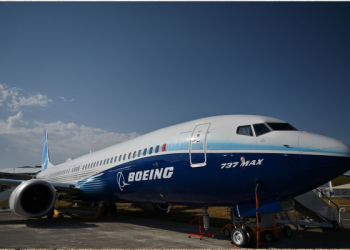
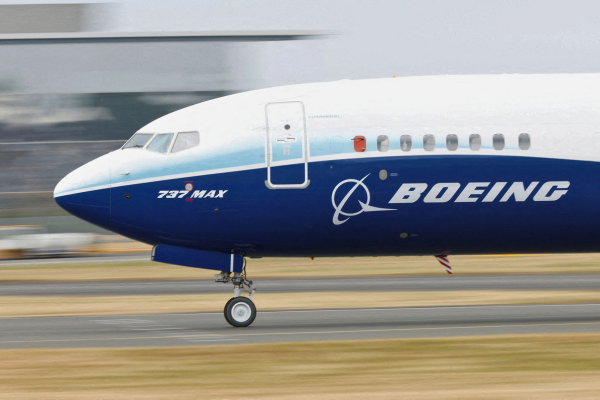
Passengers travelling on Boeing 737 MAX aircraft could soon benefit from additional safety checks after the U.S. Federal Aviation Administration (FAA) proposed inspections on hundreds of aircraft over concerns that some passenger seats may not have been installed correctly.
The proposal aims to reduce the risk of injuries during emergency landings and ensure passengers can evacuate aircraft quickly if an emergency occurs. Although no injuries linked to the issue have been reported, regulators say the inspections are necessary to maintain the industry’s high safety standards.
The FAA’s proposed Airworthiness Directive applies to 453 Boeing 737 MAX aircraft registered in the United States. While the regulator only has authority over U.S.-registered aircraft, aviation experts expect authorities in other countries to review the directive and consider taking similar action.
According to aviation intelligence firm IBA, there are approximately 2,300 Boeing 737 MAX aircraft currently operating worldwide, including 823 registered in the United States. That means nearly one in every five MAX aircraft globally could be affected if similar inspections are adopted internationally.
The FAA said it received reports indicating that some passenger seat assemblies may not have been properly secured to their seat tracks during installation. If left uncorrected, the seats could become detached when subjected to heavy loads caused by severe turbulence or an emergency landing.
Regulators warned that improperly secured seats could increase the risk of injuries to passengers and cabin crew. They also raised concerns that displaced seats could block aircraft aisles, slowing passenger evacuation during emergencies when every second is critical.
Each Boeing 737 MAX can have up to 69 track-mounted passenger seat assemblies requiring inspection. The FAA estimates that inspecting each seat assembly would take around one hour, while any necessary correction would require another hour, with no replacement parts needed.
The agency noted that airlines could inspect multiple seats simultaneously using several maintenance personnel, significantly reducing the amount of time each aircraft would spend out of service.
The FAA has not yet announced a deadline for airlines to complete the inspections. The proposal will move through the regulatory process before becoming a mandatory requirement.
The latest development comes as Boeing continues efforts to rebuild confidence in its manufacturing quality following a series of safety concerns. The company has been working to strengthen production standards under Chief Executive Kelly Ortberg, who has prioritised quality improvements across Boeing’s commercial aircraft business.
Those efforts intensified after the January 2024 incident involving an Alaska Airlines Boeing 737 MAX 9, when a door plug panel detached during flight shortly after take-off. The incident triggered multiple investigations, increased regulatory oversight and renewed scrutiny of Boeing’s manufacturing processes.
Boeing said it had already informed airline operators about the seat installation issue in December 2025 and welcomed the FAA’s decision to formalise the guidance.
“We support the FAA making that guidance mandatory,” a Boeing spokesperson said.
While the proposed inspections are precautionary, they highlight the aviation industry’s continued focus on identifying and addressing even minor safety issues before they become more serious risks. For passengers, the move reinforces the sector’s commitment to ensuring every commercial flight remains as safe as possible.
Read also: Boeing records strongest first-half aircraft deliveries since 2018

![Tesla [Reuters]](https://autojournal.africa/wp-content/uploads/2026/04/Tesla-Reuters-350x250.png)