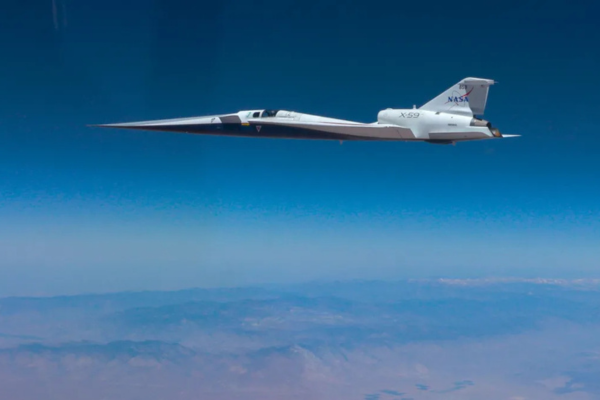
Travellers could soon reach their destinations in nearly half the time as the United States prepares for the biggest change in commercial aviation in more than five decades. If approved, the proposal could revive supersonic passenger travel, reduce international journey times, and accelerate the development of a new generation of high-speed aircraft.
The U.S. Federal Aviation Administration (FAA) has unveiled plans to lift the country’s more than 50-year ban on commercial supersonic flights over land. The proposal represents a major shift in aviation policy and could become one of the most significant regulatory changes since the retirement of the Concorde in 2003.
Under the proposal, the FAA intends to replace the long-standing prohibition with a modern, noise-based certification system. Instead of banning aircraft solely because they exceed the speed of sound, manufacturers would have to demonstrate that their aircraft meet strict environmental and community noise standards.
The regulator also plans to introduce separate rules later this year covering landing and take-off noise for aircraft capable of flying at Mach 1 or faster. Mach 1 represents the speed of sound, approximately 770 mph (1,239 km/h) under standard atmospheric conditions. By comparison, today’s commercial airliners typically cruise between 550 and 600 mph (885–965 km/h).
The original ban was introduced in 1973 after concerns that sonic booms generated by supersonic aircraft could disturb communities, damage buildings, and create widespread public opposition. Those concerns effectively prevented commercial supersonic travel over the continental United States for decades.
However, advances in aerospace technology have prompted regulators to reconsider the restriction. Modern aircraft designs, lighter composite materials, improved aerodynamics, and sophisticated flight management systems are now making quieter supersonic operations increasingly possible.
One of the key technologies behind the FAA’s proposal is a technique known as Mach Cutoff. Instead of allowing the sonic boom to reach the ground, the aircraft’s altitude, speed, atmospheric conditions and aerodynamic design work together to bend the shockwave upward, causing much of the boom to dissipate before reaching populated areas.
FAA Administrator Bryan Bedford said recent breakthroughs in aerospace engineering and noise reduction have created an opportunity to modernise regulations that were introduced more than half a century ago. According to the agency, the goal is to remove outdated restrictions while protecting communities from excessive aircraft noise.
The FAA expects both the overland supersonic flight rule and the associated aircraft noise standards to be completed by mid-2027. At the same time, the U.S. government wants the regulator to work closely with international aviation authorities to establish common standards that would support future global supersonic operations.
Several aerospace companies are already positioning themselves for the return of high-speed passenger travel. Among the frontrunners is Boom Supersonic, whose Overture airliner is designed to cruise at Mach 1.7, roughly 1,300 mph (2,092 km/h). At that speed, flights between major cities could be dramatically shortened.
Boom’s technology has already achieved an important milestone. Its XB-1 demonstrator aircraft successfully exceeded the speed of sound during a test flight in 2025, proving many of the technologies intended for the larger passenger aircraft.
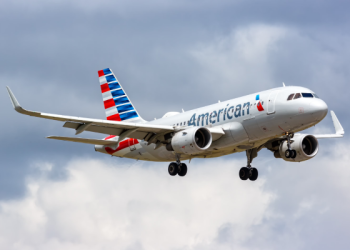
The company has also secured commercial interest from major airlines. Both United Airlines and American Airlines have announced plans to acquire Overture aircraft, subject to certification and production milestones, signalling growing confidence in the future of supersonic passenger transport.
Another competitor, Spike Aerospace, is developing the S-512 Diplomat, a business jet designed to minimise sonic boom noise while travelling faster than the speed of sound. The company says the aircraft could complete the journey between New York and Paris in less than four hours, compared with today’s average flight time of around seven hours.
The proposed rule change marks the strongest indication yet that commercial supersonic travel could soon become a reality once again. If regulators approve the new standards by 2027, manufacturers will enter a race to certify the world’s next generation of passenger aircraft and usher in a new chapter in global aviation.
Read also: Southwest Airlines faces FAA fine over drug and alcohol testing failures

![Boeing 737 max [Photo Credit BusinessInsider]](https://autojournal.africa/wp-content/uploads/2023/08/Boeing-737-max-Photo-Credit-BusinessInsider-350x250.jpg)