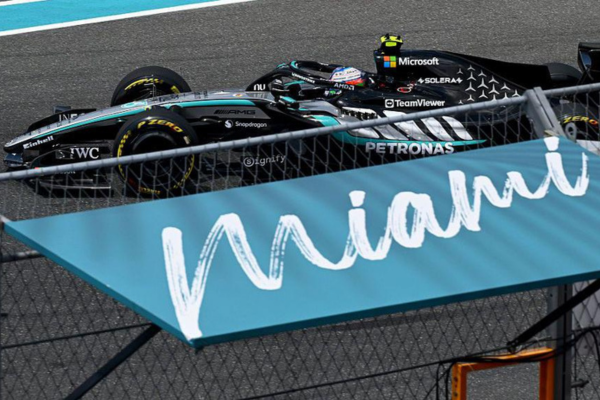
Formula 1 is making urgent changes to its 2026 rulebook just three races into the season, as officials respond to growing concerns from drivers and fans over safety and race quality.
The updated rules, which take effect at the Miami Grand Prix, focus heavily on the sport’s evolving hybrid power systems, a core part of its push toward greater electrification.
Hybrid Power Systems Overhaul Targets Safety Risks
At the center of the changes is how cars harvest and deploy energy. Early races saw drivers slowing unexpectedly in high-speed sections due to “superclipping,” where cars harvest energy even at full throttle.
To fix this, Formula 1 has reduced the maximum recharge limit from 8 megajoules to 7 megajoules during qualifying. At the same time, recharge power has increased from 250 kW to 350 kW.
This shift in energy management systems aims to shorten energy harvesting time and reduce unpredictable slowdowns on track.
The goal is simple: make racing safer without losing speed.
Boost Mode Limits Introduced to Reduce Speed Gaps
Officials have also capped the new “Boost mode” at 150 kW to prevent large speed differences between cars. These differences had already caused concern after incidents in earlier races.
Additionally, the MGU-K system, key to automotive performance optimization. will now have stricter limits. It can deploy up to 350 kW in key acceleration zones but only 250 kW elsewhere.
These adjustments are designed to create more consistent racing conditions and reduce sudden speed changes that could lead to accidents.
New Safety System for Race Starts
A new system will also monitor race starts. If a car launches too slowly, the system automatically deploys power to maintain minimum speed.
Flashing lights will alert other drivers, adding a layer of safety in one of the most dangerous phases of a race.
Drivers Cautiously Optimistic
Audi driver Nico Hülkenberg, in an interview, said the changes look promising but remain untested.
“On paper, they look like a step in the right direction, especially for safety,” he said. “Now we need to run it and see how it works.”
He pointed to earlier races where large speed differences created dangerous situations, highlighting the need for better motorsport engineering solutions.
A Sport at a Crossroads
The 2026 regulations were meant to modernize Formula 1 and align it more closely with electric vehicle (EV) technology trends. But the early backlash shows the challenge of balancing innovation with entertainment.
With the Miami Grand Prix set as the testing ground, Formula 1 faces a critical moment, prove that technology can enhance racing, or risk alienating fans who want to see drivers push to the limit, not manage energy.
![Tesla [Reuters]](https://autojournal.africa/wp-content/uploads/2026/04/Tesla-Reuters-350x250.png)