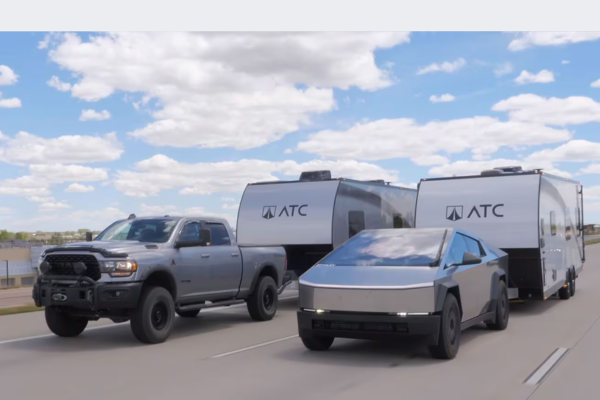
The debate between electric vehicles and gasoline-powered trucks continues to gain momentum, but one comparison is drawing attention for the size of the savings involved.
A review of operating costs shows that charging a Tesla Cybertruck costs significantly less than fuelling a Ram 1500, highlighting one of the biggest financial arguments in favour of Electric Vehicles (EVs).
Based on an annual driving distance of 15,000 miles, the Cybertruck costs approximately $6.97 per 100 miles to charge. That translates into an annual charging bill of about $1,045.50, or roughly $87.13 per month.
By comparison, the Ram 1500 costs around $13.42 per 100 miles in fuel expenses. Over the same 15,000-mile period, the truck would consume about $2,013 worth of fuel annually, equivalent to approximately $167.75 per month.
EV Charging Costs Highlight Long-Term Savings
The numbers reveal a substantial difference in Vehicle Operating Costs.
While the Cybertruck’s monthly charging bill sits below $90, the Ram 1500’s fuel bill approaches $170 per month. The gap means the gasoline-powered pickup costs nearly twice as much to keep running.
However, the comparison also highlights an important trade-off for consumers.
The entry-level Tesla Cybertruck starts at $79,990, nearly double the starting price of a 2025 Ram 1500, which begins at $40,275.
For truck buyers, the decision may come down to balancing upfront purchase costs against long-term savings from lower EV Charging Costs.
Tesla Cybertruck vs Ram 1500: The Cost Debate Continues
The comparison adds to the growing conversation around whether Electric Vehicles (EVs) offer better value than traditional gasoline-powered vehicles.
Supporters of EVs often point to lower charging, maintenance, and ownership costs. Meanwhile, critics note the higher purchase prices that many electric vehicles still carry.
The figures from the Cybertruck and Ram 1500 comparison show that while a gas-powered truck may be less expensive to buy initially, the monthly cost of keeping it on the road can be significantly higher.
As more drivers compare ownership expenses, fuel costs and charging costs are expected to remain central factors in future vehicle-buying decisions.
Read also: Tesla recalls cybertrucks over fears wheels could fall off while driving