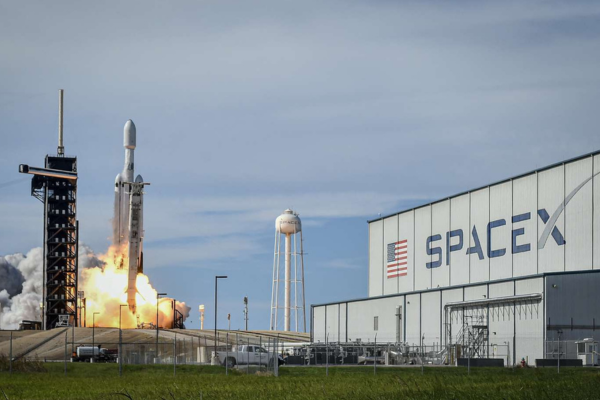
SpaceX is preparing for what could become the largest stock market debut (IPO) in history.
The planned listing may also place Elon Musk closer than anyone before him to a personal fortune of $1 trillion. But for now, much of that wealth remains on paper, tied to shares that are not easily converted into cash.
According to Reuters, SpaceX is targeting a Nasdaq listing as early as 12 June under the ticker SPCX. The company is expected to seek a valuation of about $1.75 trillion, with a possible fundraising target of around $75 billion.
That would make the rocket and satellite company one of the most valuable businesses ever to enter public markets.
For ordinary investors, the IPO offers a rare chance to buy into a company that has changed the economics of space travel. SpaceX’s reusable rockets have helped lower launch costs and made low-Earth orbit more accessible to governments, private companies and satellite operators.
But the valuation also raises a serious question: how much future growth is already priced in?
SpaceX has grown from a private rocket company into a global infrastructure business. Its Starlink satellite internet service now sits at the centre of its commercial story, serving consumers, companies and government customers across multiple markets.
The company reported $18.67 billion in revenue in 2025, but also recorded a net loss of about $4.9 billion, according to its IPO filing. Morningstar said the loss reflected heavy spending, including costs linked to artificial intelligence operations after SpaceX’s merger with xAI.
Starlink remains the strongest part of the business. Industry reports say the connectivity division generated about $11.4 billion in 2025 revenue, representing roughly 61% of SpaceX’s total revenue.
That means SpaceX is no longer just a space launch company. It is also becoming a global communications company, with satellites, broadband access, defence services and future data infrastructure all under one roof.
The IPO could significantly lift Musk’s estimated wealth.
Reuters reported that Musk controls 85.1% of SpaceX’s voting power and holds 12.3% of Class A shares. He has agreed not to sell stock for about a year after the company goes public.
Some analysts and media estimates suggest that Musk’s combined holdings across SpaceX, Tesla and other ventures could push his paper net worth near or beyond $1 trillion. However, that figure depends heavily on SpaceX’s final IPO price, post-listing share performance and the value of his other assets.
The IPO could also create huge paper gains for early investors and senior executives. Reuters said SpaceX has reserved 5% of IPO shares for selected employees and individuals chosen by its executive team, with those shares offered at the IPO price through a directed share programme.
That structure is unusual because some selected participants may be exempt from standard post-IPO lock-up rules. In simple terms, certain insiders could get more flexibility to sell shares earlier than usual.
For investors, that matters.
Large IPOs can create excitement, but they can also bring volatility. If early shareholders are allowed to sell too quickly, the market may face extra pressure after trading begins.
SpaceX’s control structure is another important issue. Musk’s voting power means public shareholders may have limited influence over major company decisions.
Supporters will argue that Musk’s control is part of what made SpaceX successful. Critics will say investors are being asked to accept high risk, limited control and a very demanding valuation.
The company’s importance now goes beyond Wall Street. SpaceX is a major launch provider for NASA and the US government. Its Starlink network also plays a growing role in communications, defence and emergency connectivity.
That gives the company enormous strategic power.
A successful IPO would bring SpaceX into public markets at a time when investors are hungry for artificial intelligence, satellite internet and defence technology. It would also test whether public investors are willing to pay a premium for one of the world’s most ambitious companies.
The emotional appeal is clear. SpaceX sells a story of rockets, Mars, satellite internet and technological dominance.
But the financial reality is more complex. The company is growing fast, yet it is also spending heavily and still making losses.
For Musk, the IPO could mark another historic personal milestone. For investors, it may be one of the biggest opportunities — and one of the biggest tests — of the decade.