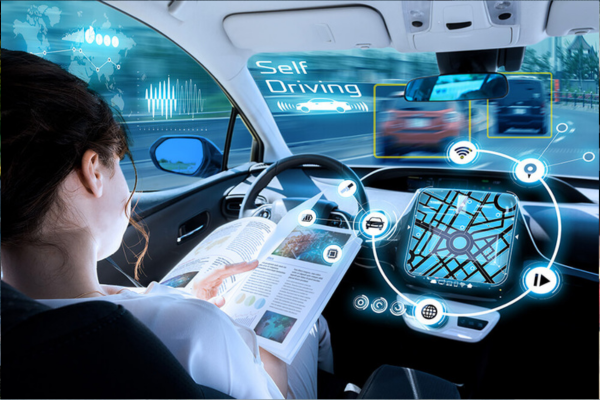
Tesla’s promise of safer, self-driving cars is facing fresh scrutiny after former employees questioned the company’s technology and the statistics used to promote it.
The electric carmaker has repeatedly said its Full Self-Driving system, known as FSD, is far safer than human drivers. Tesla executives have claimed the software is up to 10 times safer than normal driving.
But according to a Reuters investigation, former Tesla workers who helped train the technology say the system still struggles with basic and dangerous road situations. Independent safety researchers also said Tesla’s safety comparisons may give drivers and investors a misleading picture.
Tesla did not respond to detailed questions from Reuters.
Workers Saw The System Fail
Inside Tesla, data labelers review video clips from cars using the company’s driver-assistance software. Their work helps train the artificial intelligence behind FSD.
These workers examine footage of good and bad driving. They identify road hazards, mark mistakes, and send serious problems to engineers.
Former employees told Reuters they had seen clips of Tesla vehicles using FSD hitting animals, speeding, missing hazards, and failing to react properly in difficult road conditions. Some said they saw near-misses involving children and pedestrians.
The former workers said the technology continued to struggle with situations such as emergency vehicles, school buses, construction areas and pedestrians in crosswalks.
Reuters said it did not independently review the videos. Its account was based on interviews with former Tesla employees who said they had viewed the footage as part of their work.
Concerns Over Public Safety Claims
Tesla chief executive Elon Musk has long argued that FSD will eventually allow Tesla cars to drive themselves without human control.
The company’s website, however, still warns that current FSD features require active driver supervision. It also says the system does not make the vehicle autonomous.
That warning is important for drivers. It means anyone using the system remains legally and practically responsible for the car.
Despite that, Tesla leaders have increasingly promoted FSD as a major safety breakthrough. The company’s finance chief, Vaibhav Taneja, said last year that FSD could be “10x safer” than normal driving.
Musk later told shareholders Tesla was reviewing safety data before allowing people to text while using FSD. Six months later, Tesla had not approved that kind of use.
Researchers Question Tesla’s Figures
A central issue is how Tesla measures safety.
Tesla compares crashes involving its vehicles using FSD or Autopilot with national crash data from human-driven cars. But researchers told Reuters the comparison is flawed.
One concern is that Tesla counted crashes involving airbag deployments in its own cars. It then compared those figures with a broader federal crash category involving vehicles towed away after accidents.
Those are not the same thing. Many crashes that require towing do not involve airbag deployment.
A more direct comparison, using airbag-related crashes on both sides, suggested Teslas using the driver-assistance systems travelled about three times farther between such crashes, not 10 times farther, according to analysis cited by Reuters.
Even that does not prove FSD is three times safer than human driving. Researchers said other factors could distort the result.
Newer Cars Are Usually Safer
Tesla also compares its vehicles with the overall U.S. vehicle fleet.
That matters because the average Tesla is much newer than the average American car. Reuters reported that Teslas are around 4.1 years old on average, while the average U.S. vehicle is about 12.8 years old.
Newer vehicles usually have more advanced safety systems. These include automatic emergency braking, lane support and blind-spot monitoring.
Safety experts said this makes Tesla’s comparison weaker. A modern vehicle should already perform better than an older average car, regardless of FSD.
FSD Is Still Not A Robotaxi System
Another major point is that Tesla’s FSD is still a supervised driver-assistance system.
That means the person behind the wheel must remain alert and ready to take control. It is not the same as a fully driverless robotaxi with no human driver.
Researchers told Reuters this makes Tesla’s safety comparison difficult. Tesla is not simply comparing artificial intelligence with human driving. It is comparing human driving with human-supervised Tesla driving.
That difference is important. A Tesla driver can turn FSD on during easier parts of a journey and switch it off when conditions become difficult.
Robotaxi Rollout Raises More Questions
Tesla launched a robotaxi pilot in Austin, Texas, in June 2025. The service included human safety monitors in some vehicles and remote support in others.
Musk has said Tesla’s approach does not require the same detailed mapping used by rivals such as Waymo. He has argued that Tesla’s camera-based AI system will allow faster global expansion.
But former employees told Reuters that Tesla spent months preparing specific routes and hazards before public demonstrations and robotaxi launches. They said workers labelled road features, signs, kerbs and difficult situations to help the system operate smoothly in limited areas.
If true, that would suggest Tesla’s technology may still need extensive local preparation before it can operate safely at scale.
Waymo Takes A Different Route
Reuters compared Tesla’s approach with Waymo, the robotaxi company owned by Alphabet.
Waymo operates fully driverless vehicles in several U.S. metropolitan areas. It also uses detailed local mapping and compares its safety performance with human drivers in similar roads, cities and conditions.
Waymo publishes more detailed safety research and works with outside researchers. Tesla publishes headline safety claims but does not release the full underlying crash data for public review.
That difference matters because safety claims about self-driving vehicles can shape public trust, regulation and investment.
Legal And Regulatory Pressure Remains
Tesla’s driver-assistance technology has already faced legal and regulatory attention in the United States.
The National Highway Traffic Safety Administration has investigated crashes involving Tesla’s Autopilot and FSD systems. Some cases involved emergency vehicles, red lights, visibility problems and serious crashes.
Tesla was also hit with a $243 million verdict after a fatal Florida crash involving Autopilot. The company has appealed.
The broader issue is bigger than Tesla. Regulators, drivers and investors are all trying to answer one question: when is a car truly safe enough to drive itself?
Why This Matters
For Tesla owners, the message is simple. FSD may help with driving, but it is not a replacement for human attention.
For investors, the question is whether Tesla’s self-driving promise can support its huge market value. Reuters said Tesla’s market value had reached about $1.6 trillion.
For the wider auto industry, the story shows how difficult full autonomy remains. The technology can look impressive in controlled conditions, but everyday roads are unpredictable.
Children, cyclists, motorcyclists, school buses, emergency vehicles, animals, construction workers and bad weather all create real-world risks.
Tesla has changed the electric car industry. But the race to build safe autonomous vehicles is still far from over.
Until the evidence becomes clearer, the safest position for drivers is caution.
Read also: Tesla ends Model S and Model X production as factory shifts toward Optimus robots