Toyota has crossed a major hybrid sales milestone in India, as more drivers look for cars that use less fuel without needing a charging point.
Toyota Kirloskar Motor says its cumulative sales of self-charging hybrid vehicles in India have passed 300,000 units. The figure marks a significant moment for one of the world’s biggest carmakers in a market where fuel economy remains a major buying factor.
For Indian motorists, the appeal is clear. Hybrid cars can reduce fuel use in daily traffic, while still offering the familiarity of a petrol engine.
The milestone also shows how India’s clean mobility journey may not be led by electric vehicles alone. In a country where public charging infrastructure is still developing, hybrids are becoming a practical middle path.
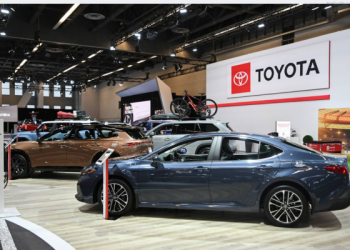
Toyota currently sells four strong-hybrid models in India: the Urban Cruiser Hyryder, Innova Hycross, Camry and Vellfire. The range covers family buyers, city commuters, business users and premium customers.
The Urban Cruiser Hyryder and Innova Hycross have helped take hybrid technology into more mainstream family segments. The Camry and Vellfire serve buyers looking for premium comfort with improved fuel efficiency.
Toyota says the growth supports its wider “multi-pathway” approach to cleaner mobility. That strategy includes hybrids, plug-in hybrids, battery electric vehicles, fuel-cell vehicles and alternative fuels.
Globally, Toyota says it has sold more than 38 million electrified vehicles over three decades. The company also says those vehicles have helped avoid more than 197 million tonnes of carbon dioxide emissions.
The company’s self-charging hybrid system uses a petrol engine, an electric motor and a battery. The battery is recharged through regenerative braking and engine power, so owners do not need to plug in the car.
That point matters in India. Many drivers live in apartments, travel long distances or lack reliable access to private charging.
Hybrid vehicles still use petrol, so they are not zero-emission cars. But they can use less fuel than conventional petrol models, especially in stop-start traffic.
For families, that can mean lower fuel bills over time. For cities, wider hybrid adoption could help reduce emissions while electric vehicle infrastructure continues to expand.
Toyota is also trying to ease long-term ownership concerns. The company offers an eight-year warranty on its hybrid battery packs in India.
That warranty is important because battery life remains one of the biggest questions for buyers considering electrified vehicles.
Sabari Manohar, executive vice president for sales, service and used car business at Toyota Kirloskar Motor, said hybrid technology plays a key role in the company’s cleaner mobility plans in India.
The message from Toyota is simple: not every customer is ready for a fully electric car today. But many are ready for something cleaner, more efficient and easier to live with.
For India’s automotive market, Toyota’s 300,000 hybrid sales milestone shows a changing consumer mindset. Buyers are no longer looking only at price, size and brand trust.
They are also thinking about fuel savings, emissions, reliability and future mobility.
That shift could shape the next phase of India’s car market. Electric vehicles may still be the long-term destination, but hybrids are proving to be a bridge many customers are willing to cross.
Read also: Toyota’s electric SUV surges 78% in sales, overtaking GM rival