Europe has poured nearly 200 billion euros into electric vehicle projects as governments and companies race to build a homegrown EV industry and reduce reliance on China.
New research from New Automotive showed countries in the European Economic Area and Switzerland have committed almost 200 billion euros, or $235 billion, to electric cars, batteries, and charging systems.
The spending highlights Europe’s growing effort to secure jobs and supply chains as the global auto market shifts toward electric vehicles.
China remains the world’s battery leader. The International Energy Agency said earlier this year that China made more than 80% of all batteries produced in 2025.
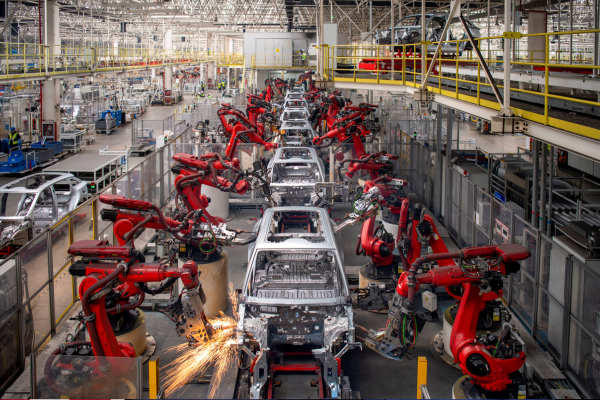
Europe’s investment includes 109 billion euros for the battery supply chain, 60 billion euros for EV manufacturing, and between 23 billion and 46 billion euros for public charging networks.
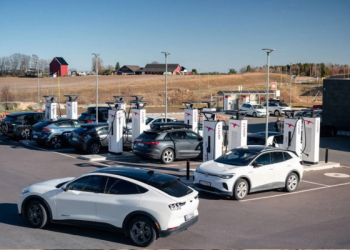
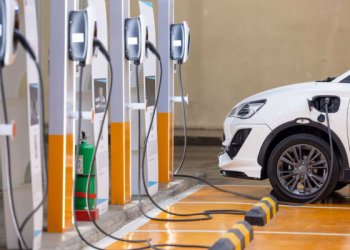
More than 1 million public charging points have already been deployed across the region.
Germany Leads Europe’s Battery Supply Chain Growth
Germany accounts for nearly one-quarter of Europe’s EV investment, making it the largest national hub in the region’s electric vehicle industry.
New Automotive said Germany now anchors both local production and wider European supply chains. The country also hosts major international battery makers and large car companies shifting to electric production.
The report said Europe now produces batteries for roughly one in three EVs sold inside the region. Planned factory capacity could meet future demand if projects are fully used.
Campaign group E-Mobility Europe said the investments already support more than 150,000 jobs. Another 300,000 jobs could be created if all announced projects move forward.
Analysts said the spending shows companies still see long-term value in Europe’s EV market despite weaker rules and political pressure on climate goals.
Public Charging Networks Expand Across Europe
The expansion of charging systems remains a major part of Europe’s EV strategy. Researchers said rising oil prices and a larger selection of electric car models helped keep investment strong even as some governments softened environmental rules.
Still, experts warned Europe faces major challenges in competing with China and other global rivals.
Rico Luman, senior economist at ING Research, said Europe’s auto production has always been concentrated in a few large countries. Analysts added that stable energy prices, subsidies, and trade protection may still be needed to support local manufacturers.
The debate comes as the European Commission changed direction on climate policy.
In December, the Commission unveiled a plan to drop the European Union’s effective ban on new combustion-engine cars from 2035. The move followed pressure from Europe’s auto industry and marked one of the bloc’s biggest retreats from green policies in recent years.
Even with the policy shift, investment in Europe’s EV industry continues to grow. Companies and governments appear determined to build stronger local battery production and reduce exposure to foreign supply chains as demand for electric vehicles rises worldwide.

![BYD Seal [Source Reuters]](https://autojournal.africa/wp-content/uploads/2025/11/BYD-Seal-Source-Reuters-350x250.png)
![Böwer 3D printing [Superyachttimes]](https://autojournal.africa/wp-content/uploads/2026/05/Bower-3D-printing-Superyachttimes-75x75.png)





![Lost luggage [CNN]](https://autojournal.africa/wp-content/uploads/2025/01/Lost-luggage-CNN-120x86.png)