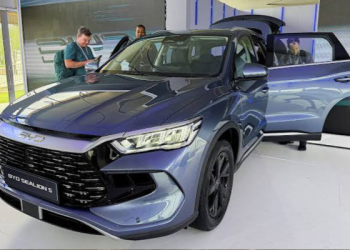

Germany’s military has banned Chinese-made commercial drones from its barracks and training grounds and restricted some Chinese vehicles from entering secure facilities over fears that their cameras and sensors could expose sensitive military information.
The measures affect drones from major manufacturers, including DJI, and selected vehicles made by BYD, Geely and NIO, according to a report by German news magazine Der Spiegel on Tuesday.
The restrictions raise concerns about military cybersecurity, data protection and the growing security risks linked to connected devices.
Germany’s Defence Ministry confirmed that the armed forces, known as the Bundeswehr, would stop using Chinese-made drone models. Existing systems will be replaced with products from Germany or other European countries.
Why Germany banned Chinese drones
The military fears that commercial drones could transmit sensitive information to external parties, including details of military exercises, images of barracks and training grounds, and information about German weapons systems.
The Defence Ministry said the small Chinese-made drones already acquired by the military were being removed from service as quickly as possible.
It declined to disclose how many drones had been purchased since 2024, citing military security.
However, local commanders had been allowed to buy commercially available drones with limited bureaucratic checks.
Under its 2024 drone strategy, the Bundeswehr created a list of approved models that could be bought from hardware and electronics stores. Several DJI products were included.
Military insiders estimate that commanders across Germany acquired several thousand drones. These included the DJI Matrice M30T, a model also used by security forces in China.
The military did not have a central system to track which units had purchased each drone. This lack of oversight has contributed to the blanket ban.
DJI drones and military data security concerns
The use of Chinese drones had been debated within the armed forces for months.
The Defence Ministry had earlier argued that strict operating rules limited the risks. It said the drones were used only in locations where sensitive military information was not involved.
Some were used to train new drone pilots. Others served as practice targets for systems designed to defend against hostile drones.
However, concerns remained about the ability of the devices to collect and transmit information.
Western intelligence analysts suspect that some Chinese drone manufacturers work closely with Chinese authorities. They also believe certain drone systems may have technology capable of sending data and images to Chinese security agencies.
An insider told Der Spiegel that Germany’s Military Counterintelligence Service had reportedly found forensic evidence of data exfiltration while examining drones used by the Bundeswehr.
Data exfiltration occurs when information is transferred from a device or system without proper authorisation.
The report did not establish whether sensitive military information had reached Chinese intelligence services or whether the alleged activity had resulted in confirmed espionage.
Germany restricts BYD, Geely and NIO vehicles
The drone restrictions are part of wider efforts to protect military facilities from possible connected vehicle surveillance.
According to Der Spiegel, the Bundeswehr has also restricted selected Chinese-made vehicles from entering barracks and other secure military locations.
Lists identifying affected models from manufacturers such as BYD, Geely and NIO are reportedly circulating within the armed forces.
Soldiers who own the affected vehicles must park outside military facilities and enter on foot.
The concern centres on the cameras, sensors and other connected systems fitted to modern vehicles. These features can collect information about their surroundings, raising fears that sensitive images and data could be transmitted to external agencies.
The restrictions do not amount to a nationwide ban on Chinese vehicles. They apply to designated models entering secure military areas.
Norway incident raises connected vehicle security concerns
Germany’s move follows a reported incident involving Chinese-made rental cars during a military exercise in Norway.
According to the report, the Norwegian Armed Forces discovered that the vehicles had recorded activities during the Hovedstad homeland defence exercise.
The exercise involved 5,000 soldiers between September 14 and 18. The recordings reportedly included security checks at the entrance to a military camp.
The incident has added to concerns about the security risks posed by connected vehicles around sensitive facilities.
For Germany, the challenge now extends beyond controlling military equipment. It also involves managing the information that everyday commercial technology can collect.
The restrictions show how military cybersecurity, data protection and defence technology are becoming linked to the growing use of drones and connected vehicles.
Read also: Chinese car brands close the gap as Germany’s new-car market grows