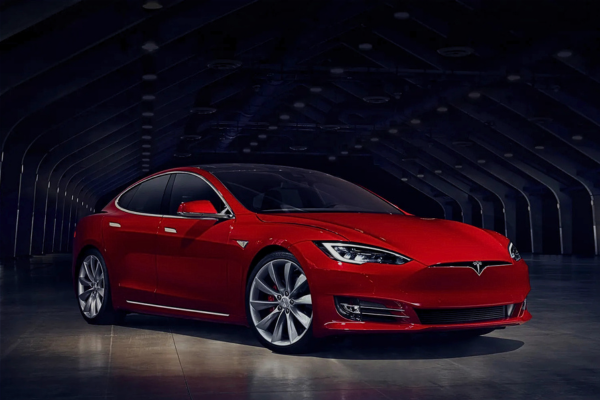
Tesla is facing growing scrutiny over its campaign to secure wider European approval for its Full Self-Driving (FSD) technology.
The company has used social media, safety research and direct engagement with regulators to argue that delays are preventing potentially life-saving technology from reaching European drivers. However, traffic-safety experts say Tesla’s evidence does not prove that FSD prevents fatal crashes.
A Reuters investigation found that Tesla has also pushed European regulators to reduce the intensity of parts of their safety assessments. The findings raise questions about how much influence the company had over the process.
Tesla’s FSD system is not fully autonomous. Drivers must remain attentive and ready to take control at all times.
Netherlands approval opens the door
The Netherlands became a key testing ground for Tesla’s European ambitions after its vehicle regulator, the RDW, approved the technology.
That decision was particularly important because the European approval process requires an initial member state to assess the system before other EU countries can consider wider approval.
Seven other EU countries, including Belgium, Denmark and the Czech Republic, have since granted national approval for the technology.
A wider EU decision involving regulators from all 27 member states is expected soon. Tesla needs backing from countries representing at least 55% of EU member states and 65% of the bloc’s population.
If successful, Tesla could become the first manufacturer to secure EU-wide approval for an advanced driver-assistance system that permits hands-free operation on roads beyond the highways currently covered by European rules.
Experts challenge Tesla’s safety evidence
Tesla has presented European regulators with research designed to demonstrate the safety benefits of FSD.
But seven traffic-safety researchers who examined the company’s methodology for Reuters said the study does not provide evidence that the system prevents fatal crashes.
One major problem is the amount of driving data available for comparison.
Tesla’s European research involved only tens or hundreds of thousands of miles driven using FSD by professional engineering drivers. That was compared with hundreds of millions of miles driven manually by Tesla owners across Europe.
Researchers said the difference makes it difficult to establish a meaningful crash-rate comparison.
Instead, Tesla examined driving behaviours such as horn use, indicator use, rapid acceleration and braking, hard cornering and automatic emergency braking.
Some of these measures can provide useful information about driving behaviour. However, researchers said they are not reliable evidence that FSD reduces serious crashes or deaths.
The researchers also questioned Tesla’s use of professional drivers, who are more familiar with the technology and may understand when they need to intervene.
Tesla itself acknowledges in the study that its comparisons should not be treated as proof of a direct cause-and-effect relationship.
Social media campaign adds pressure
Despite those limitations, Tesla and chief executive Elon Musk have made stronger claims about the technology’s potential benefits.
In July, after France’s transport minister expressed concerns about supporting EU-wide approval, Musk said delaying FSD approval in France would cost lives.
Tesla later published its European safety research online and said an average of 53 people die on European roads each day. The company argued that many of those deaths could be prevented by technology already available.
Safety researchers told Reuters that Tesla’s study does not support that conclusion.
The campaign has also encouraged Tesla supporters to contact European regulators. Officials in Sweden and Norway received dozens of messages from members of the public repeating claims that delaying approval could lead to unnecessary deaths.
Norwegian road-safety official Stein-Helge Mundal said regulators do not approve systems simply because they are popular. He also warned that the name “Full Self-Driving” could cause drivers to believe the technology is capable of more than it actually is.
Questions over the Dutch safety review
Documents obtained by Reuters also show repeated discussions between Tesla and the Dutch regulator during its assessment.
Tesla challenged aspects of the review, including testing arrangements, costs and the amount of regulatory work required.
In one exchange, Tesla objected to a €365,000 bill covering testing permits, technical work and other services provided over five months.
A week later, an RDW staff member offered to discuss ways to “adjust or reduce” the level of work required.
Tesla also questioned some testing procedures and asked the regulator to obtain approval before carrying out certain tests.
RDW said its assessment remained independent and thorough. The regulator said its work included testing on closed tracks and public roads under different conditions.
However, several autonomous-driving experts who reviewed the correspondence told Reuters that the exchanges raised concerns about the regulator’s relationship with Tesla.
A crucial moment for Tesla
The European battle comes at an important time for Tesla.
The company is facing stronger competition from established European manufacturers and rapidly expanding Chinese electric vehicle brands. Tesla has also suffered significant sales pressure in several European markets.
Winning wider approval for FSD would give the company an important technological and commercial advantage.
Tesla has long presented autonomous driving as one of the biggest opportunities in its future. Much of the company’s enormous market valuation has been linked to expectations that it can become a global leader in self-driving technology.
But the latest controversy highlights the difficult balance regulators face.
Advanced driver-assistance systems could improve road safety if they are properly designed and used. Yet regulators must also ensure that safety claims are supported by reliable evidence before allowing the technology onto public roads.
For European drivers, the debate is therefore bigger than Tesla.
It is about how quickly governments should allow potentially transformative technology to spread — and how much evidence should be required before safety promises become public policy.
Read also: Walmart’s low-cost EV charging push could force Tesla into price war