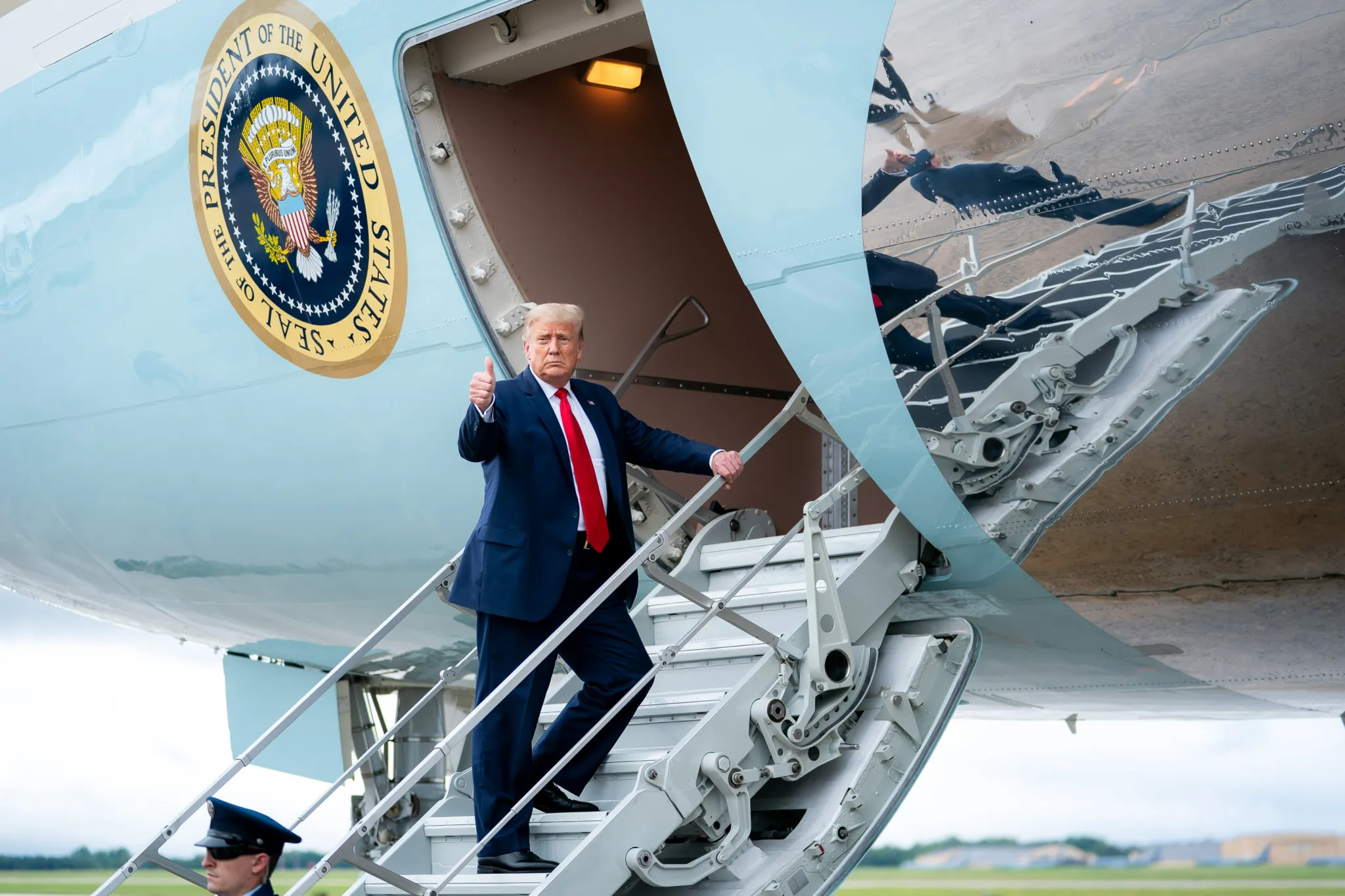
The aircraft expected to become America’s next Air Force One is now projected to cost taxpayers about $5.7 billion, a figure larger than the annual economic output of several small countries combined.
The project, known as the VC-25B program, was originally designed to modernize the presidential fleet while controlling costs through a fixed-price contract awarded to Boeing in 2018. Instead, years of delays, redesigns, and technical challenges have transformed it into one of the most closely watched examples of modern defense procurement.
The new aircraft are intended to replace the aging VC-25A fleet that has transported U.S. presidents since 1990. The current aircraft are now more than 35 years old and experiencing increasing maintenance issues.
Why The VC-25B Program Became So Expensive
Unlike a commercial Boeing 747, the VC-25B is designed to function as a flying command center during national emergencies.
The aircraft will carry secure communications systems, nuclear command-and-control capabilities, electromagnetic pulse protection, missile-defense systems, aerial refueling capability, and extensive military-grade infrastructure.
According to program estimates, the total cost through fiscal year 2031 will reach approximately $5.7 billion.
The original contract was valued at $3.9 billion, but Boeing has reportedly absorbed more than $2.8 billion in losses as costs climbed and schedules slipped.
Deliveries originally expected in 2024 have been pushed back multiple times, with the latest timeline extending into 2028 and possibly beyond.
Wiring Challenges And Supply Chain Problems
One of the biggest obstacles has been the aircraft’s custom wiring system.
The VC-25B requires more than 200 miles of specialized military-grade wiring. Engineers must ensure every cable meets strict security and electromagnetic shielding requirements.
Supply chain disruptions, workforce shortages, evolving security requirements, and the closure of the Boeing 747 production line have further complicated the project.
These setbacks have forced the US Air Force to seek temporary solutions, including an interim former Qatari Boeing 747-8 and the purchase of two retired Lufthansa 747-8 aircraft for training and spare parts.
A National Security Trade-Off
Supporters argue the aircraft’s cost reflects its mission. Air Force One is expected to remain operational during the most severe crises, including situations where conventional communications systems fail.
The VC-25B program has become a case study in the difficult balance between cost control, technological complexity, and national security requirements.
Read also: US Air Force One jets delayed to 2028 as Trump seeks use before term ends